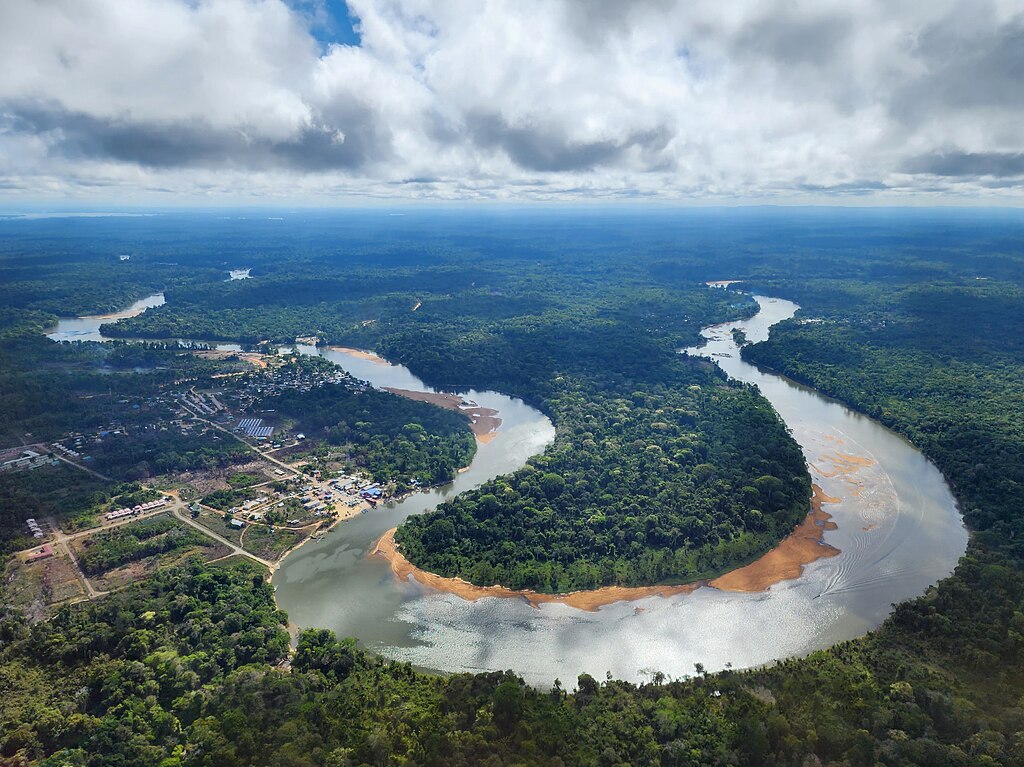
The government in Suriname has created a task force to crack down on land developers who illegally clear the Amazon Rainforest for agriculture and cattle ranching.Many areas under development are connected to Mennonites who migrated to the country from other parts of the region to help meet a domestic demand for food production.Conservationists warn that the group’s history of industrial-scale clearing and unauthorized ranching in other nations puts the rainforest at risk.Some Mennonites have received a deurwaardersexploot, a written notice delivered by a bailiff to appear in court, according to Suriname President Jennifer Geerlings-Simons. The government in Suriname has started toughening up on land developers who illegally clear the Amazon Rainforest for agriculture and cattle ranching, according to Suriname President Jennifer Geerlings-Simons, speaking at an Aug. 4 press briefing. In recent months, officials have started investigating illegal settlements and revising zoning for hundreds of thousands of hectares of mostly primary forest, previously set aside for agribusiness. Many areas under development are connected to Mennonites, a conservative Christian group who migrated to the country from other parts of the region, with plans to establish religious farming communities. “The people who are active there in the interior and have cleared land to live there, are there illegally,” Geerlings-Simons said during the briefing. “And that means that we’re going to take measures against them.” In 2023, Mongabay revealed that private agribusiness investors were working with the government to develop a Mennonite pilot program, in which around 1,000 families would be relocated from Bolivia — and possibly other parts of the region — onto as much as 30,000 hectares (about 74,000 acres) of land in interior departments of Suriname. In 2023 and 2024, Mongabay also published stories detailing the government’s plan to transfer around 467,000 hectares (1,153,982 acres) of mostly primary rainforest from the Ministry of Land Policy and Forest Management to the Ministry of Agriculture, Livestock and Fisheries (LVV) for future agribusiness development projects. Geerlings-Simons during the press briefing Aug 4. Image courtesy of Key tv 8.2 Backlash to the plans focused on Suriname’s 93% forest cover and net-negative carbon emissions status: It’s one of only three countries in the world that absorbs more CO₂ than it emits. In response to the backlash, officials canceled the Mennonite pilot program and paused development on the land transferred to LVV. However, LVV continued to control the land, leading to another attempt to develop part of it in early 2026 through a public-private partnership that also involved Mennonites. At the briefing, Geerlings-Simons specifically mentioned the several hundred thousand hectares transferred to LVV and that she had asked officials there to “reverse that decision.” “Only those areas located in the coastal plain should remain under [the LVV],” she said, referencing parts of the country that have already been cleared and degraded, “because we do indeed want to promote the agricultural sector.” For years, the country has imported a significant amount of its food, raising debates about sacrificing parts of the rainforest to increase domestic agricultural production. One proposed solution has been to accept Mennonite communities because of their successful track record with farming in countries like Belize and Bolivia. At the same time, Mennonites have been documented buying out the competition and clearing forest without proper permits, leading to widespread environmental destruction that conservationists in Suriname say the country can’t afford. In April 2026, Mongabay reported that Mennonites in Belize had visited Suriname several times and were negotiating a multi-million-dollar land purchase of around 38,000 hectares (93,900 acres) of rainforest, with plans to develop agriculture. Mennonites during a trip to scout land for agriculture in Suriname. (Photo courtesy of Adrián Barbero) Geerlings-Simons said some Mennonites already in Suriname have received a deurwaardersexploot, a written notice delivered by a bailiff to appear in court. She didn’t confirm whether Mennonites had been arrested, deported or any further action had been taken against them. Her office didn’t reply to follow-up requests by Mongabay for more information. “As far as I’m concerned, they will be put on an airplane,” she said of the Mennonites. “Because I’m going to set an example. All those thousands [of people] who want to come have to see that it’s not a free-for-all here.” Mennonites in other parts of the region declined Mongabay’s request for comment. The work is part of a task force Geerlings-Simons created to investigate unauthorized occupation and land clearing, according to John Goedschalk, a climate advisor to the president, who spoke to Mongabay over the phone. The task force is made up of government officials, police officers, attorneys and forest rangers, who will present eviction notices and cease-and-desist orders. Suriname shouldn’t be viewed as a destination for large-scale colonization, Goedschalk said. The country needs to ensure the long-term protection of its rainforests. “If they want to come here and do agriculture on the coast like everybody else, that’s fine,” he said. “But to come into our forests, create a separate society, and not abide by our legislation — that is just not going to work.” Banner image: The Suriname River. Image by NullAspect via Wikimedia Commons (CC BY-SA 4.0). See related from this reporter: Suriname’s plan to capitalize on carbon: Q&A with President Jennifer Geerlings-Simons FEEDBACK: Use this form to send a message to the author of this post. If you want to post a public comment, you can do that at the bottom of the page. Credits Topics
Suriname moves to evict Mennonites and illegal Amazon settlers
Full Article
Original Source
Read the full article at News →KhanList aggregates and links to publicly available news content. We do not host full articles from third-party sources. Always verify important information with original sources.