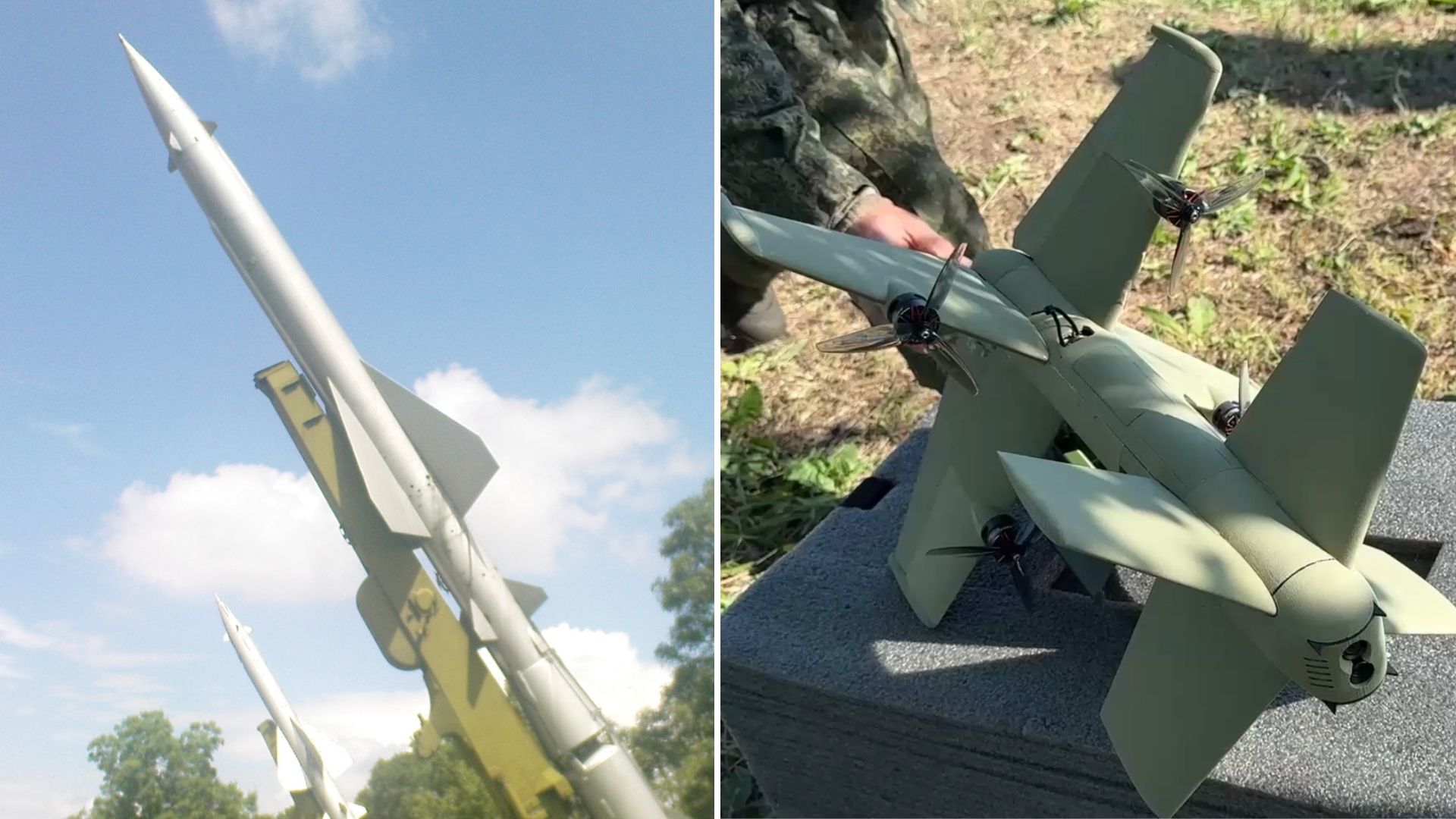
Surface to air missile (L) and Drone interceptor (R)1, 2 Air defense used to revolve around one basic problem: stopping enemy aircraft and missiles before they reached their targets. The rapid spread of drones has complicated that equation. Cheap one-way attack drones, small reconnaissance UAVs, and larger strike platforms can now threaten military bases, infrastructure, and frontline units without requiring an adversary to risk an expensive crewed aircraft. Traditional surface-to-air missiles, or SAMs, remain among the most powerful tools available for defending airspace. But using costly missiles against inexpensive drones can create an unfavorable exchange. That has pushed militaries toward another option: drone interceptors designed specifically to hunt and destroy hostile UAVs. Here is how the two approaches compare across six key areas. Cost per interception The biggest difference is economics. Modern surface-to-air missiles can be extremely expensive because they require sophisticated seekers, propulsion systems, guidance electronics, and warheads capable of destroying fast and highly maneuverable targets. That makes sense when the incoming threat is a fighter jet, helicopter, or cruise missile. The calculation changes when the target is a relatively inexpensive drone. Drone interceptors can potentially offer a lower-cost response. Many are built around simpler airframes, compact sensors, and reusable or comparatively inexpensive components. Some destroy targets by collision, while others carry small warheads or other defeat mechanisms. The objective is simple: avoid spending a high-value interceptor on a low-value threat whenever possible. Speed and target types Surface-to-air missiles maintain a major advantage when speed matters. SAM systems are designed to engage targets traveling at high subsonic, supersonic, and, in some cases, even greater speeds. That makes them suitable for threats such as combat aircraft and cruise missiles, depending on the system. Drone interceptors generally operate against slower targets. They are particularly suited to small UAVs whose flight speeds and maneuverability allow another drone to pursue them. Against a fast jet or missile, however, most interceptor drones would struggle to match the speed and engagement envelope of a dedicated SAM. Range and coverage SAM systems are built to defend large areas. Long-range batteries can monitor and engage threats tens or even hundreds of kilometers away, depending on the weapon. This allows defenders to create layered protective bubbles around cities, bases, and strategic infrastructure. Drone interceptors usually operate over much smaller areas. They may be launched once radars, electro-optical sensors, or other systems detect an incoming UAV. Their shorter range makes them better suited to local defense rather than wide-area airspace control. Ammunition and sustainability Another important difference is how quickly each system can be replenished. A missile launcher carries a limited number of ready-to-fire interceptors. Once those missiles are used, the system must be reloaded, creating potential vulnerability during large or sustained attacks. Drone interceptors could offer greater flexibility if they can be manufactured cheaply and stored in larger numbers. That becomes particularly important during swarm attacks, where dozens of drones may arrive within a short period. The challenge is ensuring that interceptor drones can launch, coordinate, identify targets, and engage quickly enough to deal with multiple threats. Guidance and autonomy Surface-to-air missiles rely on highly mature guidance systems. Depending on the weapon, they may use radar guidance, infrared seekers, command guidance, or combinations of several methods. Drone interceptors increasingly depend on autonomy. Computer vision, artificial intelligence, onboard navigation, and target recognition can allow an interceptor to pursue another drone with limited human involvement. That could make them useful against large numbers of small targets, but it also places significant importance on reliable detection, identification, communications, and autonomous decision-making. Complementary weapons, not replacements Drone interceptors are unlikely to make surface-to-air missiles obsolete. Instead, they are becoming another layer in increasingly complex air-defense networks. SAMs remain essential when the threat is fast, long-range, heavily armed, or capable of operating at high altitude. Drone interceptors can fill the gap at the lower end of the threat spectrum, particularly against inexpensive UAVs that may not justify the use of an advanced missile. The future of air defense will therefore probably not come down to choosing between missiles and interceptor drones. It will depend on using the right weapon against the right target. As aerial threats become cheaper, more numerous, and more diverse, the most effective defenses will likely combine long-range missiles, guns, electronic warfare, directed-energy systems, and interceptor drones into a layered network capable of responding without exhausting its most expensive weapons. Recommended ArticlesGet the latest in engineering, tech, space & science - delivered daily to your inbox.Atharva is a full-time content writer with a post-graduate degree in media & amp; entertainment and a graduate degree in electronics & telecommunications. He has written in the sports and technology domains respectively. In his leisure time, Atharva loves learning about digital marketing and watching soccer matches. His main goal behind joining Interesting Engineering is to learn more about how the recent technological advancements are helping human beings on both societal and individual levels in their daily lives.
Surface-to-air missiles vs interceptor drones: Which is better for modern air defense?
Full Article
Original Source
Read the full article at Interestingengineering →KhanList aggregates and links to publicly available news content. We do not host full articles from third-party sources. Always verify important information with original sources.