
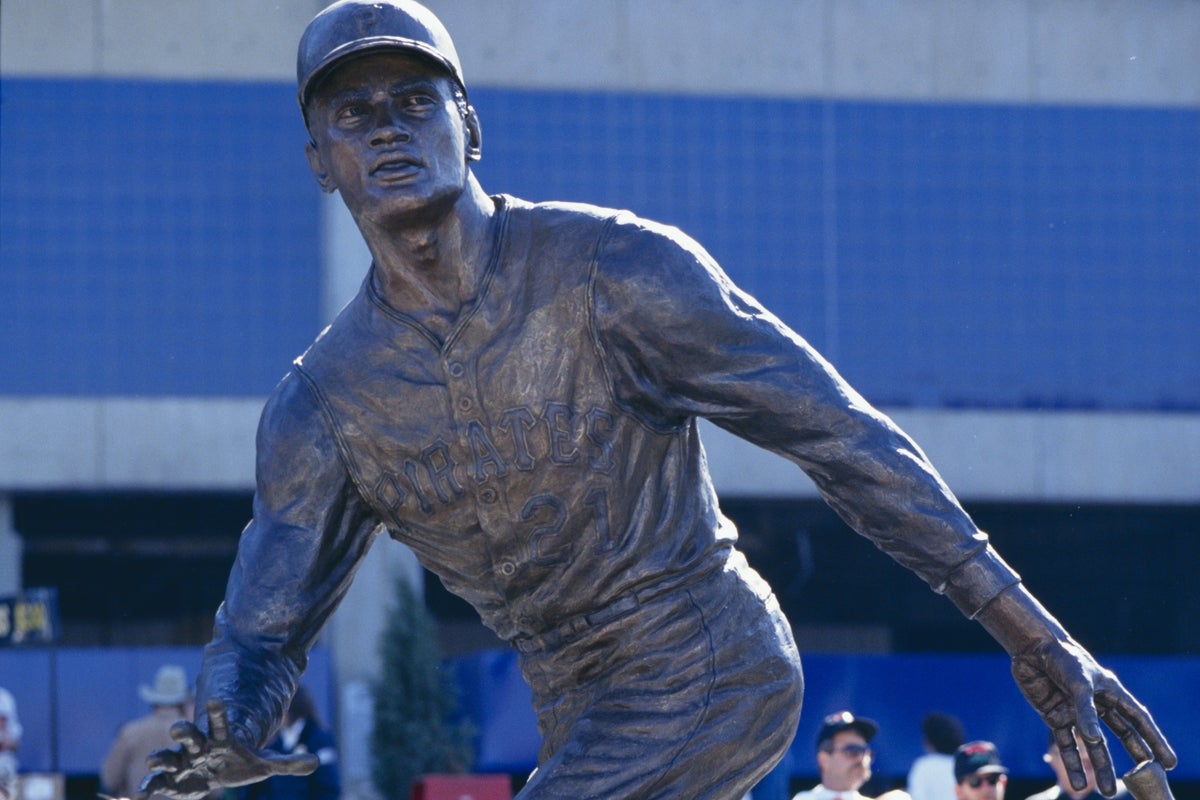
The US Supreme Court declined on Monday to consider a legal bid by Roberto Clemente’s sons contesting Puerto Rico’s placement of the baseball legend’s image on commemorative vehicle registration tags and license plates, which they claimed breached constitutional safeguards against government taking of trademark rights.The justices turned away the appeal brought by the three brothers after lower judicial bodies previously rejected their claims against the Caribbean US territory.A native of Puerto Rico, Clemente played 18 seasons as a right fielder for Major League Baseball's Pittsburgh Pirates between 1955 and 1972. His decorated career featured 15 All-Star appearances and two World Series championships, earning him induction into the Baseball Hall of Fame and a dedicated statue outside the stadium. He died at age 38 in a 1972 airplane crash while transporting humanitarian assistance to earthquake survivors in Nicaragua.The action was brought against Puerto Rico's government by Roberto Clemente Jr, Luis Roberto Clemente and Roberto Enrique Clemente, along with two family-owned companies established to protect the Roberto Clemente trademark, preserve his legacy, and advance his charitable efforts.Alleging that the unauthorized likeness generated $15 million for Puerto Rico, the lawsuit asked to halt all future use of their father's image on plates and tags, while seeking $45 million in damages alongside $3.15 million in compensation for trademark infringement."Although we are disappointed by the court's decision not to hear the important issues presented by our petition, we look forward to litigating the remaining claims in the trial court," Wen Fa, an attorney for the sons, said in a statement.Puerto Rico released the commemorative plates and registration tags displaying Clemente's face in 2022 without consent from his sons. The official initiative was discontinued at the end of that year.The sons filed suit in federal court within the territory, arguing that officials violated the Fifth Amendment of the US Constitution's ban on government takings of private property by seizing his trademark rights.San Juan-based US District Judge Gina Mendez-Miro dismissed the lawsuit, and the Boston-based 1st US Circuit Court of Appeals partially upheld that decision, turning down the argument that Puerto Rico’s use of the trademarks amounted to an unconstitutional taking.In petitioning the Supreme Court, attorneys for the family stated that lower courts erred in deciding that the Fifth Amendment fails to automatically apply to intangible property such as trademarks in the same manner as physical property like real estate."Left unanswered, the 1st Circuit's ruling would invite government to take trademarks on demand — checked only by a multi-factor balancing test that allows government to destroy much in value and pay nothing in return," they wrote.In court filings, Puerto Rico argued that the family’s Fifth Amendment claim exaggerated the scope of the appellate ruling. It asserted that the 1st Circuit never declared intangible property to be "categorically" excluded from automatic Fifth Amendment coverage."Instead, the court resolved the issues presented by applying existing precedent to the facts of this case," Puerto Rico said.
Supreme Court won't intervene in license plate dispute in Puerto Rico
Full Article
Original Source
Read the full article at Independent →KhanList aggregates and links to publicly available news content. We do not host full articles from third-party sources. Always verify important information with original sources.