
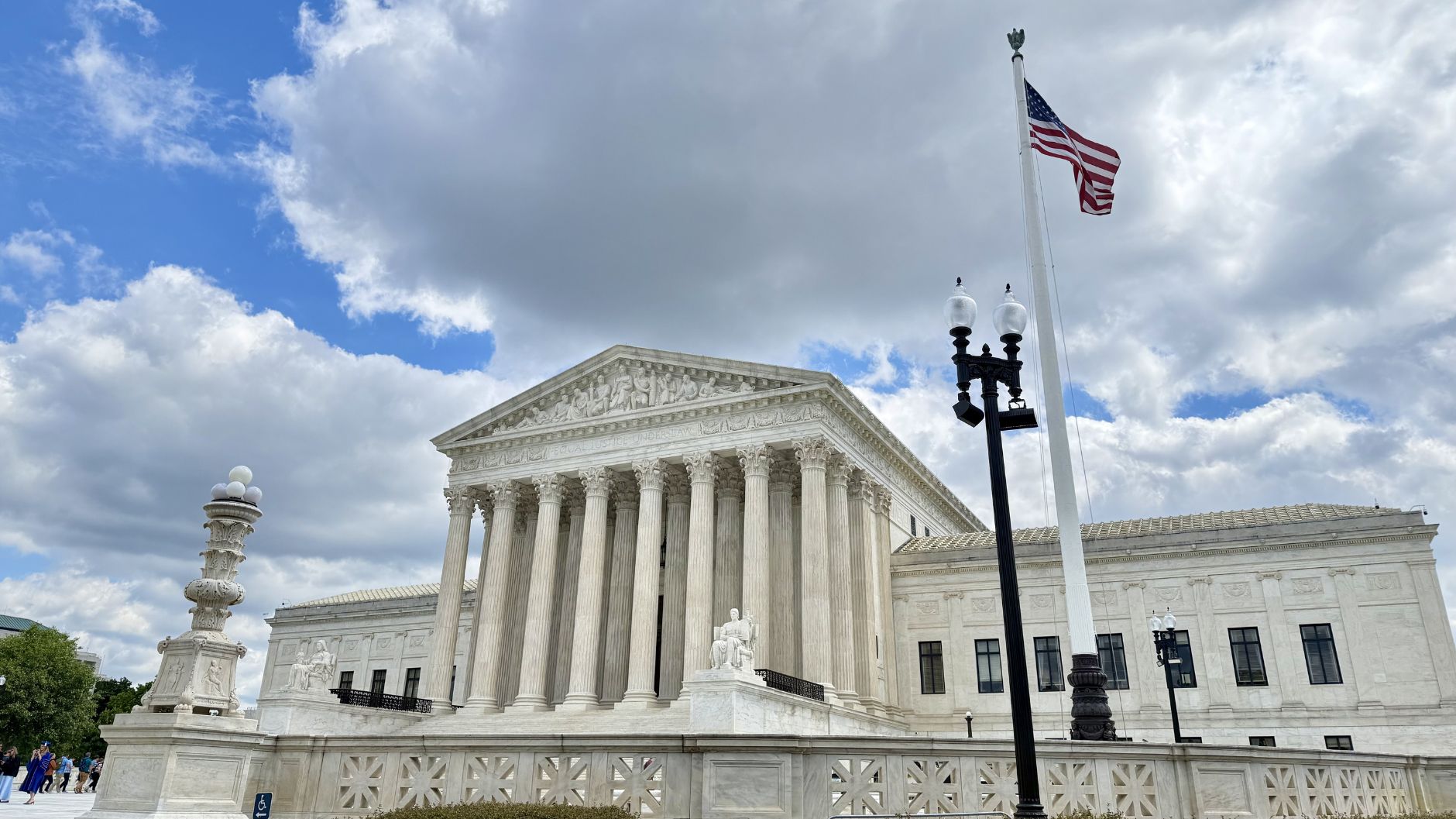
Texas filed a lawsuit against a Biden-era immigration rule, came to an agreement with the Department of Justice and got a judge to sign off on the deal all within the same day.WASHINGTON (CN) — The Supreme Court denied an emergency appeal from Democratic-led cities on Tuesday, refusing to block a deal between Texas and the Trump administration ending a longstanding immigration practice through friendly litigation.The cities say a Texas judge ignored their request to defend the Biden-era rule and instead rushed to approve an agreement between the state and the Department of Justice terminating the policy. They urged the Supreme Court to step in, warning against allowing the case to become an example for leveraging court rulings to achieve desired policy without the necessary review process.Without explanation, the justices refused to do so. There were no noted dissents.At issue is a 2024 rule codifying a longstanding practice allowing immigration judges to temporarily pause removal proceedings under certain conditions. The practice, known as administrative closure, could be used when an individual was pursuing protections through the U.S. Citizenship and Immigration Services. And advocates say it often helped law enforcement secure cooperation from immigrant crime victims and witnesses.Two years after the Executive Office for Immigration Review adopted the rule, Texas filed a lawsuit, claiming the policy exceeded the agency’s authority. The Lone Star State argued it allowed individuals without legal status to remain in the U.S. indefinitely.Hours after the filing, Texas and the Department of Justice jointly asked the lower court to declare the 2024 rule unlawful and vacate it. They also requested the court prevent the Justice Department from enforcing the rule or enacting similar regulations in the future.Later that day, Chief U.S. District Judge Reed O’Connor, a George W. Bush appointee in the Northern District of Texas, agreed to eliminate the 2024 rule nationwide and permanently restricted the federal government from adopting similar protections in the future.Legal services provider Centro Legal de la Raza moved to intervene along with the cities of Baltimore, Maryland, Columbus, Ohio, and New Haven, Connecticut. The cities said if the judgment were to result in more deportations of noncitizens as Texas suggested, it would harm their revenue because their taxpayers would be deported.Centro Legal de la Raza, which represents immigrants facing removal proceedings, said the judgment imposed substantial uncompensated legal work on the group.Under what is known as rulemaking-by-collusive acquiescence, a new administration that is hostile to a regulation by its predecessor can leverage litigation brought by a friendly party to circumvent the Administrative Procedure Act’s requirements. The cities and Centro Legal de la Raza said this case represents an “egregious new extension of this phenomenon.”But the Trump administration urged the Supreme Court to not put the “cart before the horse,” stressing the cities and Centro Legal de la Raza lacked standing to intervene. The government said any objections to the merits of the consent judgment were not a substitute for that prerequisite.Subscribe to our free newslettersOur weekly newsletter Closing Arguments offers the latest about ongoing trials, major litigation and rulings in courthouses around the U.S. and the world, while the monthly Under the Lights dishes the legal dirt from Hollywood, sports, Big Tech and the arts.Additional Reads
Supreme Court won’t block Texas-DOJ deal unraveling immigration court rule
Full Article
Original Source
Read the full article at Courthousenews →KhanList aggregates and links to publicly available news content. We do not host full articles from third-party sources. Always verify important information with original sources.