
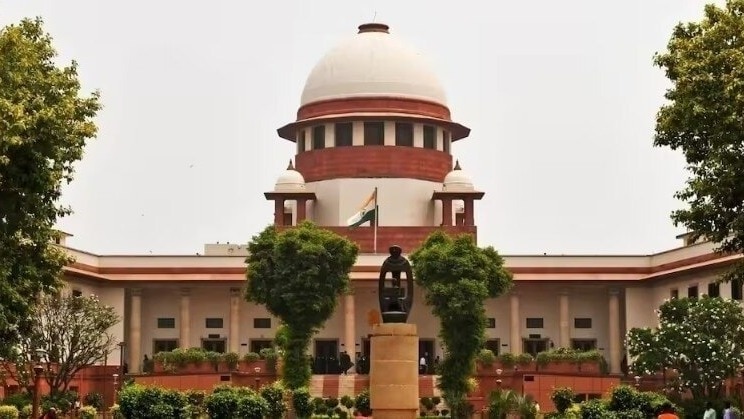
The Supreme Court has upheld a Madras High Court ruling striking down Tamil Nadu’s decision to extend Backward Class Muslim (BCM) reservation benefits to people who converted to Islam from certain Hindu communities.Dismissing the state government’s petition, the court said social backwardness associated with the Hindu caste order cannot be carried over to a non-Hindu social order after conversion.The ruling concerns a March 2024 government order allowing converts from Backward Classes (BC), Most Backward Classes (MBC), Denotified Communities (DNC) and Scheduled Castes (SC) to receive community certificates under the BCM category for reservation purposes.The Supreme Court upheld the High Court’s decision on constitutional principles. WHAT TAMIL NADU GOVERNEMENT HAD ARGUEDThe state government moved the Supreme Court on July 6, challenging the Madurai Bench’s ruling that the government order was unconstitutional.Tamil Nadu argued that conversion does not erase the social and educational disadvantages linked to a person’s caste background. Its policy sought to ensure that people who already received reservation benefits did not lose them solely because they embraced Islam. The state said the order followed recommendations from the Tamil Nadu Backward Classes Commission. It maintained that the measure protected existing benefits and would not disturb the reservation framework or social balance.WHY THE HIGH COURT STRUCK DOWN THE ORDERA High Court bench of Justices GR Swaminathan and PB Balaji held that a person who converts to Islam cannot automatically claim membership of one of Tamil Nadu’s seven notified Backward Class Muslim communities.These are Ansar, Dekkani Muslims, Dubekula, Labbais, including Rowthers and Marakkayars, Mapilla, Sheik and Syed.The High Court held that these were birth-based social groups and that conversion alone did not establish membership. It also observed that Islam preaches equality and that caste status cannot be acquired through conversion.The bench found the government order contrary to legal principles laid down by the High Court and Supreme Court.THE CASE BEHIND THE RULINGThe judgment arose from a petition by Sameer Ahamed, who converted from Hinduism to Islam in 2015. He later applied for a community certificate identifying him as a member of the Muslim Labbai community.The Tahsildar rejected his application, prompting him to approach the High Court.During the proceedings, the Tamil Nadu government defended its 2024 order as a measure to protect reservation benefits for socially backward people who changed their religion. The High Court rejected that position and struck down the order, a decision the Supreme Court has now upheld.- Ends
Supreme Court upholds Madras HC ruling denying reservation benefits to converts
Full Article
Original Source
Read the full article at Indiatoday →KhanList aggregates and links to publicly available news content. We do not host full articles from third-party sources. Always verify important information with original sources.