
The Supreme Court kicks off likely the busiest oral argument stretch of its term after returning from the Thanksgiving holiday this week, with oral arguments in nine major cases ranging from religious freedom to a key Second Amendment dispute on its schedule.The high court has had a slow start to its term with few oral arguments in major cases during its October and November sittings, but with the justices’ December sitting — which begins Nov. 30 — the Supreme Court will hear several major cases before breaking for the Christmas and New Year’s holidays at the end of December. Of the nine cases being heard by the Supreme Court during the busy oral argument sitting, seven will be closely-watched arguments with the potential for wide-ranging ramifications.On Dec. 2, the Supreme Court will hear a pair of cases that could have sweeping effects for Second Amendment rights, as “assault weapons” bans pushed by states and local jurisdictions face a constitutional test at the high court. The “assault weapons” bans the justices will examine include bans on a wide range of semiautomatic rifles, including the popular AR-15 class of guns. Pro-gun activists have argued that the AR-15, which is the most popular firearm in the country, has to be covered under the Second Amendment’s right to bear arms, otherwise local governments would find ways to enact sweeping bans on other types of guns. Activists are optimistic that the majority on the Supreme Court, which has been known for being Second Amendment-friendly, will strike down the bans with a landmark ruling. The Trump administration has backed pro-gun activists’ arguments and will argue for the laws in Cook County, Illinois, and Connecticut to be struck down.Anti-gun activists have argued that the bans are lawful because the AR-15 and similar weapons are not ordinary firearms. The briefs from the two local governments claimed the firearms covered under the ban are “exceptionally dangerous, lethal, and prone to misuse.” Anti-gun activists have also made an emotional argument in defending the bans by pointing to various infamous mass shootings.Third country deportations – Department of Homeland Security v. D.V.D. On Dec. 9, the high court will hear one of the most important cases to President Donald Trump’s immigration agenda. The case will examine the legality of the administration’s policy of deporting illegal immigrants to a country other than their country of origin. The policy of “third country” deportations has made it to the Supreme Court’s emergency docket multiple times for procedural reasons but was elevated to the merits docket earlier this year to resolve the underlying legal issues.The Trump administration has faced headwinds over its third country deportation policy, which quickly deports illegal immigrants to countries to which they may have no ties. Immigration activists have argued that the policy does not provide illegal immigrants with meaningful notice of where they will be deported to or an opportunity to raise fears of prosecution or torture.The Supreme Court has allowed the policy to remain in effect three separate times on the emergency docket, most recently in September, when the high court ruled 6-3 and elevated the case for full merits arguments in December.Parental rights – International Partners for Ethical Care v. Ferguson On Dec. 7, the Supreme Court will hear a major parental rights case involving a Washington law that state officials claim is aimed at protecting LGBT youth. Parents, however, contend it unlawfully usurps their authority over their children.The justices will weigh whether parents may sue Washington state over its law that “deliberately displaces their decisionmaking role as to ‘gender transitions’ of their children, and in so doing creates present and likely future impediments to their ability to parent their children as they deem best for them.” The law itself allows runaway minors to get transgender surgeries without parental permission, in addition to exempting the state from a requirement to inform the parents of their child’s location and condition, by making genital and chest surgeries a “protected health care service.”At the center of the dispute the Supreme Court will hear is whether a lawsuit can move forward, with parental rights activists and state officials at odds over when a lawsuit could occur. Parental rights activists argue they should be able to sue over the law before one of their children attempts to run away and trigger the law, while state officials argue that activists cannot bring forward a lawsuit unless they have been directly affected by the law already.Legality of seizing a $95,000 plane over a six-pack of beer – Jouppi v. Alaska On Dec. 1, the justices will hear an usual case about a 14-year legal saga over a punishment handed down for a passenger on Kenneth Jouppi’s plane who brought a six-pack of Budweiser into an Alaskan village where it is unlawful to have alcohol. The case centers around the Eighth Amendment’s prohibition of excessive fines and whether the state’s bid to seize his $95,000 plane as punishment for the infraction, despite it being a first-time offense and involving one case of beer, violates the Constitution.Jouppi is not fighting the other aspects of his punishment for the rogue six-pack of beer, but rather focusing on whether the seizure of his plane was an unconstitutionally excessive fine. He said shortly after his case was taken up that the fight at this point “isn’t just about me or my airplane anymore,” but rather to “ensure that the Bill of Rights actually means something in protecting against government overreach.”The property rights case was appealed from the Alaska Supreme Court, which had sided with the state in its effort to seize Jouppi’s plane.Voter registration requirements – Republican National Committee v. Mi Familia Vota On Dec. 8, the high court will hear a case regarding election integrity laws in Arizona in the latest voting law dispute to make its way before the justices.The lone major case this term regarding elections will be heard in December with RNC v. Mi Familia Vota. The case deals with two key questions about Arizona election law, including whether either the National Voter Registration Act or a federal consent decree prohibits the state from asking for proof of citizenship when using a state form to register to vote, as well as whether the NVRA bars Arizona from cleaning its voter rolls of noncitizens within 90 days of a federal election.The Republican National Committee, which is defending the Arizona laws in this case, has asked the Supreme Court to reverse a federal appeals court ruling that it claims “thwarted both mechanisms for enforcing Arizona’s citizenship qualification.” Mi Familia Vota, and other left-wing voting groups, have urged the high court to maintain the lower court’s ruling striking down the state laws. Arizona has been a hotly contested battleground state in recent elections and the eventual ruling over the state’s elections laws could have impacts on future close races.Religious liberty – Grand v. City of University Heights On Dec. 9, the Supreme Court will conclude its oral arguments for the December sitting with a key religious liberty case, Grand v. City of University Heights, that sits at the intersection of property rights.Daniel Grand was given a cease-and-desist notice from his Ohio city for hosting Sabbath prayer gatherings at his home without a special zoning permit. Grand filed a lawsuit claiming the city unlawfully chilled his First Amendment religious rights in violation of laws designed to protect against infringements of religious freedom through zoning. The city has denied that Grand’s religious rights were violated and has argued the Supreme Court should affirm a lower court that sided with University Heights.The Religious Land Use and Institutionalized Persons Act, a federal law enacted in 2000 designed to protect against religious discrimination in zoning laws, will be key to the Grand case and whether the city’s actions violated the First Amendment.THE ‘COME-AND-TAKE-IT’ SUPREME COURT TERM: AT-HOME PRAYER, PLANES, AND HOME DISTILLINGThe justices will return to the bench for oral arguments in the new year on Jan. 11, 2027, with oral arguments continuing for the current term until the end of April 2027.The Supreme Court will begin releasing rulings in its cases for this term in early 2027, with all decisions expected to be issued by the end of June 2027 when the current term concludes.
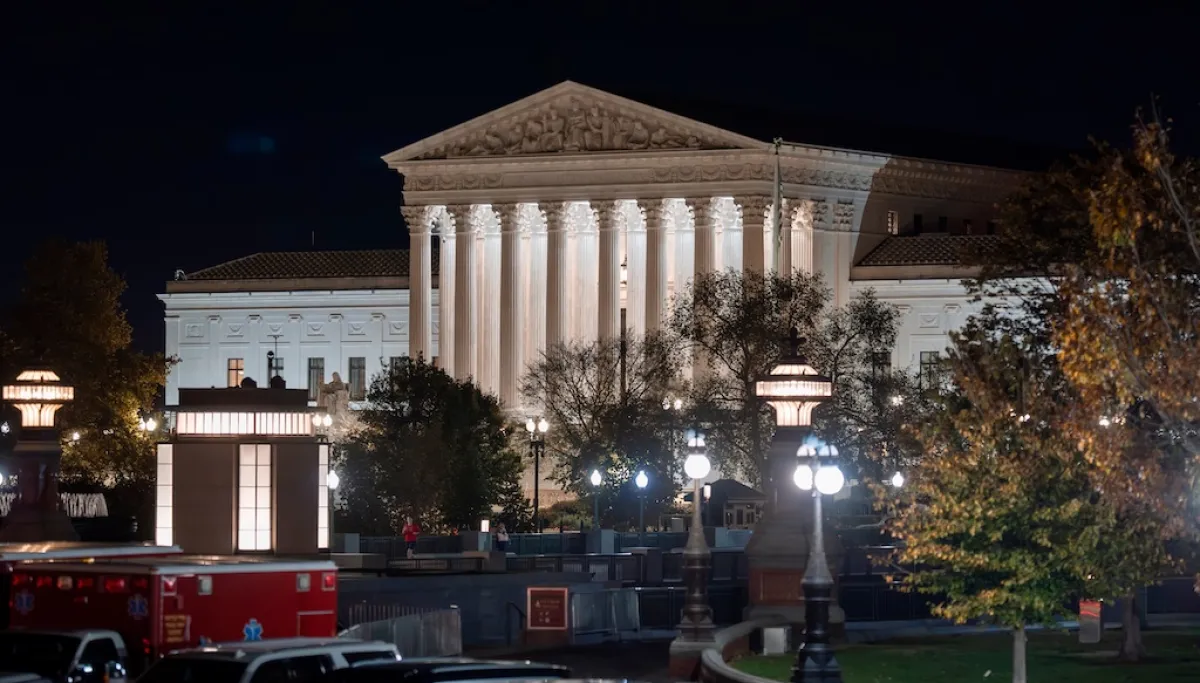
Supreme Court returns from Thanksgiving with busy December oral argument schedule
Full Article
Original Source
Read the full article at Washingtonexaminer →KhanList aggregates and links to publicly available news content. We do not host full articles from third-party sources. Always verify important information with original sources.