
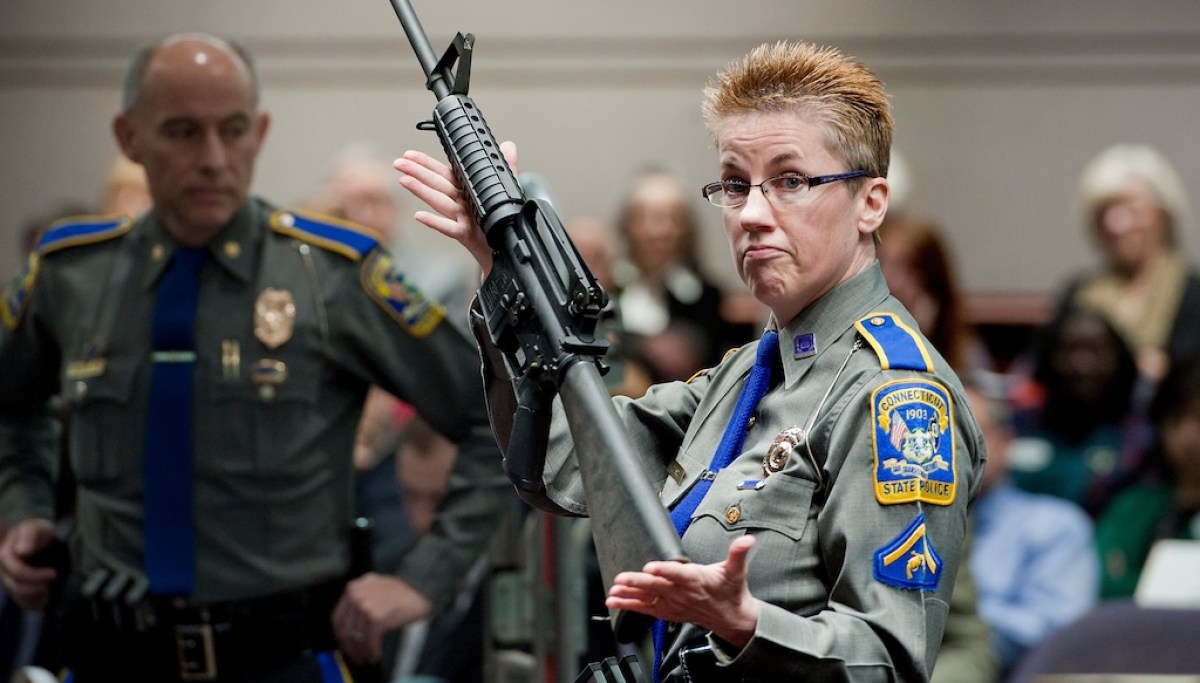
The Supreme Court will go forward with oral arguments in a pair of cases challenging the legality of “assault weapons” bans next month, after punting on a request to dismiss one of the two cases as moot on Tuesday.The effort to dismiss the case challenging Cook County, Illinois’s “assault weapons” ban began when the lead plaintiff, Cutberto Viramontes, asked to be dismissed from the case while all other plaintiffs said they wanted to remain on it. Cook County officials filed a motion arguing that because Viramontes was seeking to be dismissed, the rest of the case should also be dismissed. The coalition of remaining plaintiffs told the Supreme Court that “Viramontes’s involvement is unnecessary” for the case to continue and that it does not affect the underlying question of whether sweeping bans on semiautomatic firearms, such as the AR-15, are constitutional. Recommended Stories The Supreme Court granted Viramontes’s request to be dismissed from the case on Monday, changing the name of the case from Viramontes v. Cook County to Khaya v. Cook County, and said it would defer the request to declare the case moot pending oral arguments. The high court will hear oral arguments in the pair of “assault weapons” cases on Dec. 2, with the consolidated cases Grant v. Higgins, dealing with Connecticut’s “assault weapons” ban, and Khaya v. Cook County. The question the justices will grapple with will be whether the Second and 14th Amendments “guarantee the right to possess AR-15 platform and similar semiautomatic rifles.” A ruling in the case is expected by the end of June 2027 and is expected to have significant ramifications for gun rights broadly.Even if the Supreme Court were to dismiss the Khaya case, it would still have another regarding Connecticut’s similar “assault weapons” ban, meaning the general issue of whether bans are lawful will likely be decided by the justices.‘ASSAULT WEAPONS’ BANS ARE ON THEIR WAY TO THE SUPREME COURTThe Supreme Court faced a last-minute effort to dismiss another high-profile case last term, when in Little v. Hecox, the biological male athlete challenging Idaho’s ban on biological men in women’s sports tried to voluntarily dismiss the case ahead of oral arguments. Similar to the current gun cases, the Supreme Court had also taken up a case regarding a West Virginia law, in conjunction with the Idaho case, and deferred deciding whether to dismiss the case until after oral arguments.The Supreme Court ultimately rejected the effort to dismiss the case and upheld the Idaho and West Virginia laws banning biological men from women’s sports as constitutional.
Supreme Court punts on Hail Mary effort to dismiss ‘assault weapons’ case
Full Article
Original Source
Read the full article at Washingtonexaminer →KhanList aggregates and links to publicly available news content. We do not host full articles from third-party sources. Always verify important information with original sources.