
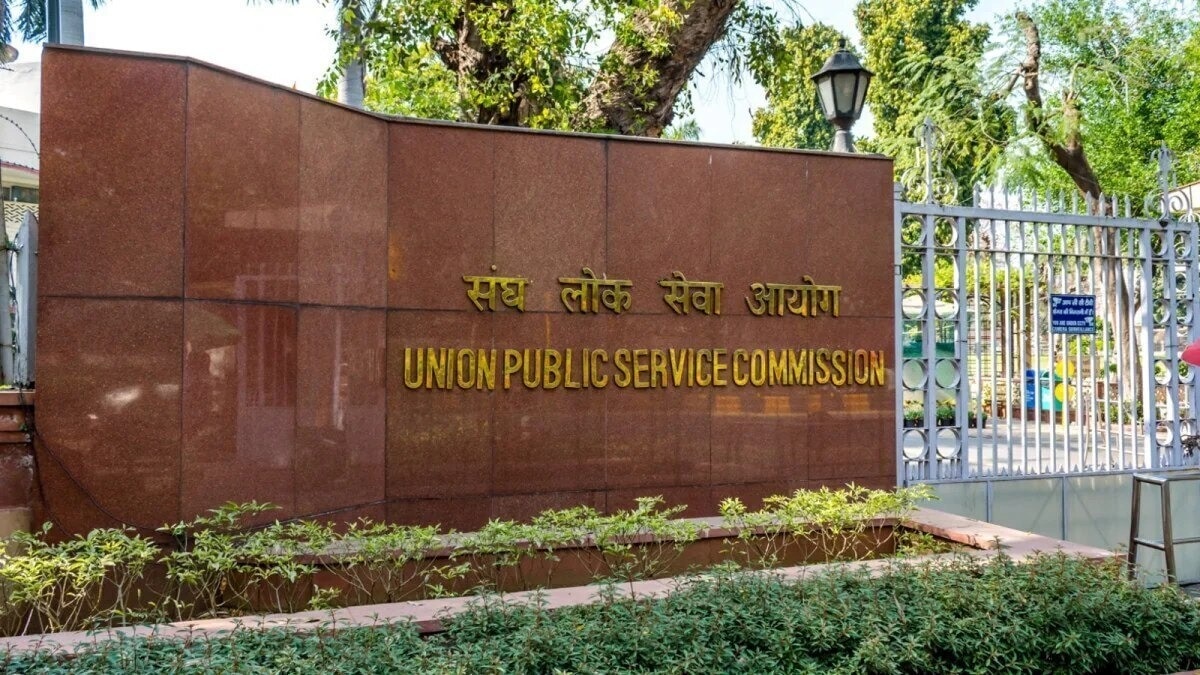
The Supreme Court on Tuesday agreed to consider setting up a special bench to examine whether its March 11 judgment on OBC creamy-layer criteria should apply to candidates selected through the Civil Services Examination 2025.The Department of Personnel and Training has sought permission to allocate services to 958 candidates recommended by the Union Public Service Commission under the creamy-layer rules followed before the judgment.The Centre argued that applying the ruling to the completed 2025 selection process could result in unequal treatment of similarly placed candidates and delay their training and cadre allocation.At the start of the day’s proceedings, Solicitor General Tushar Mehta mentioned the matter before a bench headed by Chief Justice Surya Kant and comprising Justices Joymalya Bagchi and V Mohana. Mehta said the government had filed an application in a disposed case and sought an urgent hearing by a bench headed by Justice PS Narasimha.Senior advocate Sanjay Hegde, appearing for a litigant, pointed out that the March 11 judgment was delivered by Justices Narasimha and R Mahadevan, who now sit on separate benches. “We will have to set up a special bench,” the Chief Justice said, adding that he would consult the judges.WHAT THE MARCH 11 JUDGMENT SAIDThe government’s application arises from the Supreme Court’s judgment in Union of India versus Rohith Nathan.The court held that a clarificatory letter issued on October 14, 2004, could not override the September 8, 1993 office memorandum governing the identification of the OBC creamy layer.It ruled that the salary or income of a parent employed in a public sector undertaking or private company could not by itself determine whether a candidate belonged to the creamy layer.The parent’s post and employment category must also be examined along with the prescribed income and wealth criteria under the 1993 memorandum.WHY THE CENTRE WANTS AN EXEMPTIONThe Civil Services Examination 2025 notification was issued on January 22, 2025. The preliminary examination was held on May 25, while the main examination took place from August 22 to 31.UPSC declared the final results on March 6, 2026, and recommended 958 candidates for appointment to the IAS, IFS, IPS and other central services.The Supreme Court delivered the Rohith Nathan judgment five days later, on March 11.The Centre said candidates had applied and participated under the administrative interpretation prevailing before the judgment.Candidates whose parents worked in PSUs or the private sector and earned above the prescribed ceiling may have assumed that they were not eligible for OBC non-creamy layer benefits. Some may have applied under the general category, while others may not have applied at all.Such candidates may also have forgone the three-year upper-age relaxation and additional examination attempts available to OBC non-creamy layer applicants.CONCERN OVER UNEQUAL TREATMENTThe government said candidates who applied under the OBC category but were later found ineligible could benefit if their status was reassessed under the March 11 judgment.Candidates who did not apply under the OBC category would have no similar opportunity to change their category retrospectively or claim age and attempt relaxations.The Centre argued that this could create two groups of candidates who had acted under the same administrative rules but would now be treated differently.A fresh creamy-layer assessment would also require officials to verify the employment status and posts held by the parents of candidates whose eligibility is disputed.Extending the exercise to those who never applied as OBC candidates could require reopening the entire examination process, the government said.TRAINING, CADRE ALLOCATION MAY BE DELAYEDThe Centre also cited the Foundation Course for the CSE-2025 batch at the Lal Bahadur Shastri National Academy of Administration in Mussoorie, tentatively scheduled for the last week of August.It said a delay in service allocation could affect training schedules, IAS and IPS cadre allocation, seniority, pay fixation and the training calendars of other central services.Invoking the doctrine of prospective overruling, the government argued that the selection process had concluded before the March 11 judgment and that candidates had acted on the legal position then in force.The Centre said it was not seeking to dilute or bypass the judgment. It wanted clarity on its application to CSE-2025 and permission to complete service allocation under the creamy-layer determination followed before March 11, 2026.- EndsPublished By: India Today Web Desk Published On: Aug 25, 2026 16:00 IST
Supreme Court may form special bench on OBC quota rules for civil services exam
Full Article
Original Source
Read the full article at Indiatoday →KhanList aggregates and links to publicly available news content. We do not host full articles from third-party sources. Always verify important information with original sources.