
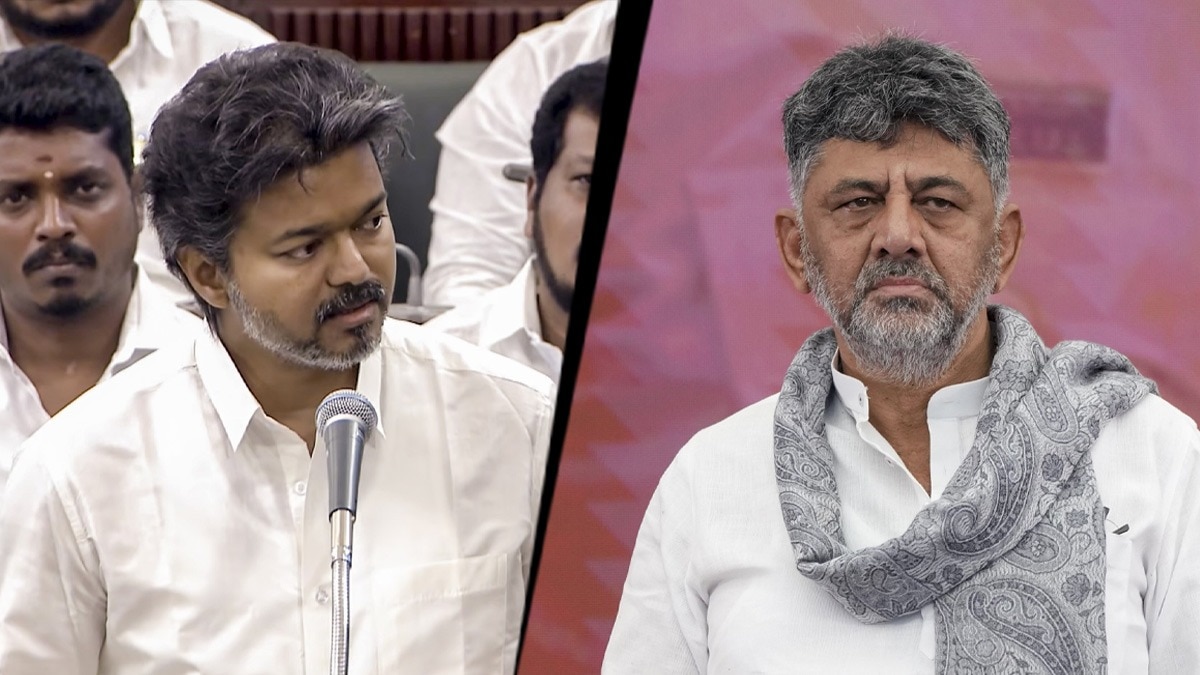
The Supreme Court has agreed to hear a petition by the Joseph Vijay-led Tamil Nadu government seeking directions to Karnataka to comply with the Cauvery Water Management Authority’s (CWMA) decision to release 3,500 cusecs of water per day for 15 days from the Kabini and Krishna Raja Sagara reservoirs. The move comes as the water-sharing dispute has emerged as a major point of political confrontation in both states.Tamil Nadu argued that Karnataka failed to release the required amount of Cauvery water despite repeated directions from the river authorities. Senior Advocate CS Vaidyanathan, appearing for Tamil Nadu, urgently mentioned the matter before Chief Justice of India Surya Kant, who agreed to list it on Thursday.At the heart of the dispute is the conflict between upstream Karnataka, which seeks to retain more water to meet its growing agricultural and urban needs, and downstream Tamil Nadu, which argues that any reduction in historical flows would severely affect millions of farmers who depend on the river for irrigation. Kerala is also a riparian state, as a portion of the Cauvery basin extends into the state, entitling it to a share of the river water.Tamil Nadu told the Supreme Court that it was short of more than 22 million litres per day (MLD) even when calculated against its drought-year water allocation. The state also clarified that its petition was against Karnataka after the Chief Justice of India sought to know whether the plea was against Kerala. Tamil Nadu approached the top court on August 3, seeking implementation of the CWMA’s July 30 decision directing Karnataka to release 3,500 cusecs of water daily for 15 days. It has sought the release of 4.536 TMC of water, calculated at the rate of 3,500 cusecs per day for 15 days, on or before August 12.The DMK, the Opposition party in Tamil Nadu, has also filed a similar application. The CWMA decision requires Karnataka to release the water from the Kabini and Krishna Raja Sagara reservoirs to meet Tamil Nadu’s requirements.The Cauvery water dispute has turned into a major political flashpoint in both Karnataka and Tamil Nadu, with the states facing a weak monsoon this year. While Karnataka insists on retaining more water for its own requirements, particularly those of Bengaluru, Tamil Nadu has been seeking increased releases.The issue escalated further after Vijay planned to meet Karnataka Deputy Chief Minister DK Shivakumar in Bengaluru, a move that faced strong opposition from various groups in Karnataka.As the row intensified, the Tamil Nadu government reiterated that it would continue to pursue the Cauvery issue through legal means.Chief Minister Vijay recently told the Assembly that his government would not compromise on Tamil Nadu’s interests and would stand firm on the state’s water rights. Vijay said he had considered visiting Bengaluru for talks with the Karnataka government, hoping that dialogue could help resolve the decades-old dispute."I thought, what if talks are held with a neighbouring state, as even hostile nations hold dialogue to resolve issues?" he said, adding that he was prepared to face insults for the sake of the people of Tamil Nadu.The Chief Minister described the Cauvery as the state's "lifeline" and an emotional issue, and asserted that his government had no intention of playing politics over it.Vijay also reiterated Tamil Nadu's opposition to Karnataka's proposed Mekedatu dam project.Karnataka has proposed building a balancing reservoir on the Cauvery River at Mekedatu, a project that Tamil Nadu strongly opposes over concerns that it could affect the state's downstream water share.Vijay said the Tamil Nadu government had written to the Prime Minister opposing any legal or administrative sanction for the Mekedatu project, citing relevant provisions of the Cauvery Tribunal's final verdict and the Supreme Court's judgment.- EndsPublished On: Aug 10, 2026 11:34 IST
Supreme Court agrees to hear Vijay govt's plea to direct release of Cauvery water
Full Article
Original Source
Read the full article at Indiatoday →KhanList aggregates and links to publicly available news content. We do not host full articles from third-party sources. Always verify important information with original sources.