
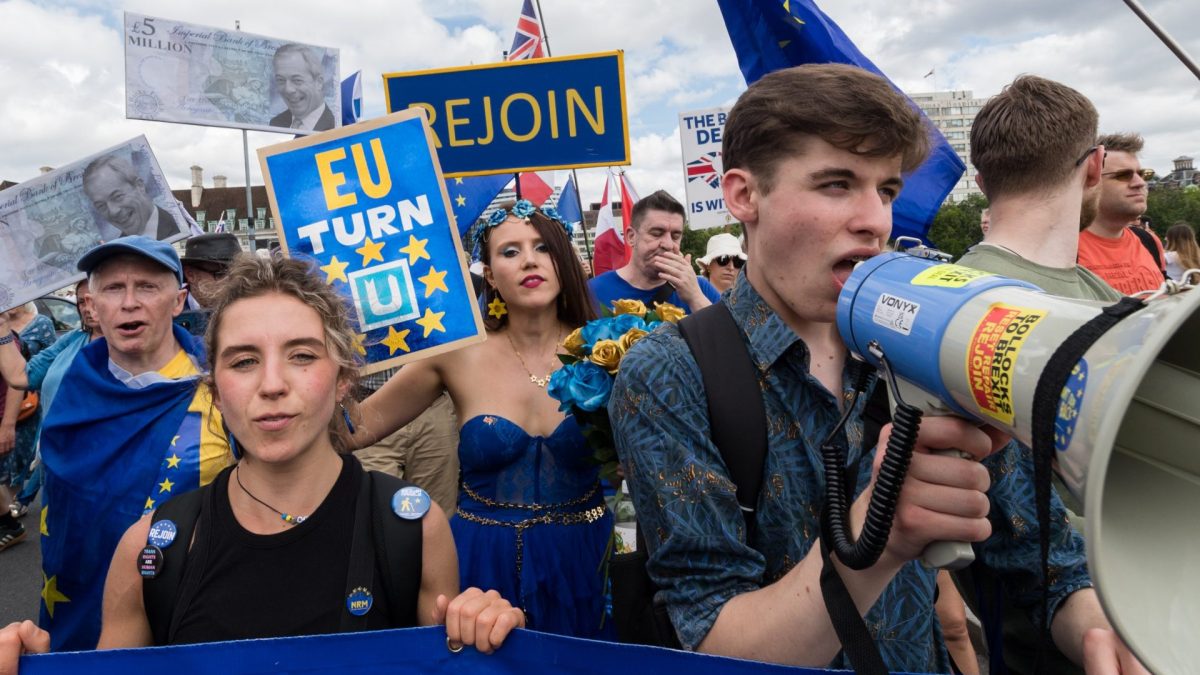
Support for Britain rejoining the European Union has slipped since Andy Burnham began ramping up the prospect of reversing Brexit, a new poll for The i Paper has found. While the UK becoming an EU member again is still backed by most voters who expressed an opinion, the gap between supporters of rejoining and those who want to stay out has narrowed to six percentage points, compared to 13 points last month, the survey by BMG Research revealed. Burnham has thrown a spotlight on Britain potentially rejoining the EU in recent weeks, arguing that there should be a national conversation about options for closer ties with Europe in the wake of signing the Brexit reset deal with Brussels. And in a speech at the Lord Mayor’s banquet earlier this month, the Prime Minister said Brexit “has not worked”. Yet the poll for The i Paper shows his rhetoric could be backfiring among voters. It has additionally sparked a Stay Out campaign, launched by the architect of Brexit, Nigel Farage, earlier this week meaning the arguments against rejoining are being widely aired. The survey shows 43 per cent of Britons want to rejoin the EU, a fall of five percentage points on a month ago, while 37 per cent want to stay out, an increase of two points. “Don’t knows” have risen by three percentage points to 20 per cent. The findings suggest that the increasing prospect of undoing Brexit has focused people’s minds on the issue. ‘Unthinkable’ to rejoin without a referendumLast year, months before he entered No 10, Burnham said he would like to see the UK rejoin the EU in his lifetime, but when he was campaigning to be an MP in the Makerfield by-election in June he played down the prospect. However, over the past few weeks, the Prime Minister has said the Brexit reset deal agreed last Friday, which eased trade barriers between the UK and the EU, should lead to a broader conversation in which options on the table include Britain fully rejoining the bloc. On Monday, he said it would be “unthinkable” to rejoin without a referendum. Robert Struthers, head of public perceptions at BMG, said: “Double-digit leads for rejoining the EU have become common this year. We’ve recorded six in the last nine months. In the almost three years before that, it happened only once. “This month’s lead has dropped back to six points after Burnham pushed the issue, struck new deals with the EU and started a broader conversation about our future. “But it’s fair to say the overall trend has moved slowly towards rejoining, and the numbers were volatile before in periods where the UK-EU relationship was less newsworthy. So, we’d need to see this decline sustained for a few months before being confident it has anything to do with what the government is doing.” Strong backing for youth experience shceme Struthers said a lot of the support for rejoining was the result of younger people who did not vote in the 2016 referendum but are now eligible, rather than older voters who had changed their minds on the issue, while deaths among older people who backed Brexit have disproportionately impacted the stay out vote. The poll also reveals that 47 per cent of people support the UK-EU youth experience scheme, under which 100,000 Britons a year aged 18 to 31 will be able to work, study or travel in the European Union for up to three years, with a further 100,000 EU citizens entitled to do the same in the UK. Just 23 per cent of voters are against the scheme. The public is split on the university fees EU students should pay in this country – one of the issues still contested between the British government and Brussels – with a third saying they should keep paying international fees. In a boost for Burnham, the survey also suggests that Labour is regaining support on the hotly contested issue of immigration from Farage’s Reform party. For the first time in two years, Labour leads Reform as best trusted by the electorate on immigration, at 22 per cent versus 20 per cent. This lead could increase further as much of the fieldwork for the poll was carried out before figures released on Thursday showed that net migration had fallen to 77,000 – the lowest number since 1997 – which is likely to benefit Labour. Majority support deportation scheme to Rwanda An outright majority of 53 per cent say they would support a plan to deport failed asylum seekers to Rwanda, in line with five EU countries and the last Conservative government, with just 18 per cent against. Rejoining the EU is seen as better for the economy (net +12 per cent), but worse for legal immigration (net -10 per cent) and small boat crossings (net -5 per cent). Struthers added: “On the issues, the public is split in much the same way as in 2016. People see the economic case as favouring Europe and the immigration case as going the other way. “Once the terms of joining are debated and scrutinised, people will have to think harder about the decision and what it means. The volatility in our tracker, with numbers moving up and down, adds to the sense that there is plenty of room for views to shift.” BMG polled 1,504 adults in Great Britain between 24 and 26 November.
Support for rejoining EU falls after Burnham restarts Brexit debate
Full Article
Original Source
Read the full article at Inews →KhanList aggregates and links to publicly available news content. We do not host full articles from third-party sources. Always verify important information with original sources.