
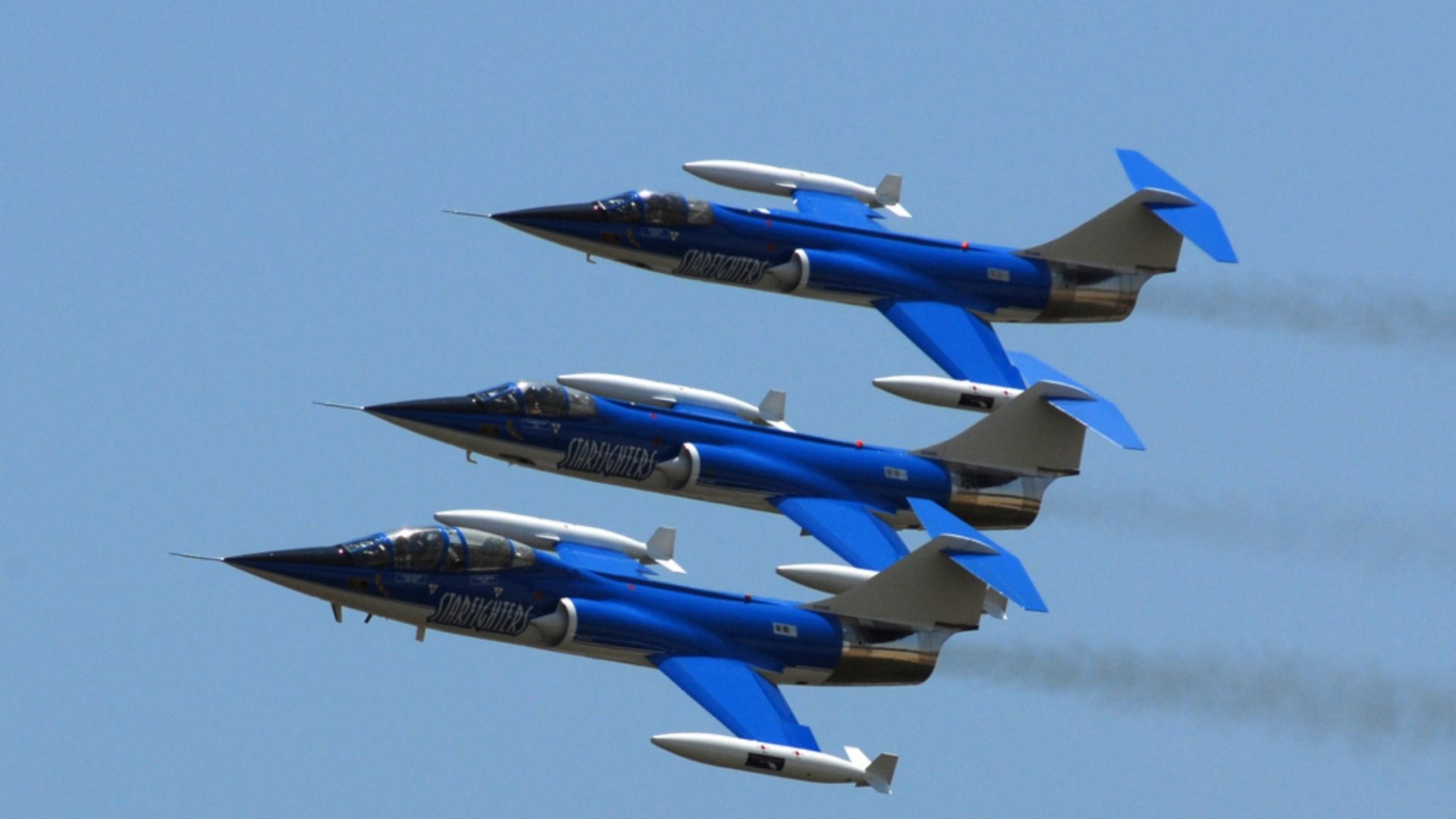
Starfighters Space, a space company operating the world’s only commercial fleet of flight-ready Mach 2+ supersonic aircraft, and Vaya Defense and Space, the privately held developer of the patented Vortex-Hybrid rocket engine, have agreed to explore supersonic flight testing and future air-launched suborbital missions. The Florida-based companies announced a memorandum of understanding covering two potential areas of collaboration. The work would combine Starfighters’ commercial fleet of flight-ready F-104 aircraft with Vaya’s patented Vortex-Hybrid rocket engine. Both firms operate on Florida’s Space Coast, only miles apart. Their proximity is expected to support faster engineering, prototyping, engine testing, and development of hardware intended for flight. Testing hardware in sustained supersonic flight The first collaboration track centers on Starfighters’ Wind Tunnel in the Sky service. It uses F-104 aircraft to carry hardware through sustained flight at speeds above Mach 2, allowing technologies to be evaluated in an airborne environment. Under the plan, the companies will assess flights involving Vaya hypersonic test articles and other payloads. The aim is to validate and mature hardware under conditions that can be difficult to reproduce during ground testing. The service gives developers an opportunity to expose equipment to actual supersonic flight before moving further into development. Starfighters operates its F-104 fleet from NASA’s Kennedy Space Center in Florida and Midland International Air and Space Port in Texas. Hybrid engine assessed for air launch The second track will examine whether Vaya’s hybrid propulsion technology is suitable for STARLAUNCH, Starfighters’ air-launch system. The assessment will initially focus on suborbital missions. Engineers will study propulsion performance, packaging, and the integration of the vehicle and its payload. They will also evaluate methods for carrying and operating the hardware from the F-104’s underwing stations. “Vaya has spent years maturing a propulsion technology that is throttleable, restartable, and non-explosive — which is close to an ideal profile for a vehicle carried under the wing of an aircraft,” said Tim Franta, CEO of Starfighters Space. “Their shop is also a short drive from our hangar at Kennedy Space Center. That combination of technical fit and proximity allows us to develop and test hardware faster than either of us could alone,” he added. Nearby facilities support development Starfighters will gain access to Vaya’s propulsion laboratory and precision machining facility under the memorandum. The facilities could support collaborative engineering, prototype production, engine tests, and the development of flight-ready components. Vaya said its engine was designed around qualities demanded by air-launched systems, including compact packaging, controlled operation, and safe handling. “Air launch puts a premium on propulsion that is compact, safe to handle, and controllable in flight — all reasons we designed our technology the way we did,” said Dr. Wes Naylor, President and CEO of Vaya. “Starfighters offers a flight environment that is difficult to replicate on the ground and a near-term path to demonstrating our technology in the air,” he added. The memorandum begins a technical evaluation rather than confirming flight tests or launches. Its two tracks will determine how the companies’ aircraft, propulsion system, facilities, and engineering capabilities could work together. Any resulting missions would ultimately depend on the findings of those joint technical studies and assessments.Get the latest in engineering, tech, space & science - delivered daily to your inbox.Atharva is a full-time content writer with a post-graduate degree in media & amp; entertainment and a graduate degree in electronics & telecommunications. He has written in the sports and technology domains respectively. In his leisure time, Atharva loves learning about digital marketing and watching soccer matches. His main goal behind joining Interesting Engineering is to learn more about how the recent technological advancements are helping human beings on both societal and individual levels in their daily lives.
Supersonic US aircraft could validate hypersonic hardware for future air launches
Full Article
Original Source
Read the full article at Interestingengineering →KhanList aggregates and links to publicly available news content. We do not host full articles from third-party sources. Always verify important information with original sources.