
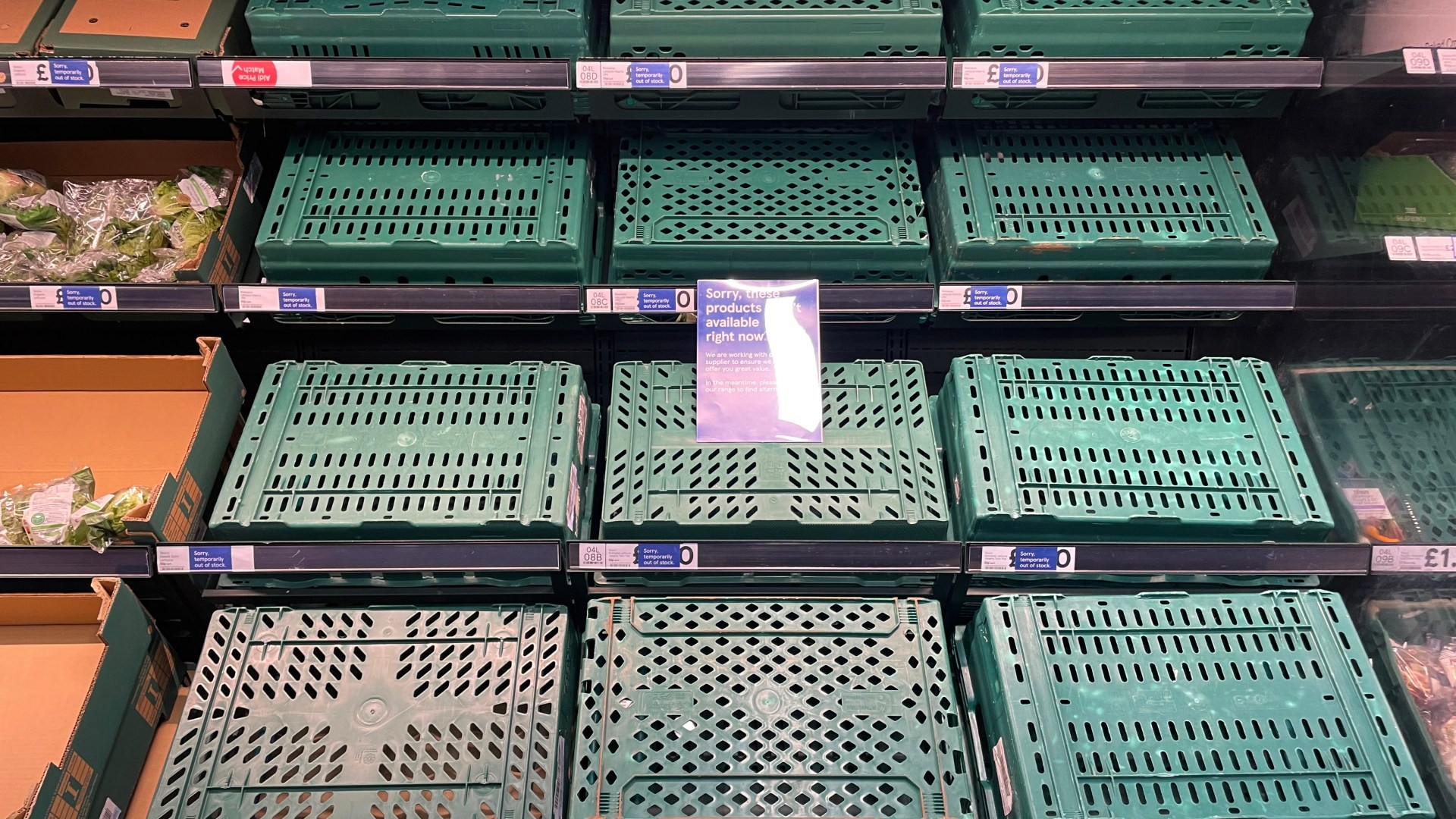
BRITAIN’S food supply chain is at growing risk from cyber attacks, extreme weather and war, a damning watchdog report has warned. The National Audit Office (NAO) warned that the Government “cannot afford to be complacent” and must do more to prepare for “catastrophic events” that could leave supermarket shelves empty. It comes after shoppers faced bare shelves in 2022 when Russia‘s invasion of Ukraine sparked shortages of olive oil, lettuce, broccoli and tomatoes. Egg buying was also rationed by supermarkets following a devastating bird flu outbreak. Sign up for the Money newsletter Thank you! The NAO warned that risks to Britain’s food supply are “becoming more likely” and could have “more severe impacts” than ever before. It found the Department for Environment, Food & Rural Affairs (Defra) has not been tested by a “catastrophic event” that caused a total failure of food supply – but such an event would need far greater government intervention to keep the nation fed. Crucially, the watchdog found Defra’s emergency plans lack detail, have not been shown to businesses, and have not been independently checked. The last time a severe food supply disruption was tested in a national exercise was back in 2023 – and that same test found worrying gaps in Britain’s preparedness. Tom Bradshaw, president of the National Farmers Union, said Britain had “taken it for granted that food will always be available”. He said: “The UK only has to look back to 2022 to remember the sight of bare supermarket shelves following major disruption to food supply chains. Most read in Money “If food security is national security, as the Prime Minister says, we cannot afford to see that repeated.” James Bielby, chief executive of Food and Drink Wholesale UK, said businesses have always found a way through crises – but warned that cannot continue forever. He said: “Industry has repeatedly stepped up to keep the country fed in times of crisis, but we cannot rely on businesses simply finding a way through every time. “Food is designated as Critical National Infrastructure, but that needs to mean something in practice.” The report also found the UK currently has no legal powers to force businesses to act during a catastrophic food emergency – unlike countries such as Norway. Local councils and emergency planners were also found to be under-resourced and unclear on what would be expected of them if disaster struck. Sir Geoffrey Clifton-Brown, chairman of the Commons public accounts committee, said the findings should serve as a wake-up call for Defra. He said: “As the threat of severe disruption grows, it must strengthen its understanding of supply chain vulnerabilities and take faster action to improve the resilience of government, businesses and communities before these risks become reality.” Despite the stark warnings, officials insisted Britain’s food system has so far proven remarkably resilient, coping with the pandemic, war in Ukraine and cyber attacks on retailers including Marks & Spencer and Co-op without major shortages. Households currently spend £148billion a year on food, with the UK producing around 60% of what it consumes. The NAO has now issued a string of recommendations to Defra, including drawing up a clear risk plan, testing emergency responses more often, and reviewing what legal powers it may need in a crisis. A Defra spokesman said: “The Prime Minister has made clear that food security is national security. “He’s met with farmers and recognised the role they play and challenges they face with a new package of government support. “The NAO’s report shows risks to food supplies are becoming more complex, which is exactly why we are working with farmers and the food and drink industry to strengthen the UK’s food security and resilience.” Comment now
Supermarkets at risk of EMPTY shelves as ‘catastrophic’ weather events & cyber threats push UK food supply to the brink
Full Article
Original Source
Read the full article at Thesun →KhanList aggregates and links to publicly available news content. We do not host full articles from third-party sources. Always verify important information with original sources.