
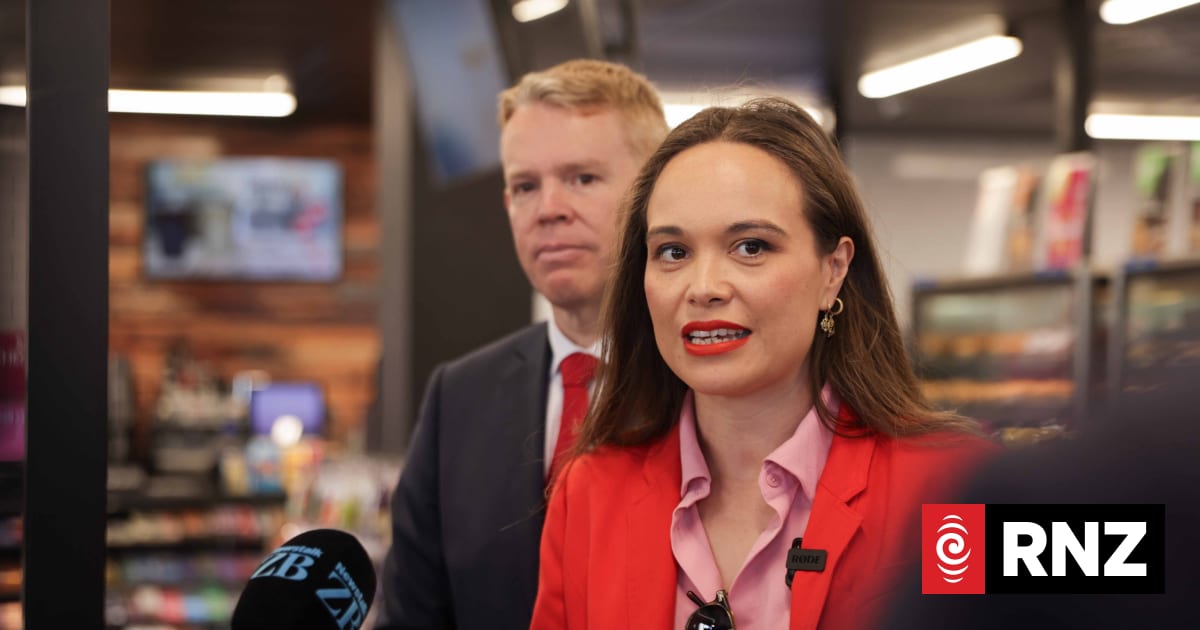
Prime Minister Christopher Luxon is speaking to Morning Report shortly. Listen live on the player above, the RNZ app or your local RNZ frequency.Consumer NZ is pleased the political debate on the grocery sector has shifted towards finding solutions and away from debating whether or not there is a problem.On Sunday, Labour revealed its plans to increase competition in the grocery sector by focusing on the wholesale side.It follows National and New Zealand First's plans to split up Foodstuffs, and the Greens' policy to create a state-owned KiwiMart.If elected, Labour would force Foodstuffs and Woolworths to run their wholesale arms independently from their retail arms.The party would give smaller stores guaranteed access to wholesale products, preventing wholesalers cutting off supply.It would also remove restraint of trade laws that prevent smaller retailers such as Four Square from lowering prices if they want, or from choosing to go independent.Labour leader Chris Hipkins said when even The Warehouse was struggling to access wholesale, it showed something needed to change."There are small businesses up and down the country that want to really compete, that want to give a better deal to their consumers, who can't at the moment because they can't access the wholesale that allows them to do that."Labour's commerce and consumer affairs spokesperson Arena Williams.Sam RillstoneAnnouncing the policy at Plenty Foods grocer in Upper Hutt, Labour's commerce and consumer affairs spokesperson Arena Williams said Labour would essentially create a "different team, under a different model" to incentivise wholesalers to "go out and win" customers."We want the wholesalers to behave like any other business. To win retail customers like this grocer, to make sure their deals work for a grocer like this."The policy, Williams said, would see more "small, hard-nosed, tough" businesspeople getting into the grocery business, offering more products and competition.The policy has found tentative support from the Greens, and vehement criticism from ACT.National is pointing to advice commissioned by the previous Labour government as to why the policy would not work.Foodstuffs and Woolworths, meanwhile, are watching closely, while insisting they are already doing what they can to support competition.Consumer NZ chief executive Jon Duffy presents Finance Minister Nicola Willis with a petition on accurate supermarket pricing (file photo).Anneke SmithConsumer NZ encouraged by debate shiftWhile Hipkins and Williams were confident Labour could achieve its reforms in its first 100 days in government, advocacy group Consumer NZ did not think any of the proposals political parties had put forward could be done quickly.But its chief executive Jon Duffy said it was clear there needed to be structural intervention."What is really encouraging is that we seem to be now not having a debate around whether the government needs to step in and do something about this sector, it's how they should do that. So that means the debate has really moved forward to implementing solutions rather than still debating whether there's a problem. So that's a good thing."Duffy said creating two independent wholesalers looked like a good idea, but he wanted to see more detail on its structure."In order for those entities to be genuinely independent of the retail arms, there's going to have to be pretty firm structures in place separating them out. So I'm interested to see the detail on how that would work."Greens co-leaders Marama Davidson and Chlöe Swarbrick announcing the party's KiwiMart policy.RNZGreens 'stoked' at more supermarket policiesGreen Party co-leader Chlöe Swarbrick said she was "stoked" to see both Labour and National wanted to force structural change to increase competition.Swarbrick said the Greens, which earlier this month announced they would create a state-owned KiwiMart to force a third player, had "put on the agenda" the need for more affordable groceries."A lot of it does feel, albeit like clearly a step in the right direction, none go as far as securing the future of affordable groceries as introducing that third player owned in the public interest for and by New Zealanders in the form of KiwiMart."In April, New Zealand First proposed splitting Foodstuffs in the same way as National would pursue, but without a Commerce Commission review first.National's deputy leader Nicola Willis.RNZ/Nick MonroNational warns of consequencesNational is campaigning on pursuing splitting up Foodstuffs, subject to a Commerce Commission review.If re-elected, National would legislate to break up Foodstuffs so Pak'nSave became one chain and Four Square and New World another.National's deputy leader Nicola Willis said Labour's policy was light on detail, with the idea already having been examined and rejected as complex, costly and high-risk.Willis pointed to a 2022 market study by the Commerce Commission warning that separating wholesale and retail operations was not "necessary or desirable" and would create "practical challenges and transaction costs"."The commission warned that government facilitation of a new independent wholesaler would be 'complex, potentially expensive' and carry a 'high risk of failure'," she said."The subsequent independent assessment commissioned under the previous Labour government went further, finding wholesale ownership separation was 'fundamentally flawed' and warning that forced divestment could cause significant disruption and impose costs that could ultimately be borne by consumers."Willis said Labour was announcing an intervention first "and the consequences are worked out later".Labour's Williams acknowledged that the Commerce Commission had identified "potential problems" with the separation, but said Labour's policy would fix them by ensuring small grocers had a guaranteed route of access to a range of essential goods "on fair terms"."Prices don't rise in the short term under this model," she said.ACT Party leader David Seymour.Zachary CornelisenACT takes aim at bureaucracyThe ACT Party, which earlier came out swinging against National's plan to pursue a Foodstuffs split, was similarly critical of Labour's proposal.Leader David Seymour said he felt a sense of déjà vu, and that the policy was unworkable."It would take an army of bureaucrats to decide what a fair price is, larger than the army that we currently have."With four parties now campaigning on major structural change, Seymour said the campaign was descending into hysteria."As soon as it becomes acceptable to attack a legitimate business for short-term political gain, the only question left is, who's next?"Seymour said ACT's plan was to make it easier to get a consent for a new supermarket, which he admitted was "more subtle" than what others were proposing but "more honest".Foodstuffs and Woolworths respondA Foodstuffs spokesperson said Foodstuffs would take time to consider the detail of Labour's announcement."As we've said previously, we support any discussion focused on improving outcomes for grocery customers at the checkout. The key questions for any proposal are whether it will deliver lower prices, better choice and better service for New Zealanders, how long any benefits would take to flow through, and how those benefits would be achieved in practice," the spokesperson said."Both Foodstuffs cooperatives are already committed to expanding and strengthening their wholesale offers, and we continue to look for ways to improve choice and access across the grocery sector."Woolworths said it remained committed to a competitive and sustainable grocery sector, and it understood the cost-of-living pressure Kiwi families were under."We have worked constructively with the government and the Commerce Commission for a number of years to implement significant, structural changes across our business to support greater competition. This includes working with the Grocery Supply Code and establishing a dedicated wholesale business, New Zealand Grocery Wholesalers, to provide wholesale grocery items to a growing number of independent retailers," a spokesperson said."We will work through these policies carefully and continue to engage constructively and transparently with the Commerce Commission and the government to ensure that they have all of the information they need as they consider these issues. As shared previously, any proposal aimed at lowering prices for customers needs to consider all of the factors that impact the cost of groceries."Read all the election policies released so far in our full guide
Supermarket debate shift 'encouraging' as Labour, National campaign on reform
Full Article
Original Source
Read the full article at Rnz →KhanList aggregates and links to publicly available news content. We do not host full articles from third-party sources. Always verify important information with original sources.