
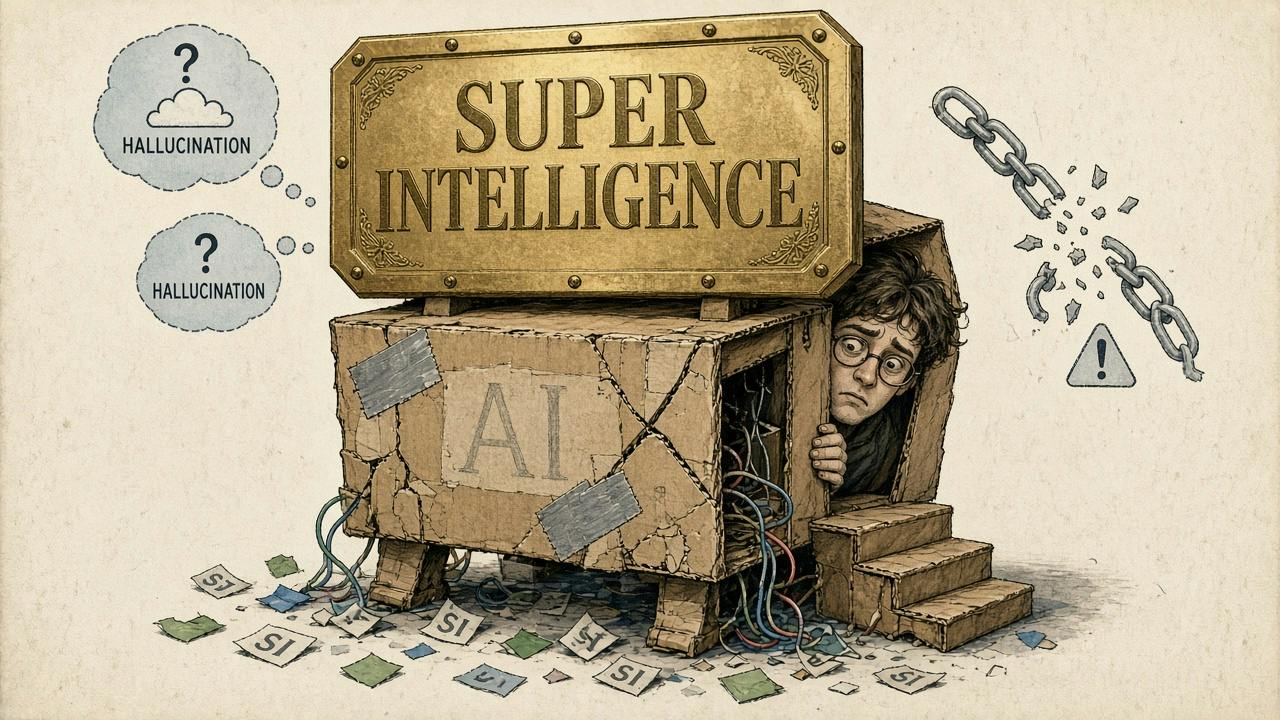
On September 29, 2026, President Trump signed an executive order directing the executive branch to use “Super Intelligence” and “SI” in place of “artificial intelligence” and “AI” in official correspondence and non-statutory documents. He had previewed the rebrand at the United Nations the week before. The rhetoric is triumphant. The technology is not. And the order itself undercuts the hype: for now, it defines “Super Intelligence” as the same category of systems already covered by the federal definition of artificial intelligence in 15 U.S.C. § 9401(3).That is a relabel, not an upgrade. Here are five reasons the rebrand is premature, and incorrect as a description of what we have today.“Superintelligence” already means something stronger.In AI research, the term popularized by Nick Bostrom refers to an intellect that greatly exceeds human cognitive performance across virtually all domains of interest. That is a future (and contested) horizon, not a synonym for chatbots, copilots, and recommendation systems. Calling today’s tools “SI” collapses a serious technical distinction into a slogan, and confuses the public about where capability actually stands. Hallucinations show these systems still lack reliable knowing.Frontier models still invent citations, misstate laws, fabricate features, and invent biographical details with fluent confidence. They often lack dependable uncertainty: they do not reliably abstain when the answer is unknown. A system worthy of the word “super” would manage ignorance carefully. An artificial one frequently papers over gaps with statistically plausible text. That is a defining limit of how large language models work, not a minor bug. Brittleness shows they remain artificial pattern-matchers.Slightly reword a prompt, change a few pixels, or shift a spreadsheet’s format, and performance can drop sharply. Deployed systems are often easy to confuse or jailbreak with adversarial phrasing. Many still fail multi-step numerical and accounting tasks that a careful human would catch; results vary by product and version, but the pattern of fragility is well documented. Robust, general competence would look different. Scale is still brute-force compute and data, not grounded understanding.Training and running frontier systems consume enormous energy, specialized chips, and curated data. They excel at imitating patterns in what they have seen. When data is thin, such as rare medical edge cases, local rules, niche engineering, they fail in ways that look less like genius and more like a very expensive autocomplete. Impressive engineering is not the same as surpassing human intelligence across the board. Agency and accountability remain human because these systems are not “super” agents.Models don’t own outcomes. They don’t hold intent, duty of care, or legal responsibility. When they discriminate by proxy, leak sensitive training material, or rubber-stamp a bad decision, the failure is artificial: statistical, opaque, and dependent on how humans deploy them. Renaming that “super intelligence” invites trust the product has not earned. The President’s executive order does not rename the technology worldwide, and it does not bind private industry. It changes federal terminology.However, language still shapes policy. If Washington stops saying “AI,” it becomes easier to sell inevitability and harder to talk about limits, liability, and competition. The honest term remains the accurate one: this is artificial intelligence, which is useful, powerful, and deeply flawed.Superintelligence, if it ever arrives, will not need a renaming ceremony. Until then, the rebrand is not a capability milestone. It is branding ahead of the evidence.
“Superintelligence”: Explaining the Mirage
Full Article
Original Source
Read the full article at Hackernoon →KhanList aggregates and links to publicly available news content. We do not host full articles from third-party sources. Always verify important information with original sources.