
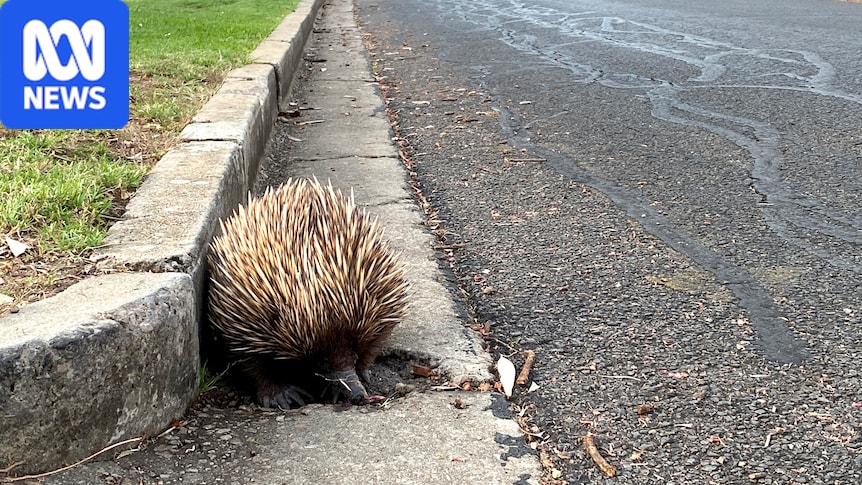
People coming across echidnas in suburban Adelaide should not move them in the belief they are helping, a rescue worker says, amid an increase in activity.Adelaide's echidna population is considered very stable and locally abundant where habitat exists.But they also roam and use the city's stormwater network to make their way to water and food sources, and while well-meaning people may see them in suburbia and want to move them on, the animals are generally "on a mission" and know where they're going."I hate to think how many get moved on because they are species that some people are really scared of," Southern Koala and Echidna Rescue co-founder Mish Simpson said."I see online that people have moved one because it was walking down the street, and then you read the comments and someone else moved it, and someone else moved it, and then someone else moved it."I'm like, 'This poor thing doesn't want to be in the scrub. Stop taking it to the scrub. It's trying to get somewhere.'"Ms Simpson said they got a lot of reports of echidnas in people's yards."I just say give them half an hour to an hour and there's a good chance it will disappear and people are getting back to me and saying, 'Yep, it's long gone,'" she said.Mish Simpson is the founder and director of the Southern Koala and Echidna Rescue. (ABC News: Luke Pike)A Department for Environment and Water spokesperson said the species excelled at navigating and could remember safe routes, "therefore avoiding cars and human traffic"."They have a wide temporal range of activity in a day and night cycle, so can avoid many urban threats."She said they were also relatively protected from common urban predators, like cats, dogs and foxes, "by their behavioural and physiological defence adaptations, including curling up and digging in and their sharp spines"."Because of this, echidnas have maintained their distribution across South Australia when compared with other similar-sized mammals," the spokesperson said.An echidna with an injured foot under Mish Simpson's care. (Supplied: Southern Koala and Echidna Rescue)Ms Simpson said in the 10 years she had been rescuing echidnas, she had only seen one case of an injury caused by dogs, in which two had managed to "sadly, bite its beak off"."Most of the time, the dogs are not determined enough. They get pricked in the face a few times and they give up."We used to bring the [attacked echidnas] in because there was blood on the echidna but it always turned out to be the dog's blood."She said domestic cats, too, were not much of problem because they generally did not know what to do, although feral cats had learnt to "get their paws underneath the echidnas and tear their guts".Ms Simpson said the most common injuries and rescues she dealt with were echidnas hit by cars, which typically occurred on dark, unlit and windy country roads outside suburbia, "although we did have one killed in a driveway on the weekend, which was really sad".She said calls from people seeking advice had increased from 76 in 2024, to 212 in 2026, but wondered if it was because people had more awareness of her rescue group.Breeding later in seasonMs Simpson had also noticed an emerging pattern."Their breeding season used to be in winter, but it's September and October that's becoming our busiest time," she said.In 2025 they cared for 15 echidnas, but last year they had about 40, and only four so far this year."Last year it didn't get busy until the springtime so it's definitely interesting," Ms Simpson said."We're getting lactating echidnas coming through at the end of the summer and they shouldn't still be having babies at that time, so we're definitely noticing the pattern of how things are changing."She recalled how the echidnas they had in care last winter were very inactive."They didn't want to eat and they kept going into torpor, which is kind of like their hibernation state," Ms Simpson said.Torpor allows echidnas to lower their body temperature, heart rate and metabolism to conserve energy and survive months without food."So we had to try every trick under the sun to make their enclosures warmer so we could get them eating," Ms Simpson said."I wonder if that behaviour is kind of what they're doing in the wild, they're too cold and shutting down and then as it starts to warm up a little bit, that's when they seem to be moving around."Ms Simpson said echidnas at the moment were "on a mission" and should be left alone — although if one was seen trying to navigate a major arterial route or freeway that might be an exception."They're all looking for their mates right now, which again, is really bizarre for it to be happening this late in the season," she said.The DEW spokesperson said the greatest threats to local echidna populations were vehicle strikes, and habitat loss resulting from "the clearance and degradation of native vegetation associated with development"."Fallen logs, tree stumps, understorey vegetation and rocky, rubble areas are important habitat features that provide shelter and support ant colonies, a key food source for echidnas," she said."Disturbance or landscaping of these areas can reduce habitat quality."
Suburban echidnas on the prowl as breeding season stretches late
Full Article
Original Source
Read the full article at Abc →KhanList aggregates and links to publicly available news content. We do not host full articles from third-party sources. Always verify important information with original sources.