
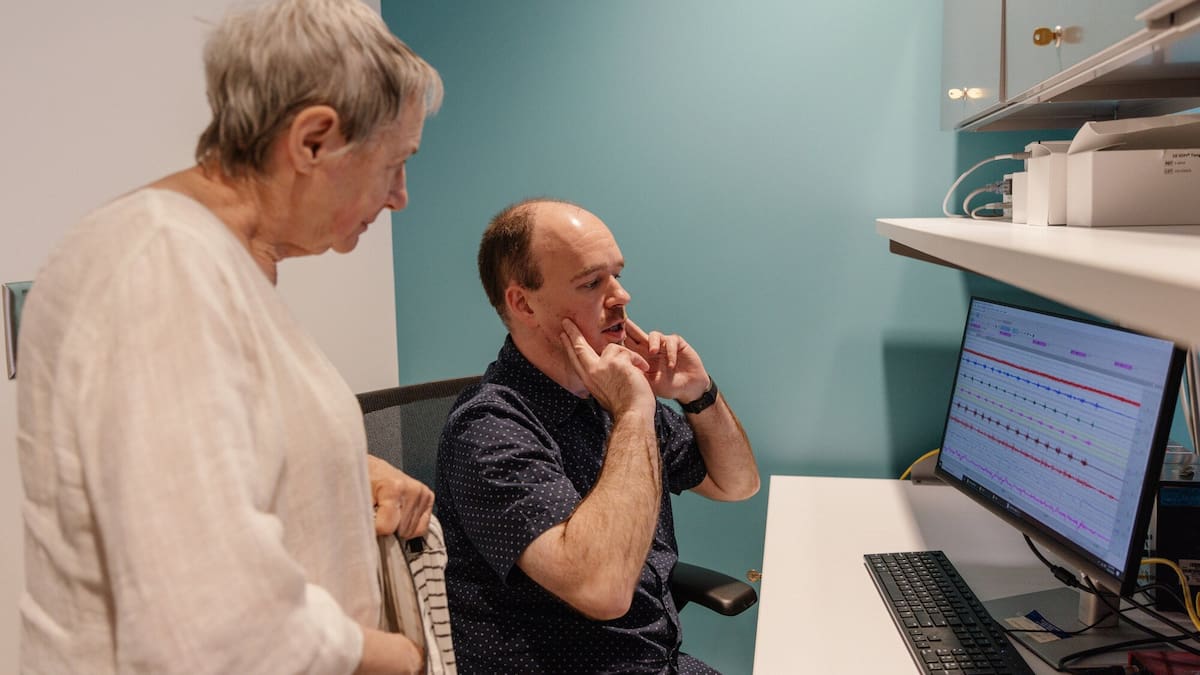
Pam BelluckNew York Times·14 Nov, 2026 03:00 AM9 mins to readBrian Richburg, right, senior research operations manager in Dr Marziye Eshghi's lab, shows Deb a screen that tracked some of her mouth and jaw movements. Research is analysing subtle aspects of how people talk and speech-related movements like chewing and swallowing to try to help predict the risk of developing dementia. Photo / Cassandra Klos, The New York TimesSignals can be detected in the way people talk years before symptoms of cognitive decline emerge, researchers are finding.It’s not every day that a 76-year-old woman is asked to talk nonsense – repeating “ga ba da” and “ka pa ta” as fast as she can. All with sensors affixed
Subtle changes in speech may help predict dementia risk
Full Article
Original Source
Read the full article at Nzherald →KhanList aggregates and links to publicly available news content. We do not host full articles from third-party sources. Always verify important information with original sources.