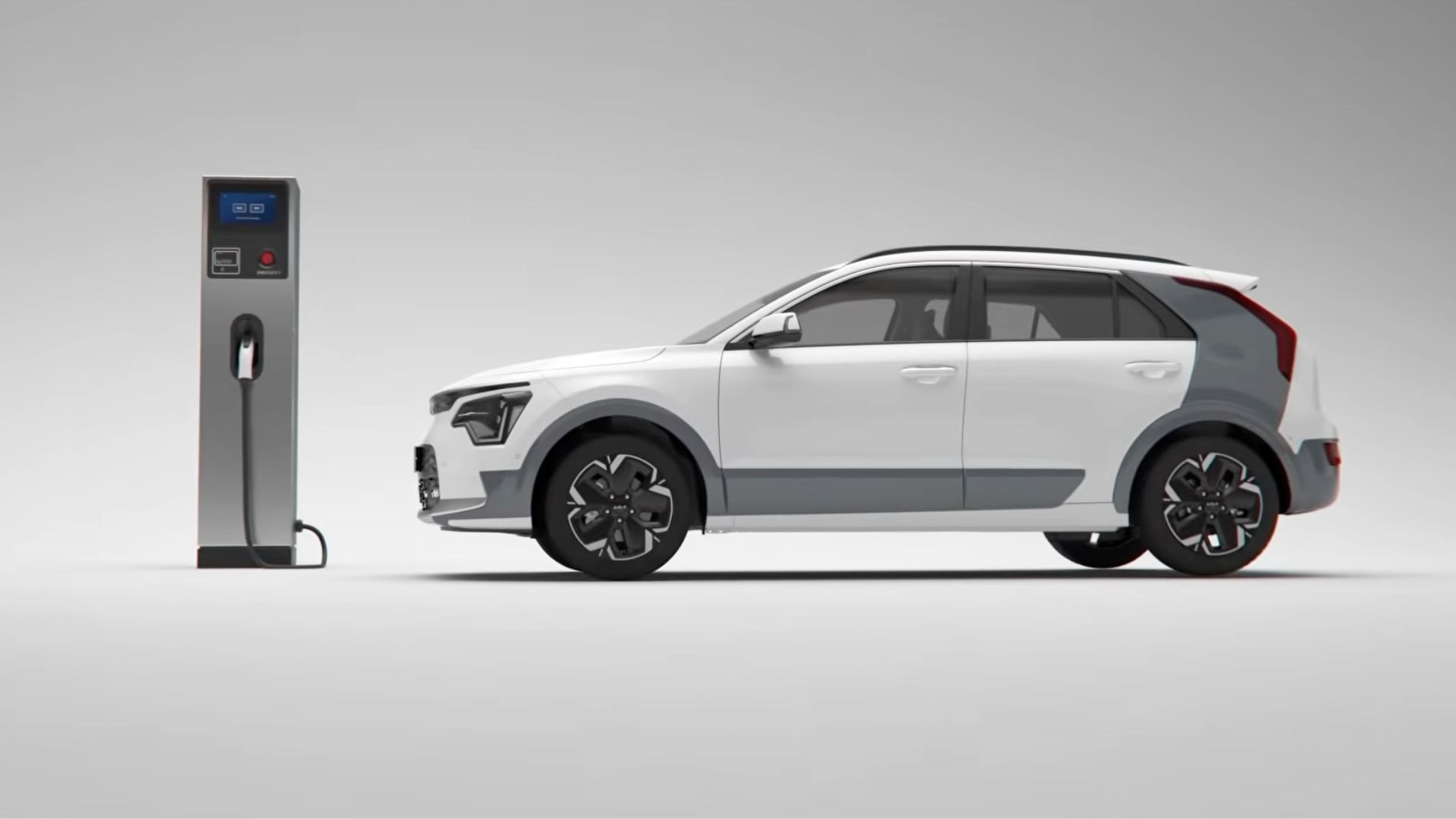
The Kia e-Niro with a 64 kWh battery ranked first with an average battery health score of 97.25% after more than 62,000 miles.Kia Worldwide/YouTube A Swedish analysis of nearly 10,000 electric vehicle (EV) battery health tests has found that several EV models retain the vast majority of their original battery capacity even after years of use. The study, based on data collected between 2022 and 2026, offers new insight into long-term battery durability, a key concern for used EV buyers. Korean automakers emerged as the strongest performers, with two models showing exceptionally low battery degradation after around 100,000 kilometers (62,000 miles) of driving. The findings highlight continued improvements in battery longevity as EV adoption accelerates worldwide Recently, Austrian researchers developed a battery management system that detects hidden cell damage and aging, improving EV battery safety, performance, lifespan, and predictive maintenance. EV Batteries Endure The analysis of nearly 10,000 EV battery health tests has found that modern EV batteries retain most of their original capacity even after 62,000 miles (100,000 kilometers), easing concerns about long-term battery degradation among used-car buyers. The study, released by Swedish used EV retailer Carla, analyzed 9,954 battery health tests conducted between 2022 and 2026 using diagnostic technology from Austrian battery testing company AVILOO. The data covered a wide range of electric vehicles available on Sweden’s second-hand market, providing one of the largest real-world assessments of battery durability, reports Helsinki Times (HT), The results showed that several popular EVs retained more than 95% of their original battery capacity after 62,000 miles (100,000 kilometers). Korean manufacturers dominated the rankings, with the Kia e-Niro equipped with a 64 kWh battery claiming the top spot. The model recorded an average battery health score of 97.25%, indicating battery degradation of less than 3%. The mechanically related Hyundai Kona Electric, also fitted with a 64 kWh battery, ranked second with 97.18%, while the Kia EV6 with a 77.4 kWh battery placed third at 95.95%. Rounding out the top six were the Volvo XC40 Recharge with a 69 kWh CATL battery at 94.70%, the Polestar 2 equipped with a 78 kWh CATL battery at 94.35%, and the BMW i3 with the 120 Ah battery at 93.77%. Tesla’s highest-ranked model was the Model 3 equipped with a 60.5 kWh CATL lithium iron phosphate (LFP) battery, which retained 93.34% of its original capacity. Other Tesla models, including the Model S, Model X, and Model Y, also appeared in the top 20. Audi’s e-tron 50 and e-tron 55, Volkswagen’s ID.4 and ID.3, and the Skoda Enyaq iV were also among the highest-performing vehicles. Cells shape longevity The study highlighted that battery chemistry and cell supplier can significantly influence long-term battery health, even within the same vehicle model. Carla found notable differences among Tesla Model 3 variants. Cars fitted with CATL LFP batteries retained 93.3% of their original capacity after 62,000 miles (100,000 kilometers), compared with 91.5% for versions using LG Chem batteries. Model 3 variants equipped with Panasonic batteries recorded lower average battery health scores of 89.8% and 88.2%, depending on battery size, reports HT. Carla said the findings suggest that battery technology plays as important a role in long-term durability as the vehicle itself. The company noted that driving conditions, charging habits and climate also influence battery aging, meaning two otherwise identical vehicles can experience different rates of degradation over time. The study concluded that modern EV batteries generally degrade gradually rather than suffering dramatic losses in capacity. Even the lowest-ranked model among the top 20—the Volkswagen ID.3—retained 91.79% of its original battery capacity after 62,000 miles (100,000 kilometers). According to Carla, battery health testing provides valuable information for used EV buyers alongside factors such as vehicle age, mileage and equipment, with the overall results indicating that today’s electric vehicles are capable of maintaining high battery performance after years of real-world use, reports HT. Recommended ArticlesGet the latest in engineering, tech, space & science - delivered daily to your inbox.Jijo is an automotive and business journalist based in India. Armed with a BA in History (Honors) from St. Stephen's College, Delhi University, and a PG diploma in Journalism from the Indian Institute of Mass Communication, Delhi, he has worked for news agencies, national newspapers, and automotive magazines. In his spare time, he likes to go off-roading, engage in political discourse, travel, and teach languages.
Study finds top EVs retain over 95% battery capacity, even after 62,000 miles
Full Article
Original Source
Read the full article at Interestingengineering →KhanList aggregates and links to publicly available news content. We do not host full articles from third-party sources. Always verify important information with original sources.