
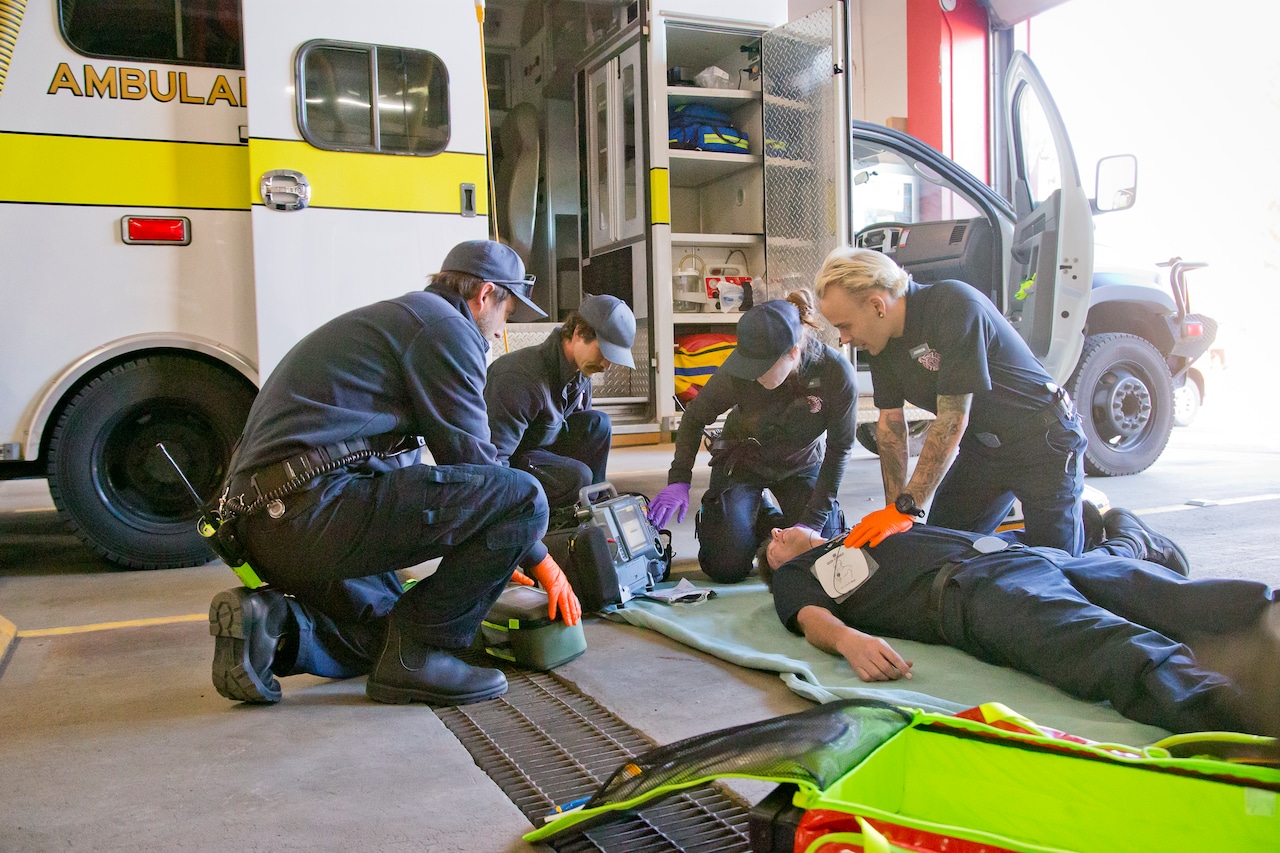
The U.S. Department of Education has approved the first program for the Workforce Pell Grant, an expanded version of federal student aid.As of August 4, eligible students at Iowa Central Community College will be able to use federal Pell Grant funding to enroll in the school’s 14-week emergency medical technician (EMT) program.Secretary of Education Linda McMahon joined Acting Secretary of Labor Keith Sonderling and Iowa Gov. Kim Reynolds last week at Iowa Central Community College’s Fort Dodge campus to celebrate the program approval.“After decades of debate and a lot of hard work, Workforce Pell is finally here – opening up new opportunities for students to use their Pell Grants on programs that will help them jumpstart their careers,” said McMahon. “Today’s announcement demonstrates our commitment to providing students with affordable pathways to rewarding careers without taking on significant debt.”Reynolds referred to the Workforce Pell approval as a “game changer.”“Throughout my time as governor, Iowa has emphasized work-based learning, career and technical education, and registered apprenticeship programs to introduce young Iowans to high-demand careers and the variety of educational pathways that lead to employment,” she said. “Now, the Workforce Pell program will allow schools to fast-track students within 8 to 15 weeks into rewarding careers with little-to-no debt, expanding high-quality career opportunities and paving the way to a stronger and more resilient economy.”The Department of Education estimates the Workforce Pell will support approximately 190,000 recipients annually, as more programs are approved.The Workforce Pell Grant expands on the existing need-based federal Pell Grant program to include financial aid for short-term skilled trades training programs. The Workforce Pell is the first of its kind at the federal level, providing students the funding to pursue career paths that do not require completing two- or four-year college programs.The grant was created under the Working Families Tax Cuts Act, which President Donald Trump signed into law on July 4, 2025.The Workforce Pell Grant program has rigorous criteria for program eligibility. All programs are required to receive approval from their state’s governor and the Secretary of Education. Programs must be offered by accredited institutions, be a minimum of 8 weeks in instructional time and no more than 15 weeks, as well as 150-599 clock hours in length, or the equivalent number of credit hours.Programs must also meet completion, job placement and value-added earnings metrics. For example, the programs must have at least a 70% annual completion rate within 150% of the program length and at least 70% job placement by the second quarter after graduates complete the program.Workforce Pell experiences slow rolllout across statesThe Workforce Pell Grant has been a hot topic in education nationwide, but implementation has been off to a slow start. As of August 10, less than half of states have released approval frameworks for the grant. Eighteen states have published frameworks, while 17 have published eligible-occupation lists for Workforce Pell, according to Opportunity Data.Education experts are not surprised to see a slow rollout with the federal grant program.Michelle Van Noy, director of the Education and Employment Research Center at Rutgers University, told Inside Higher Ed that the states’ varied systems for evaluating educational institutions is driving program approval timelines.“We knew that there was going to be a good amount of variation in terms of how easily states and institutions were going to be able to implement,” Van Noy explained. “The states run the full gamut in terms of their ability to determine whether programs are eligible and how quickly they were able to do that.”Despite these challenges, a few states have moved forward with approvals. Iowa Central Community College’s EMT program is one of nine programs in Iowa that have received state approval. The other programs include training in HVAC, commercial driver’s license and manufacturing maintenance at Des Moines Area Community College, Eastern Iowa Community Colleges and Iowa Western Community College.Indiana, which already had a state grant that requires similar data reporting to the Workforce Pell, has approved three programs. These include certified medical assistant programs at Ivy Tech Community College and Vincennes University, as well as an electrical maintenance tech bootcamp at Vincennes.Administrators at Ivy Tech and Vincennes explained to WISH-TV that their schools have more programs that will be eligible for Workforce Pell after making some tweaks.“Workforce Pell has a significant requirement related to job placement and wages, and so we need to backward design from an employer, in many cases, to make sure that we’re successful in launching these Workforce Pell programs,” said Molly Dodge, senior vice president for workforce and careers at Ivy Tech.Tony Hahn, vice president for government and legal affairs at Vincennes, said students will not be able to apply for the Workforce Pell Grant until the fall or next spring.Other states are processing program applications on an ongoing basis, some with a handful of approvals and others with none. For example, Pennsylvania has approved two of 40 submitted programs so far, including a commercial driver’s license program at Douglas Educational Center and a truck-driving program at Rosedale Technical College. Ohio, on the other hand, has not approved any programs. The Ohio Department of Higher Education has marked six applications as incomplete and rejected three, according to Signal Statewide.It could be a couple years before many programs are approved for the Workforce Pell because the programs must exist at least one year to be eligible. Institutions across the U.S. are currently evaluating their programs for eligibility and modifying them accordingly. At the same time, state higher education entities are working on their evaluation mechanisms and approval processes. Van Noy is hopeful about more programs being approved in the coming months and years.“States are continually learning from one another and sharing best practices,” she said. “We’re trying to go slow so we can go fast, but this is an opportunity that all states want to get right.”
Students can now use federal grants for this EMT training program
Full Article
Original Source
Read the full article at Cleveland →KhanList aggregates and links to publicly available news content. We do not host full articles from third-party sources. Always verify important information with original sources.