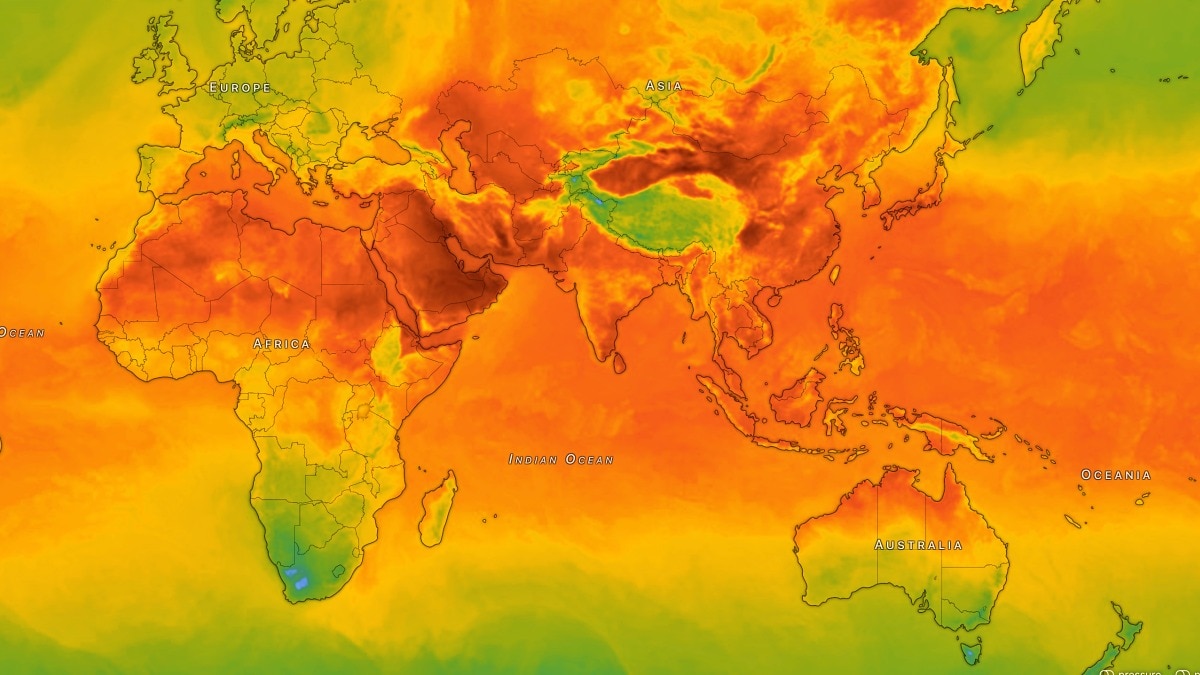
Global sea-surface temperatures have stayed at record highs for 50 straight days as El Niño strengthens rapidly. Scientists say the trend reflects climate change and could intensify extreme weather worldwide.The unprecedented warmth is being driven by a combination of human-induced global warming. (Photo: Windy)Global sea-surface temperatures have reached an alarming milestone, recording their 50th consecutive day at an all-time high, pointing to the intensifying impact of a rapidly strengthening El Nino and long-term climate change.According to global climate datasets, average sea-surface temperatures across the oceans between 60° South and 60° North have remained above all previous records for nearly two months.The latest analysis shows temperatures continuing to climb, with scientists expecting the warming trend to persist for at least another month.The unprecedented warmth is being driven by a combination of human-induced global warming and one of the fastest-developing El Nio events ever observed. Sea-surface temperatures in the Nio 3.4 region, the central Pacific zone used to monitor El Nio, have risen faster since New Year's Day than in any year since reliable records began in 1850. Climate scientists say there is likely no immediate return to normal conditions."There's likely no going back from here until El Nio is done. We'll remain in record territory," researchers tracking global ocean temperatures have warned.The latest temperature graph illustrates just how exceptional 2026 has become. While previous years fluctuated around the long-term average, the 2026 curve sits dramatically above every other year in the historical record, with global sea-surface temperatures now exceeding 21°C, far above the 1982–2011 average.Warm oceans act as the Earth's energy reservoir, absorbing more than 90% of the excess heat trapped by greenhouse gases. 2026 is now likely to become the second-warmest year ever recorded globally. (Photo: Reuters) As ocean temperatures rise, they fuel stronger tropical cyclones, increase atmospheric moisture, intensify extreme rainfall events and marine heatwaves, and accelerate coral bleaching across the world's reefs.The rapid warming also strengthens El Nio, a natural climate pattern characterised by unusually warm waters in the equatorial Pacific. A powerful El Nio can alter rainfall patterns worldwide, triggering droughts in some regions while bringing devastating floods to others.India has already witnessed an erratic monsoon this year, while several parts of Europe, North America and Asia have endured repeated episodes of extreme heat.Current projections indicate that 2026 is now likely to become the second-warmest year ever recorded globally, behind only the previous record year.However, with El Nio expected to strengthen further and peak later this year, scientists say 2027 is now virtually guaranteed to become the warmest year on record unless the climate system undergoes an unexpected shift.The back-to-back record-breaking ocean temperatures highlight how natural climate variability is now amplifying an already warming planet.Scientists warn that as greenhouse gas concentrations continue to rise, record-breaking years are becoming the new normal rather than rare events, signalling an increasingly unstable global climate.- EndsPublished By: Sibu Kumar TripathiPublished On: Jul 23, 2026 12:38 IST
Strongest El Nino: For 50 days, global ocean temperature has remained hot
Full Article
Original Source
Read the full article at Indiatoday →KhanList aggregates and links to publicly available news content. We do not host full articles from third-party sources. Always verify important information with original sources.