
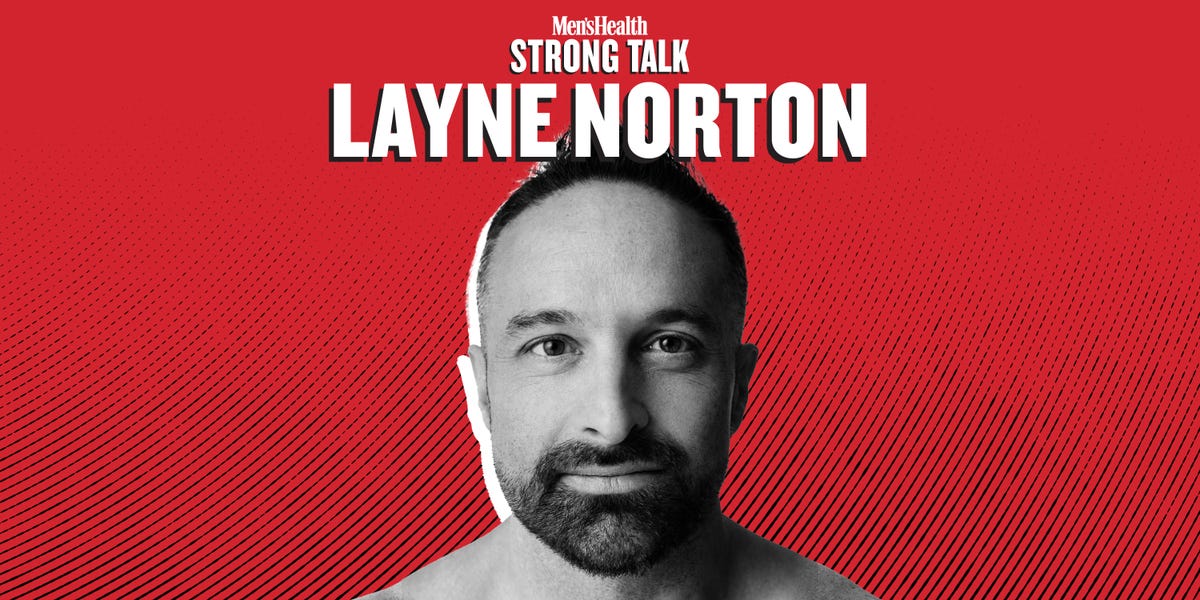
2 min readOVER THE PAST few years, testosterone has undergone a major cultural rebrand: Once viewed almost solely as a bodybuilding steroid, it’s now seen as a longevity protocol.When Men’s Health surveyed nearly 2,200 American men about their thoughts on the hormone, 40 percent of guys said their T levels are more important to them than they were a year ago, and nearly a quarter of them said they currently know someone who’s on testosterone replacement therapy (TRT). How the heck did T go so mainstream, and what does it mean for you? Ebenezer Samuel, CSCS, and Pat Davidson, PhD, broke it down in their latest Strong Talk episode with special guest Layne Norton, PhD.Samuel, Norton, and Davidson started the conversation by explaining their earliest perceptions of testosterone. They all initially viewed it as taboo. Davidson recalled seeing a 2000 TIME magazine cover in which the magazine published an image of an angry shirtless guy, referenced the dangers of the hormone, and asked whether taking it was worth the risk. Samuel added that the portrayal of T as a weight room and sports cheat code made people resistant to using it, even if they weren’t taking it for bodybuilding purposes. His own 82-year-old father, who’s now on TRT, was one of those people who internalized this perception of testosterone for decades. “There came a time when it became beneficial to get him on testosterone,” Samuel says. “It was a little bit of a push-pull because he viewed it as cheating in life.”Fast-forward to 2026 and testosterone is, well, everywhere. No longer stigmatized (at least not as much as it used to be), T is openly discussed on social media and even in the highest levels of government. And thanks to the boom in online clinics, the hormone is more accessible than ever. The global TRT market is projected to continue to grow from $2.03 billion in 2024 to $2.7 billion by 2033.But as testosterone has become more normalized—to the point where even U.S. Secretary of Defense Pete Hegseth wants to test active military members’ T levels—the discourse around what the hormone can and can’t do has grown more confusing. Samuel, Davidson, and Norton dove deep on this, along with the relationship between T and masculinity, the ethics of using TRT in pro sports, and the difference between testosterone as replacement therapy and as a performance enhancer. Watch the full episode, then read our full report on the state of American testosterone here.Want more deep-dive fitness conversations from Samuel and other celebs and experts who've been on our Strong Talk podcast? Check out all of our episodes here.Watch the Latest EpisodesGetty ImagesGetty ImagesGetty ImagesGillian MacLeod/MH IllustrationGillian MacLeod/MH IllustrationGillian MacLeod/MH IllustrationCourtesy of Subject/MH IllustrationGetty ImagesMen's HealthGillian MacLeod/MH IllustrationCourtesy of Sadik HadzovicGillian MacLeod/MH IllustrationGillian MacLeod/MH IllustrationJocelyn Solis-Moreira, MS is the associate health & fitness for Men's Health and has previously written for CNN, Scientific American, Popular Science, and National Geographic before joining the brand. When she's not working, she's doing circus arts or working towards the perfect pull-up.
Strong Talk: The Culture of Testosterone
Full Article
Original Source
Read the full article at Menshealth →KhanList aggregates and links to publicly available news content. We do not host full articles from third-party sources. Always verify important information with original sources.