
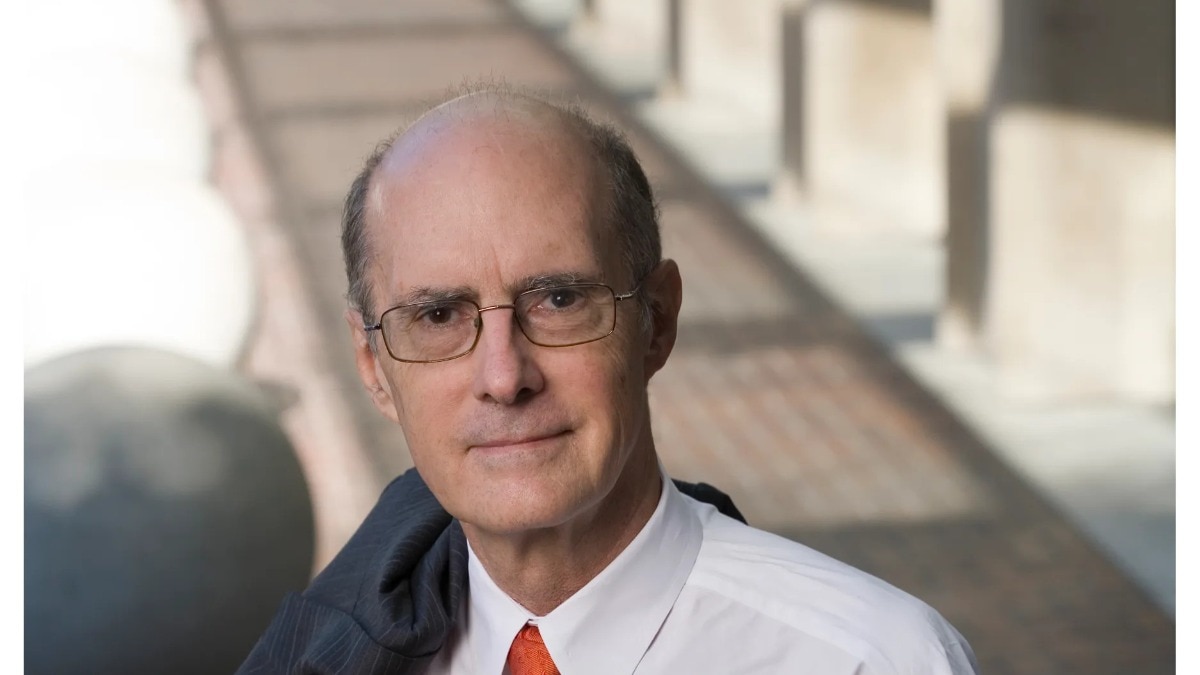
Strobe Talbott, the former US deputy Secretary of State who helped rebuild ties with India after the 1998 Pokhran nuclear tests, died at his home in East Hampton, New York, on Thursday. He was 80. His son, Devin Talbott, said he died after a long illness.Talbott led the Clinton administration’s talks with New Delhi after Washington imposed sanctions on India over the tests. Between June 1998 and September 2000, he met Jaswant Singh 14 times in seven countries across three continents.The talks began with India’s nuclear programme and broadened to cover trade and security, laying the groundwork for a closer India-US partnership in the 21st Century. FROM POKHRAN TO CLINTON’S INDIA VISITIndia conducted five nuclear tests on May 11 and 13, 1998. Pakistan carried out tests of its own later that month. Washington urged both countries to curb their nuclear programmes, and Talbott held separate talks with New Delhi and Islamabad. In his meetings with Singh, who became India’s External Affairs Minister in December 1998, Talbott pressed India to sign the Comprehensive Nuclear-Test-Ban Treaty, halt production of fissile material for nuclear weapons, show restraint in deploying missiles and warheads, tighten export controls and resume dialogue with Pakistan.Singh resisted Washington’s demands while keeping the talks going. The dialogue helped pave the way for Bill Clinton’s visit to India in March 2000, the first by a US president in 22 years. India and the US went on to reach a civil nuclear agreement several years later. Talbott gave Singh credit in his 2004 book, Engaging India: Diplomacy, Democracy and the Bomb. “As one of the architects of the Indian strategy, Jaswant Singh came closer to achieving his objective in the dialogue than I did to achieving mine,” he wrote.FROM TIME MAGAZINE TO THE STATE DEPARTMENTBorn in Dayton, Ohio, in 1946, Talbott studied at Yale and Oxford. He shared lodgings with Clinton at Oxford, where he also helped translate the memoirs of former Soviet leader Nikita Khrushchev.He spent 21 years at Time magazine, reporting from Eastern Europe and covering the White House and State Department before becoming Washington bureau chief and later a foreign affairs columnist.Talbott joined the State Department in 1993 as an ambassador-at-large advising on the newly independent states of the former Soviet Union. He became deputy Secretary of State in 1994 and held the post until 2001.He went on to lead the Yale Center for the Study of Globalization and served as president of the Brookings Institution from 2002 to 2017. In 2011, then Secretary of State Hillary Clinton named him chair of the department’s Foreign Affairs Policy Board. He continued in the role under her successor, John Kerry.- Ends
Strobe Talbott, who helped rebuild India-US ties after Pokhran, dies at 80
Full Article
Original Source
Read the full article at Indiatoday →KhanList aggregates and links to publicly available news content. We do not host full articles from third-party sources. Always verify important information with original sources.