
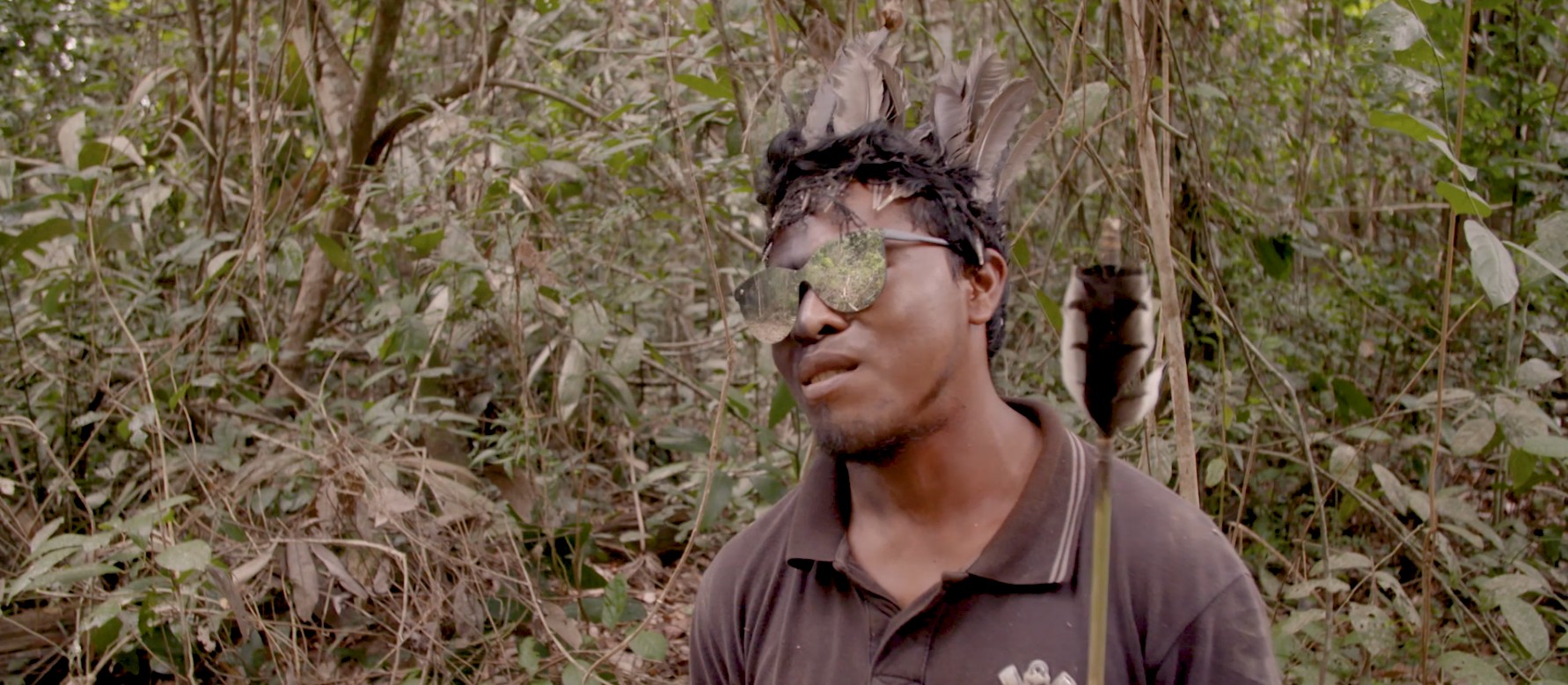
Expected in 2026, the long-awaited trial for the 2019 killing of forest guardian Paulo Paulino Guajajara and the attempted killing of fellow guardian Láercio Guajajara, in the Brazilian Amazon, was pushed again, the court told Mongabay.A year ago, the advisory staff to the judge in the case told Mongabay that the case wouldn’t be held in 2025 for lack of time; one year after it said “there are no available slots on the court’s hearing calendar,” sparking outrage among Guajajara Indigenous, activists and authorities.“There appears to be no justification provided by the judge for why the plenary session for the jury trial has not been held throughout 2026, especially given that the last procedural step took place back at the end of 2025,” Alfredo Falcão, the federal prosecutor leading the case, told Mongabay.The Federal Public Ministry will analyze “the actual reasons for the delay in this trial” and, if applicable, “take the appropriate procedural steps to ensure that the trial takes place as quickly as possible,” he added. Why hasn’t the trial for the 2019 killing of forest guardian Paulo Paulino Guajajara and the attempted killing of fellow guardian Láercio Guajajara, in the Brazilian Amazon, taken place yet? “[T]here are no available slots on the court’s hearing calendar,” the advisory staff to the judge in the case told Mongabay in an emailed statement, one year after claiming lack of time for it to be held in 2025, sparking outrage among Guajajara Indigenous, activists and authorities. “They’re just stringing me along. Because if they actually intended to resolve this, they would have done it by now,” Paulo Guajajara’s father, José Maria Paulino Guajajara, told Mongabay by phone. “This is taking way too long — it’s been seven years already! That’s exactly why I’m here, feeling pretty fed up, to say the least.” “It’s as if we aren’t seen as human beings, right? When someone kills an Indigenous person, it’s as if it’s nothing at all — just the same as killing any animal,” Laércio Guajajara told Mongabay by phone. “We have a lot of negative thoughts about the justice system regarding this case.” On Nov. 1, 2019, Paulo Guajajara and Laércio Guajajara were fired upon in an alleged ambush by illegal loggers in the Arariboia Indigenous Territory, in northeastern Maranhão state. In August 2025, a long-awaited anthropological report of the collective damages to the Indigenous community as a result of the crimes was concluded and attached to the court case, bringing hope to the Guajajara people, activists and the Federal Public Ministry (MPF) that the case would be finally tried. But in October 2025, the advisory staff to federal judge Ronaldo Desterro, who is in charge of the case, told Mongabay in an emailed statement that the trial was very likely to only happen in early 2026, “given that there is not enough time for it to be held by the end of this year.” Paulo Paulino Guajajara’s killing has become the symbol of the guardians’ fight to protect Arariboia. Image by Karla Mendes/Mongabay. A year later, Desterro’s advisory staff responded to Mongabay’s request for information about the scheduling of the jury trial: “[I]t will not be possible for it to take place this year, as there are no available slots on the court’s hearing calendar. It is expected to be held in the first half of next year.” Between 1991 and 2023, 81 Indigenous Guajajara were killed in Maranhão; almost half of these killings, 38, happened in Arariboia — six were forest guardians. None of the perpetrators have been brought to trial. The trial over the crimes against Paulo and Laércio will be a legal landmark as the first killing and attempted killing of Indigenous leaders to go before a federal jury in Maranhão. In most cases, killings are considered crimes against individuals and are tried by a state jury, but these crimes were escalated to the federal level because prosecutors made the case that they represented an aggression against the entire Guajajara community and Indigenous culture. For Alfredo Falcão, the federal prosecutor leading the case, it’s “regrettable” the trial was not scheduled to take place within this year. “There appears to be no justification provided by the judge for why the plenary session for the jury trial has not been held throughout 2026, especially given that the last procedural step took place back at the end of 2025,” he told Mongabay by phone. MPF will analyze “the actual reasons for the delay in this trial” and, if applicable, “take the appropriate procedural steps to ensure that the trial takes place as quickly as possible,” he added. Mongabay requested an interview with Desterro; his office said by email that he will not be able to give the interview because the national magistracy law “prohibits magistrates from expressing, through any means of communication, an opinion on cases pending judgment.” Laércio Guajajara, a witness to, and survivor of, the killing of fellow Indigenous forest guardian Paulo Paulino Guajajara, in an interview on the Buriticupu River, in the Arariboia Indigenous Territory, in September 2023. Image by Ingrid Barros for Mongabay ‘We want justice!’ MPF requested the process to be expedited twice: In September 2023 and July 2026, according to the full court case reviewed by Mongabay. Appeals filed by the defendants and delays in the preparation of the anthropological report — which took more than two years to be attached to the court case, as Mongabay reported in November 2025 — prevented the case from being tried quickly, Falcão said. But since August 2025, when the anthropological report was concluded, there is no reason for the lack of activity in the case, he added. “A meeting with the judge is being arranged to explain the importance and the most urgent need for the case to be brought to trial,” Falcão said. “As a last course of action, the Federal Public Ministry could request that the court grant priority to this trial.” In 2024, a Mongabay video centered on Paulo’s killing was screened at Chile’s Supreme Court as a key case for the workshop “Environmental crisis: The role of the judicial system to ensure safety of the critical voice” as part of UNESCO’s World Press Freedom Day Conference in Santiago. Paulo and Laércio were members of the “Guardians of the Forest,” a group of Indigenous Guajajara in Arariboia who risk their lives to protect their ancestral land against illegal logging, hunting and other environmental crimes. The group, formed almost two decades ago, also protects the Awá people, hunter-gatherers who live in voluntary isolation in the depths of Arariboia’s forests and are considered the “most threatened” Indigenous group on the planet. “We want justice!,” said Olímpio Iwyramu Guajajara, president of the Ka’aiwar Indigenous Association of Forest Guardians of the Arariboia Indigenous Territory, in a video to Mongabay, alongside other forest guardians, on Nov. 1. “We are gathered here, and at the same time, we are speaking out against the injustice faced by our leaders, who are being murdered within our own territories, such as the case of Paulo and other guardians who were killed here, within the Arariboia Indigenous Territory.” On the seven-year anniversary of Paulo’s death, José Maria and his family honored his memory by lighting candles on his grave. “My son died for us, protecting our land,” said José Maria, asking for justice. “It makes me so sad — losing one’s own child is just not easy. It’s all so incredibly painful for me.” Laércio said he’s very skeptical about justice. “They’re always saying that: ‘Next year, next year,'” he said. “But the fight must go on. I will never give up.” Banner image: Paulo Paulino Guajajara in an interview with reporter Karla Mendes in 2019. Image courtesy of Max Baring/Thomson Reuters Foundation. Karla Mendes is a staff investigative and feature reporter for Mongabay in Brazil and the first Brazilian to win the John B. Oakes Award for Distinguished Environmental Journalism. A member of the Pulitzer Center’s Rainforest Investigations Network, she is also the first Brazilian and Latin American ever elected to the board of the Society of Environmental Journalists (SEJ); she was also nominated Diversity, Equity and Inclusion (DEI) chair. Read her stories published on Mongabay here. Find her on LinkedIn, Instagram, Threads, Bluesky and 𝕏. Dying for Arariboia After 6 years, trial in Indigenous forest guardian killing pushed to 2026 FEEDBACK: Use this form to send a message to the author of this post. If you want to post a public comment, you can do that at the bottom of the page. Credits Topics
‘Stringing me along’: After 7 years, trial in Indigenous forest guardian killing delayed again
Full Article
Original Source
Read the full article at News →KhanList aggregates and links to publicly available news content. We do not host full articles from third-party sources. Always verify important information with original sources.