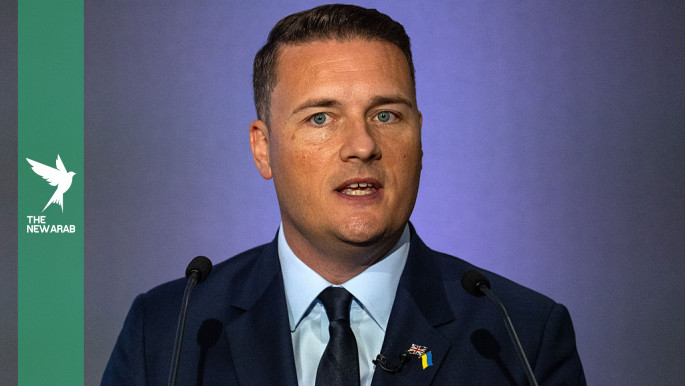
From a Middle East perspective, particularly a Palestinian one, the appointment by new British Prime Minister Andy Burnham of former Health Secretary Wes Streeting, who served under his predecessor Keir Starmer, as defence secretary in the government he formed earlier this week is the biggest surprise in the new cabinet. This is particularly so given Streeting's criticism of Israel and its war on Gaza, although hopes remain limited that those positions will translate into actions capable of fundamentally changing policy, particularly by ending arms supplies to Israel. Streeting in the Mandelson files Documents from former British ambassador to the United States Peter Mandelson – whose appointment prompted controversy for the Starmer government because of questions surrounding his background and links to Jeffrey Epstein – reveal that Streeting did not hide his anger towards Israel over its crimes in Palestine. At the time, he was health secretary in the Starmer government, whose removal was driven in part by public anger over its complicit policy towards the genocide in Gaza. According to the documents, Streeting expressed his real views on Israel frankly and without reservation in exchanges with Mandelson. He said Israel is "committing war crimes before our eyes; its government is using the language of genocide and behaving like a rogue state. They should pay the price by becoming pariahs through sanctions on the (Israeli) state, not just on a handful of ministers." Streeting's position on the Gaza war was not an emotional reaction. He was already known for opposing the crimes in the Palestinian territory, views he expressed in a WhatsApp group that included several ministers and senior members of the governing Labour Party. "Muted criticism" The disclosure of the messages between Mandelson and Streeting came while Andy Burnham and his team were preparing their plan to succeed Starmer, with Streeting among the first senior ministers and officials to publicly call for Starmer's departure. This means Burnham was fully aware of Streeting's position when he later appointed him defence secretary. He is also naturally aware of growing calls from the Palestine movement and its expanding base of supporters to end military cooperation, including the arms trade, with Israel. This is the dilemma facing both the new defence secretary and the new prime minister, not only before public opinion but also among Labour voters. First position after taking office On Wednesday, 22 July, in his first comments on Palestine since taking up his new post, Streeting declined to say whether Britain should continue buying Israeli weapons. Speaking at the Farnborough Airshow, he said such a decision was "not one he takes alone". He said Israel "has not met British military standards" during its operations in Gaza and the occupied West Bank, adding that this was something he had to tell Israel as a "friend and ally". However, he stressed Israel's right to "defend itself". Ending military cooperation Since the start of Israel's genocidal war in Palestine following 7 October 2023, anti-war campaigners, Palestine supporters and dozens of MPs from across the political spectrum in Britain have continuously called for an end to military cooperation and the arms trade with Israel. Under arms export licensing rules, the defence secretary has a highly influential role that the Export Control Joint Unit, part of the Department for Business and Trade, must consider when issuing arms export licences. According to the latest report submitted to the British Parliament in January 2024, the Ministry of Defence "assesses (military) exports from the perspective of British national security, the impact of weapons on regional stability, and ensuring sensitive military technology does not fall into hostile hands". However, Palestine supporters do not expect Streeting to remain faithful to positions he repeatedly used to convince the many pro-Palestinian constituents in his electoral district that Britain should take concrete measures to restrain Israel. "He has never spoken (about these positions) publicly before, and he will do little to help the Palestinians," Lindsey German, convenor of the Stop the War Coalition, one of Britain's largest umbrella organisations bringing together Palestine supporters, opponents of Israel and anti-war activists, told The New Arab. In his speech at a large national pro-Palestine march shortly before Burnham became prime minister, Palestinian ambassador to London Husam Zomlot, backed by British MPs, politicians and trade unionists, called for Britain to stop arming Israel. However, German believes Streeting will not support that demand. She said the most he will do in his new role is "continue the British government's policy of offering muted criticism that carries no consequences for Israel". Defending the rule of law In his widely circulated Gaza video, released just days before he became Labour leader and prime minister, Burnham criticised Israel but did not condemn it for its continued violations of the ceasefire. He also declared support for the need for "accountability for the scale of destruction suffered by the people of Gaza", saying there was "no contradiction between a zero-tolerance approach to antisemitism and holding the government" of Benjamin Netanyahu accountable. However, comments made later by his new foreign secretary, Ed Miliband, appear to reinforce the expectations of the Stop the War Coalition official. In his first statement after taking office, Miliband twice described the Russia-Ukraine conflict as an "illegal Russian war". By contrast, he referred to both Israel's war on the Palestinians and the Israeli-US war on Iran simply as "conflict in the Middle East". Speaking in Manila, where he attended the ASEAN conference on Tuesday, he repeated Burnham's pledge that Britain would "work tirelessly to end the horrific suffering of the people of Gaza". Senior Labour MPs, including John McDonnell, have argued since the start of the genocidal war that fulfilling that pledge requires an immediate halt to arms supplies to Israel and accountability for its leaders. Miliband also pledged that one of his main priorities would be "defending our values of democracy, freedom and the rule of law on the international stage". This is consistent with Burnham's view that "international courts, not politicians" should determine what is happening in Gaza. That naturally revives questions about threats made by former foreign secretary and former Conservative prime minister David Cameron against the International Criminal Court after it issued arrest warrants for Netanyahu and former Israeli defence minister Yoav Gallant and whether Miliband will continue the same approach, which undermines international law. Despite the importance of the defence and foreign secretaries in the British government, they are not the only figures who determine Britain's policy towards Israel, according to Chris Doyle, director of the Council for Arab-British Understanding (CAABU). "The overall direction of the government will determine how Wes Streeting behaves as defence secretary regarding Israel," Doyle told The New Arab. He added, "Naturally, if the prime minister says we will continue military and security cooperation with Israel, then that will be the direction." That prompted Sophie Bolt, general secretary of the Campaign for Nuclear Disarmament, to express genuine concern to The New Arab that the Burnham government could be "even worse" than the Starmer government. That concern has led Bolt to place her hopes on continued protests, while the Green Party has called for Burnham and his government to be placed under "public" scrutiny. A new wave of pressure Doyle believes Streeting and Miliband will have a "major influence" in shaping the government's approach towards Israel. He said Streeting's presence at the Ministry of Defence, given his well-known views on Israel, "indicates there will be a somewhat tougher approach towards Israel". Whether that expected firmness will be sufficient is another matter. It is linked to what Doyle expects will be steadily increasing pressure "to end military and security cooperation between Britain and Israel", leading him to predict that "there will be a huge change in Israeli behaviour". To reach that stage, the Palestine movement, through all its organisations across Britain, is determined, according to German and Bolt, to "continue grassroots pressure to build a strong solidarity movement for Palestine". A new wave of pressure has already begun, led by the Palestine Solidarity Campaign, which has urged Britons to write to the new prime minister reminding him that, in his Gaza video, he admitted the Labour Party "did not respond in the right way" to what happened in Gaza and needed to "improve its performance". According to the campaign's message, this requires "concrete and effective action" if Burnham genuinely wants to "bring a permanent end to the Labour Party's shameful complicity in Israel's crimes against the Palestinians". It also reminded him that if his foreign secretary has pledged to promote democracy and freedom abroad as British values, he must first promote them at home by "reversing authoritarian practices that use public order and counterterrorism legislation to suppress protests supporting Palestinian rights". Article translated from Arabic by Afrah Almatwari. To read the original, click here.
Streeting appointment tests Burnham's Gaza promises
Full Article
Original Source
Read the full article at Newarab →KhanList aggregates and links to publicly available news content. We do not host full articles from third-party sources. Always verify important information with original sources.