
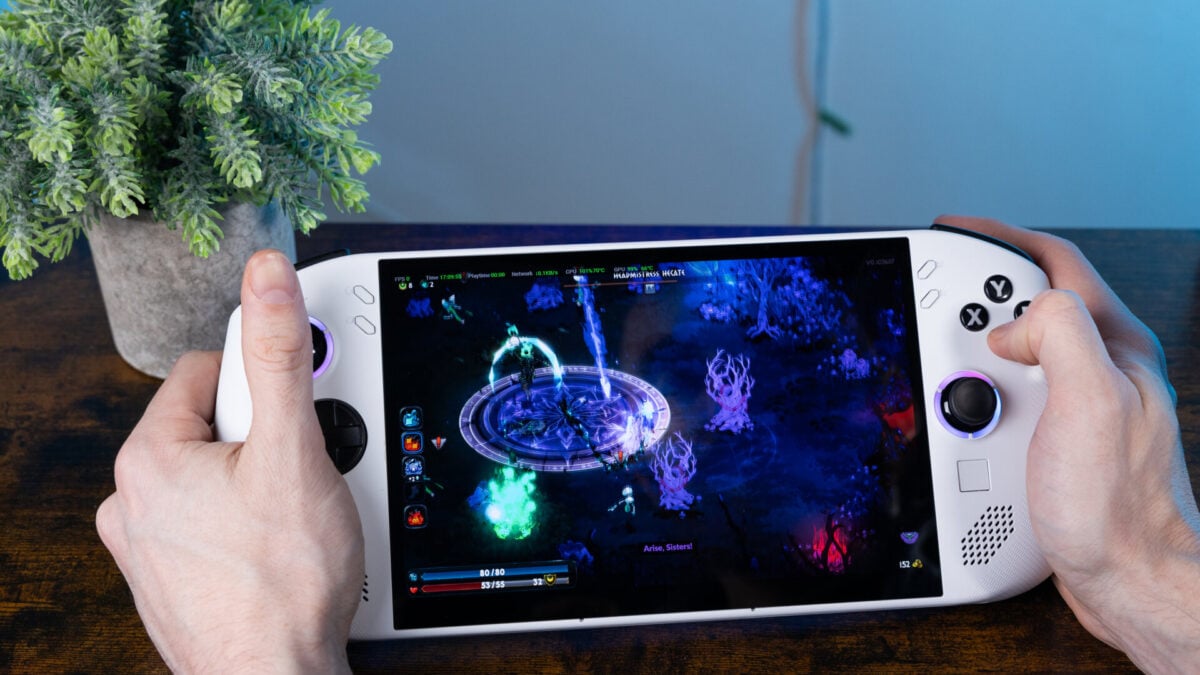
Let’s face it, most of us can’t possibly afford today’s supercharged handheld gaming PCs. It seems like Lenovo agrees, since new leaks from Windows Latest suggest we’ll soon see a “Legion Go Beam” arrive sometime in the next few months. Despite the fact that these leaked renders look like every other gaming handheld we’ve seen from the company, don’t expect it to play your games natively on-device. The “Beam” in the name clearly points to a streaming focus, similar to past attempts like the Logitech G Cloud. You don’t need to pack a streaming handheld with the best hardware, but it seems like Lenovo is taking its Windows 11-based Legion Go S (the white one, not the black edition that came with SteamOS) and is stripping away all the fluff. That means nixing the trackpad on the bottom of the device, which I personally won’t miss a single iota. EXCLUSIVE: This is Lenovo's upcoming Legion Go Beam, a new gaming handheld that appears to be a more affordable alternative to the premium Legion Go 2: https://t.co/T5Nrh5VAig pic.twitter.com/JdLI9QrzsK — Windows Latest (@WindowsLatest) November 18, 2026 The device seems to have similar ergonomics to the Legion Go S, which isn’t a bad thing. It even has back buttons and a redesigned shape to the triggers that may make it easier to use over long play sessions. It’s missing the switches to turn the triggers from analog to micro-switch triggers—a shame, but it’s not the end of the world. The main consideration is the screen, with extra-large bezels that may squeeze your game’s real estate to what seems like less than the 8 or 8.8 inches we’ve become used to on Lenovo’s other handhelds. The leaks don’t say what kind of specs are inside this supposed Legion Go Beam. Don’t expect this device to rock your world. Acer has also promoted its own streaming handheld dubbed the Nitro Blaze Link. It’s only running on 1GB of RAM and 8GB of storage, which is barely enough to power its Linux Debian distro operating system. I’ve had some hands-on time with that device, and I wasn’t all that enthused by its cheap-feeling controls. I don’t expect the Legion Go Beam to support specs built for playing any AAA games natively. However, I’d still appreciate if the device ran some lower-end, 2D titles. It contains what looks like a microSD card slot to help it expand storage, which gives me hope that the device has some capacity for native gaming. Otherwise, it would wholly depend on your Wi-Fi connection to help it stream from services like GeForce Now or Xbox Cloud Gaming. It also needs to support local streaming, such as from a PlayStation 5 with PS Remote Play. Lenovo’s not the only one pushing streaming handhelds. Acer still has this Nitro Blaze Link waiting in the wings. © Kyle Barr / Gizmodo What will matter more than anything is price. Streaming handhelds need to cost way less than anything that came out this year, like the $1,300 Asus ROG Xbox Ally X20 and the $1,450 Acer Predator Atlas 8. Now that a Steam Deck OLED starts at $790, we need alternatives that don’t break the bank. Lenovo in particular is in desperate need of some kind of affordable gaming device. Lenovo’s Legion Go 2 launched at a $1,350 price for the higher-end Ryzen Z2 Extreme model. A year since launch, that price seems somehow reasonable. It now costs $2,000 for the same high-end model. The Legion Go S was supposed to be the more reasonable buy for the typical PC gamer. Price hikes saw that device soar up to close to $1,000 for a version with the Ryzen Z2 Go chip and 512GB of storage. We don’t have a crystal ball telling us whether RAMageddon prices will continue to strain our favorite gaming devices into 2027 or later. All we consumers can do is hope for the best but expect the worst.
Streaming Handhelds Might Not Be Such a Bad Idea Anymore
Full Article
Original Source
Read the full article at Gizmodo →KhanList aggregates and links to publicly available news content. We do not host full articles from third-party sources. Always verify important information with original sources.