
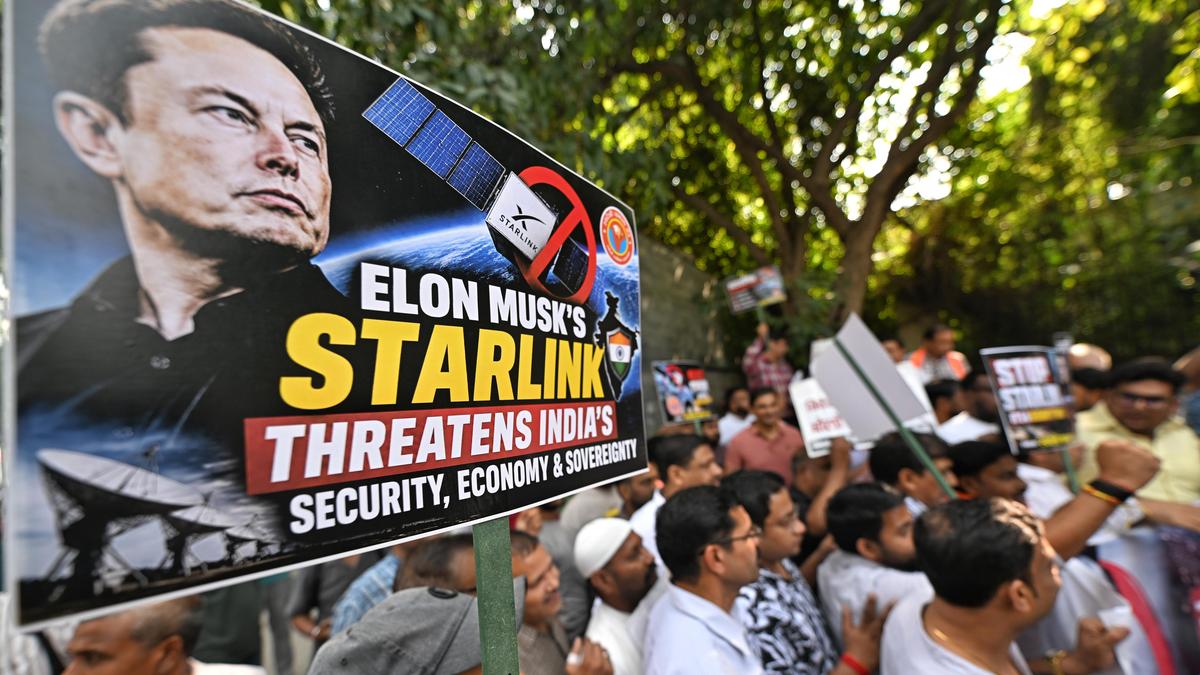
‘India should retain its strict licensing conditions while improving its ability to check compliance’ | Photo Credit: THE HINDU/SHASHI SHEKHAR KASHYAP Recently, Elon Musk unleashed a volley of social media posts, accusing Indian “oligarchs” of impeding Starlink’s entry into India. The government rejected the accusation and clarified that all satellite operators must go through the same regulatory process. The ensuing public debate has centred on Mr. Musk, Mukesh Ambani, protectionism and telecom competition. All this obscures important questions of how much control India will have over Starlink once it operates here.In its current form, Starlink is unlikely to replace fibre and mobile networks because they have almost opposite strengths. Fibre and mobile networks take time and money to set up, but can serve many people in one area. Starlink reaches remote places without towers or cables but is limited by how many users it can serve in one region. While fibre and mobile networks are optimised for density, Starlink is optimised for reach. Starlink has previously stopped taking new residential customers in areas where it ran out of capacity. Published - November 11, 2026 12:08 am IST
Strategic autonomy must guide India’s Starlink policy
Full Article
Original Source
Read the full article at Thehindu →KhanList aggregates and links to publicly available news content. We do not host full articles from third-party sources. Always verify important information with original sources.