
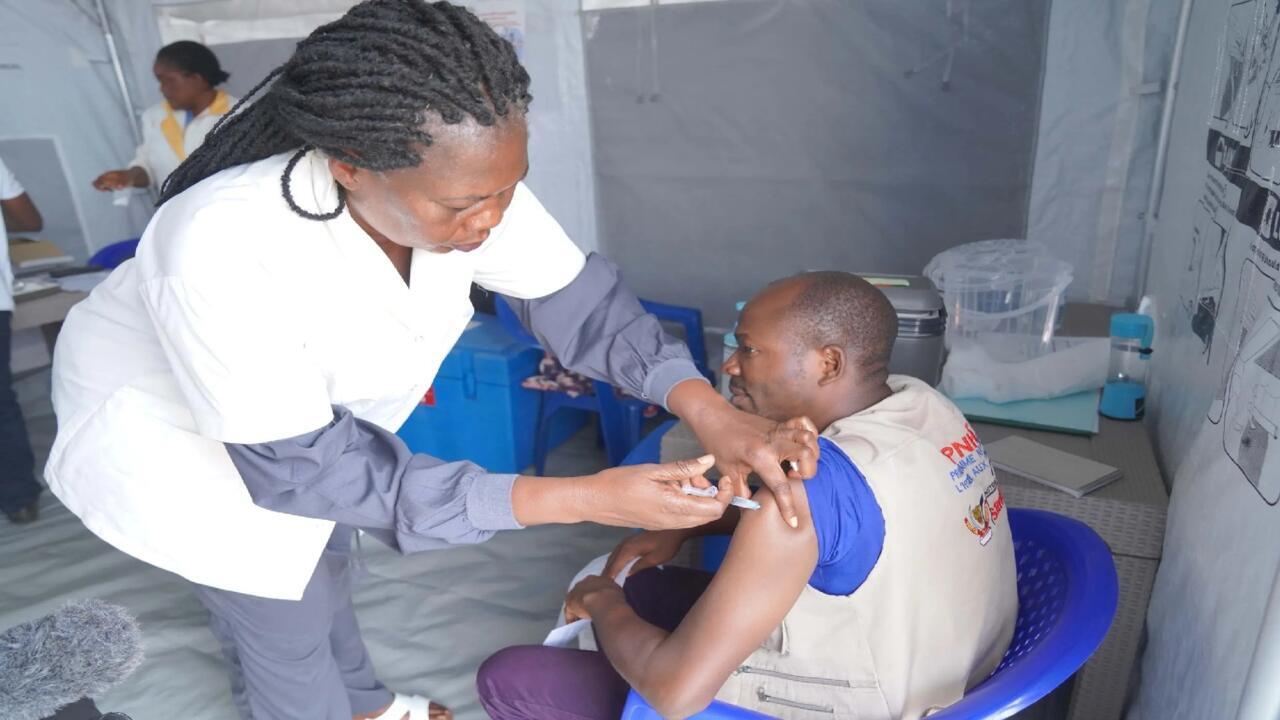
Two vaccines against the deadly Bundibugyo Ebola strain gripping the Democratic Republic of Congo are set to enter trials in the outbreak's epicentre next week, the World Health Organization announced on Tuesday. Issued on: 18/11/2026 - 15:38 2 min Reading time "We expect two candidate vaccines developed specifically for Bundibugyo virus to begin testing as early as next week," World Health Organization (WHO) chief Tedros Adhanom Ghebreyesus told a press conference at the United Nations health agency's headquarters in Geneva on Tuesday. The so-called Tumaini trial in the Democratic Republic of Congo (DRC) will test the safety, efficacy and ability to trigger an immune response. The trial uses the ring vaccination method of immunising contacts deemed to be at high risk of infection. Ervebo, a vaccine already approved for use against the more common Zaire strain of Ebola, kicked off the Tumaini trial on 23 October, at the full-scale Phase 3 level, to determine if it also offers any protection against Bundibugyo. There are currently no vaccines or treatments for the less common Bundibugyo species of Ebola, which is responsible for the outbreak declared in May that triggered an international public health emergency. Health agencies have confirmed that the Ebola outbreak in eastern DRC remains out of control as the epidemic reached the six-month mark, with case numbers and deaths still rising at a record pace. A total of 5,568 deaths out of 11,376 cases have been confirmed in what is the central African country's worst-ever Ebola outbreak, according to the WHO. Resource shortages, instability in the country and poor coordination have hampered efforts to contain the outbreak, which is the second-largest on record globally. DRC Ebola outbreak still 'out of control' six months on, Africa CDC warns Different vaccine types The two Bundibugyo-specific candidate vaccines on trial have both already passed through Phase 1 clinical trials. One is a ChAdOx1 adenoviral vector jab developed by the University of Oxford. The other, mRNA-1469, was developed by the United States-based Moderna group using technology made famous during the Covid-19 pandemic. Meg Doherty, head of the WHO's science for health department, said Phase 2 clinical trials with the candidate vaccines are scheduled to begin on 26 or 27 November in Bunia, the capital of the DRC's northeastern Ituri province which is at the epicentre of the outbreak. If the safety and immune response data from the Phase 2 trial pass the next stage of review, the candidate jabs can move forward to a full-scale Phase 3 trial. Doherty said that more than 140 people were enrolled in the Tumaini trial, with thousands of contacts ultimately expected to sign up. The trial will also eventually expand beyond the current single site in Bunia. Ebola vaccine trials 'reason for hope' in DR Congo and beyond Ebola, which spreads through contact with bodily fluids and causes a haemorrhagic fever, has killed more than 15,000 people in Africa over the past 50 years. Tedros said 400 to 500 new cases were still being reported every week, with two-thirds of confirmed deaths still taking place outside Ebola treatment centres. "Children are paying a terrible price. They account for more than a quarter of confirmed cases and one third of deaths," he added. (with AFP)
Strain-specific Ebola vaccines to be trialled in DRC, WHO announces
Full Article
Original Source
Read the full article at Rfi →KhanList aggregates and links to publicly available news content. We do not host full articles from third-party sources. Always verify important information with original sources.