
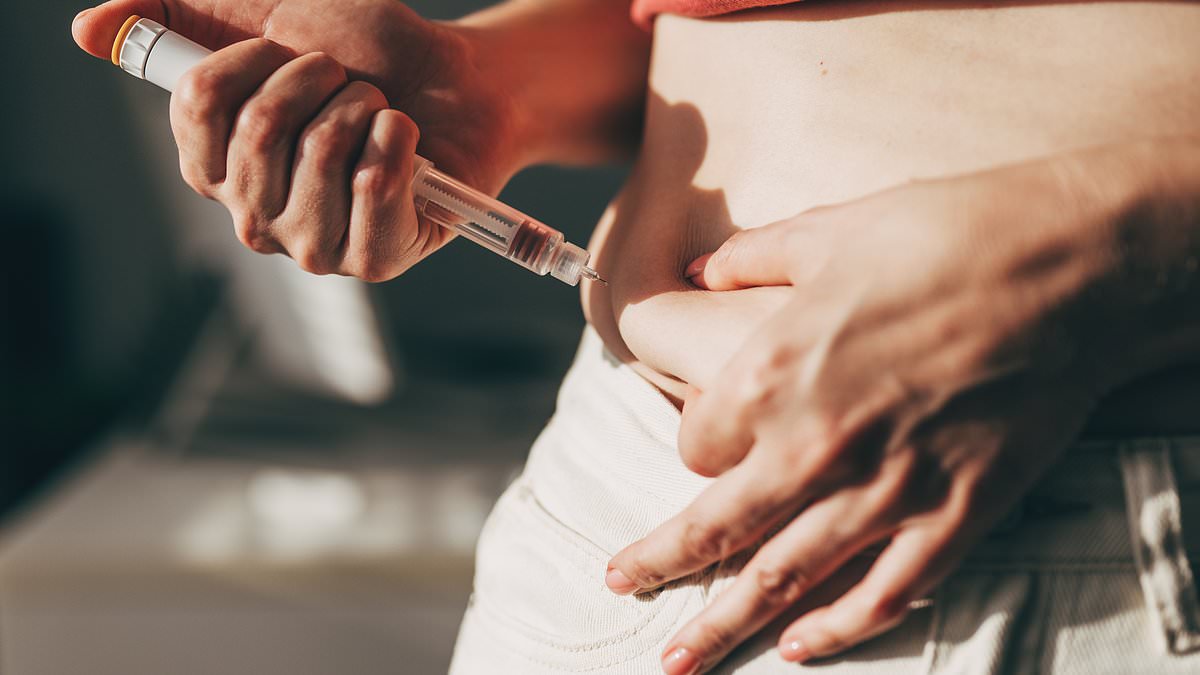
Diabetics who quit their weight-loss jabs could face double the risk of suffering a heart attack or stroke – and be five times as likely to die, a major study suggests.The findings raise concerns about what happens when patients stop taking drugs such as Ozempic, particularly as researchers found the increased risks persisted even among those who regained very little weight.Crucially, the increased risks were seen even in patients who regained very little weight after stopping treatment.The findings suggest the drugs may protect the heart in ways that go beyond simply helping people lose weight.Previous research has shown that patients who stop taking weight-loss jabs typically regain around two-thirds of the weight they lost, raising concerns about the long-term health consequences.But the latest study, published in The Lancet Regional Health, suggests that putting weight back on may be only part of the problem.Researchers analysed the medical records of more than 80,000 people with type 2 diabetes in Italy over a ten-year period.Around 60 per cent stopped taking the treatments, known as glucagon-like peptide-1 (GLP-1) receptor agonists, during the study. People who stop taking fat jabs may face double the risk of heart attack, stroke or early death compared with those who stay on the drugs, a large study suggestsThe team, led by scientists at the University of Campania, found that those who stopped treatment were roughly twice as likely to suffer a heart attack or stroke as those who continued taking the drugs.Their risk of dying from any cause was nearly five times higher.Surprisingly, patients who stopped treatment regained relatively little weight and showed only small differences in blood sugar control.The researchers said this suggests the drugs may have important benefits beyond weight loss, although they cautioned that stopping treatment could also be a sign that some patients were already becoming less healthy.The medications, taken by more than 2.5 million Britons, have become major treatments for obesity and type 2 diabetes.But many patients stop taking them within the first year, often because of side effects such as nausea, vomiting and diarrhoea, or the high cost of paying privately.The latest findings suggest patients may need to stay on the drugs long term to maintain their protection against heart disease and premature death.However, because the study was observational, it cannot prove that stopping the drugs directly caused the increased risks. Experts say there are ways to reduce the chances of regaining weight when coming off the jabs.One option is to gradually reduce the dose rather than stopping abruptly.A 2024 study found that patients who tapered their medication over nine weeks continued losing weight and maintained a stable weight for the following six months.Professor David Strain, an expert in metabolic disease at the University of Exeter, recommends reducing the dose before gradually increasing the time between injections.'First, patients should go down to a lower dose and then start extending the time period between doses before stopping completely,' he says.'While I've seen patients put on weight since, it hasn't been large amounts.'Exercise may also make a significant difference.A Danish study found that people who exercised four times a week while taking the weight-loss drug liraglutide regained significantly less weight after stopping treatment than those who relied on medication alone.A year later, those who exercised had regained an average of 2.5kg, compared with 6kg among those who had taken the drug without exercising.The participants, who took part in cycling and circuit training sessions, also tended to maintain their exercise routines after stopping treatment.Lead author Signe Sorensen Torekov, from the University of Copenhagen, said: 'The study almost makes me want to advise against medical treatment without increased physical exercise.'Experts also recommend eating plenty of protein and fibre, exercising regularly and getting good-quality sleep to help maintain weight loss.However, patients with diabetes should not stop or alter their medication without discussing it with their doctor, as changes in treatment can affect blood sugar control. Coming off jabs? Here's how to protect your heart... New research suggests stopping weight-loss injections may increase the risk of heart attacks and strokes, even without significant weight regain.While scientists have yet to establish how to prevent this additional risk, there are proven ways to protect your heart.Ask about alternative medicationDrugs called SGLT2 inhibitors, including dapagliflozin and empagliflozin, can reduce cardiovascular risks in people with type 2 diabetes. The NHS prescribing watchdog NICE recommends them for many patients because of their heart and kidney benefits.Check your cholesterol and blood pressureHigh readings significantly increase the risk of heart attacks and strokes. Cholesterol-lowering statins and blood-pressure medication can reduce these risks, particularly in people with diabetes.Monitor your blood sugarBlood sugar levels can rise after stopping the jabs, even without weight regain. The NHS recommends regular HbA1c tests, which measure average blood sugar over two to three months.Keep exercisingPhysical activity helps control blood pressure, cholesterol and blood sugar independently of weight loss. The NHS recommends 150 minutes of moderate exercise weekly, plus strength training twice a week.Anyone considering stopping treatment should discuss their cardiovascular risks and medication options with their doctor first.
Stopping weight-loss jabs could DOUBLE your risk of a heart attack or stroke - and make you five times more likely to die... even if you keep the weight off, experts discover
Full Article
Original Source
Read the full article at Dailymail →KhanList aggregates and links to publicly available news content. We do not host full articles from third-party sources. Always verify important information with original sources.