
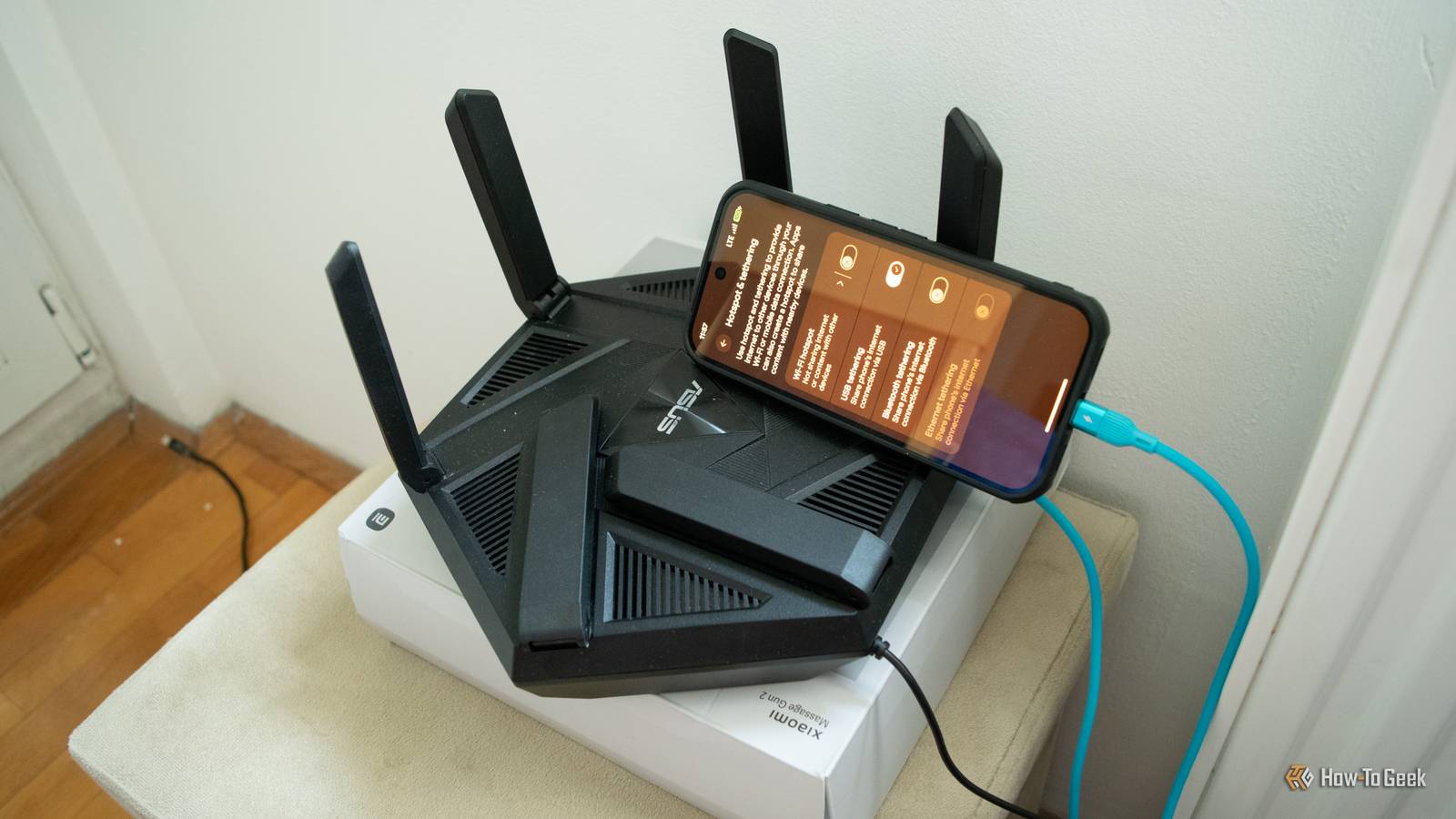
Published Aug 19, 2026, 10:15 AM EDT Monica J. White is a journalist with over a decade of experience in covering technology. She built her first PC nearly 20 years ago, and she has since built and tested dozens of PCs. PC hardware is her main beat, and graphics cards and the GPU market at large are her main area of interest, but she has written thousands of articles covering everything related to PCs, laptops, handhelds, and peripherals. From GPUs and CPUs to headsets and software, Monica's always willing to geek out over all things related to computing. Outside of her work with How-To Geek, Monica contributes to TechRadar, PC Gamer, Tom's Guide, Laptop Mag, SlashGear, Whop, and Digital Trends, among others. Her ultimate goal is to make PC gaming and computing approachable and fun to any audience. Monica spends a lot of time elbow-deep in her PC case, as she's always making upgrades, testing something, or plotting out her next build. She's the go-to tech support person in her immediate circle, so she's never out of things to do. Whenever she has spare time, you'll find her gaming until the early hours and hanging out with her dog. Most of us give little thought to USB ports, beyond finding some of them kind of confusing, because what do you mean they're color-coded? But a handy USB port on the right device can actually be transformative. One such device is your router. Use your router to turn a USB drive into a tiny NAS Basic file sharing for free? Yes please You can turn an old Windows 10 PC into a NAS, but you can also turn your router into a NAS. Pretty cool, huh? As long as your router's USB port supports storage, you can use that port to support an external SSD, HDD, or even a tiny flash drive (although that's not going to give you much to work with). The router can then make that drive available to other devices on your network, usually through SMB. In practice, this is pretty neat: you can access the same files from all the PCs that can access your local network, all without needing to move the drive. It's handy for files that your entire household wants to have access to. For me, since I recently canceled my Google Drive subscription, I use this to easily share files across my home network. Setting this up is as easy as plugging the drive into the router and going into the router's admin interface. Look for something along the lines of USB storage, file sharing, Samba, or network storage. Once you find your way around, you can enable sharing, choose which folders on the drive can be accessible to everyone, and set up usernames and passwords if needed. All set? The folder should behave like any other folder on your PC. Obviously, this isn't going to replace a proper NAS, but it's a budget-friendly way to get something close to that. Your old printer can become a network printer One USB cable can make an older printer way more useful Credit: Nick Lewis / How-To Geek Do you still use a printer at home? No? Move right along, this one isn't for you. But if you do, there's a way to make your aging, disappointing (just me) printer a little bit better. If your printer only supports USB and doesn't have Wi-Fi (not that printers should be using Wi-Fi -- switch to Ethernet!), plugging it into a compatible router can still make it a family printer instead of just an office printer. The router essentially acts as a print server, sitting between the printer and every device that needs to use it. This is especially useful for older laser printers that still work perfectly well. Setup varies depending on the router and the printer, but the general idea is simple. Plug the printer into the USB port, and then enable the router's printer sharing/print server feature. This won't work on every router, but if it works on yours, you might as well use it. Use a cellular modem as a backup internet connection for your router The USB port becomes a second WAN Credit: Goran Damnjanovic / How-To Geek I have some severe trust issues when it comes to ISPs being able to provide a steady internet connection. As such, I've gone to great lengths to make sure I have internet access even if my ISP lets me down. This is one of my favorite backup solutions. If your router can use a compatible USB cellular modem, or sometimes a tethered phone, as a backup WAN connection, you're basically golden. WAN stands for wide area network, which in this case basically means the connection your router uses to reach the internet. This keeps your normal connection as the primary link, but gives your router something to fall back on when or if your main connection goes bye-bye. If your router supports failover (not all do, unfortunately), you can set it up so it'll automatically switch over to that cellular connection when your main internet goes down. There'll still be some downtime, but not as much as if you had to wait for your ISP to fix it. (In my case, that took over a month one time.) There are caveats, because of course there are. First, your router needs to support USB cellular modems or tethering, and compatibility isn't a given, so don't assume it'll work just because your router has a USB port. A dive into the settings will tell you where things stand. Cellular backup also isn't seamless; Wi-Fi calls, live streams, and things of that nature will drop during the switchover, but you'll be able to hop back on sooner than if you had to wait for your main ISP. Quiz8 Questions · Test Your KnowledgeCreative ways to repurpose an old routerTrivia challengeThink your old router is just e-waste? Think again — see how much you know about giving routers a second life.NetworkingDIYSoftwareHardwareSecurityBeginWhich open-source firmware is most commonly used to unlock advanced features on a repurposed router?AFreeNASBOpenWrtCRaspbianDpfSenseCorrect! OpenWrt is a Linux-based firmware that replaces a router's stock software, unlocking features like advanced traffic shaping, VPN hosting, and package installation. It supports a huge range of router hardware and has a thriving community of developers.Not quite. The answer is OpenWrt, a powerful open-source Linux firmware that transforms compatible routers into highly customizable networking devices. FreeNAS and pfSense are great tools but run on full PCs, while Raspbian is for Raspberry Pi boards.ContinueWhat is a common repurpose for an old router that helps eliminate Wi-Fi dead zones in a large home?ANetwork-attached storage serverBWireless access pointCDNS sinkholeDPacket snifferCorrect! An old router can be configured as a wireless access point, extending your existing network's Wi-Fi coverage to areas your main router can't reach. You simply connect it via Ethernet to your primary router and disable its DHCP server so it doesn't conflict.Not quite. The answer is wireless access point. By connecting an old router to your main router via a cable and tweaking a few settings, you can extend Wi-Fi coverage throughout your home without buying dedicated mesh hardware.ContinueA repurposed router running Pi-hole or similar software can be used to block what type of unwanted content across an entire network?AEncrypted HTTPS trafficBAds and tracking domainsCPeer-to-peer file transfersDVPN tunnelsCorrect! By running a DNS-based ad blocker like Pi-hole on or alongside a repurposed router, you can block ads and tracking domains for every device on your network simultaneously. This means even smart TVs and phones that don't support browser extensions benefit from ad blocking.Not quite. The answer is ads and tracking domains. DNS-level blocking tools like Pi-hole intercept requests to known ad-serving and tracker domains before they even load, protecting your whole network without needing software on each individual device.ContinueWhich of the following can an old router with USB ports be repurposed as, by attaching an external hard drive?AA 4K media transcoderBA basic NAS (network-attached storage) deviceCA cloud gaming serverDA Bluetooth audio receiverCorrect! Many routers with USB ports can share an attached hard drive over the local network, effectively turning the router into a basic NAS device. This lets multiple users on the same network access, store, and stream files from one central location.Not quite. The answer is a basic NAS device. Plugging a USB hard drive into a compatible router lets you create a shared network storage location for backups, media, and files — a surprisingly handy trick that costs almost nothing if you already own the hardware.ContinueWhat networking function allows a repurposed router to connect two physically separate local networks together over the internet securely?ADHCP relayBMAC address filteringCVPN serverDQoS schedulingCorrect! A router flashed with firmware like OpenWrt or DD-WRT can be configured as a VPN server, allowing remote devices or entire remote networks to connect securely as if they were on the same local network. This is great for accessing home resources while traveling.Not quite. The answer is VPN server. Setting up a router as a VPN server creates an encrypted tunnel between the internet and your home network, meaning you can securely access local devices, files, and services from anywhere in the world.ContinueAn old router can be repurposed as a network switch. What is the primary purpose of a network switch?AAssigning IP addresses to devices automaticallyBConnecting multiple wired devices on the same local networkCFiltering internet traffic based on content rulesDBroadcasting a Wi-Fi signal to wireless devicesCorrect! A network switch forwards data packets between wired devices on the same local network, letting you connect more Ethernet-based devices than your main router has ports for. Turning an old router into a switch just requires disabling its DHCP server and connecting it via one of its LAN ports.Not quite. The answer is connecting multiple wired devices on the same local network. A switch expands the number of Ethernet ports available on your network, which is perfect for home offices or entertainment centers with lots of wired devices.ContinueWhich creative repurpose turns a router into a device that detects and logs all gadgets connecting to your home network?APrint serverBNetwork monitorCSmart home hubDMedia centerCorrect! With the right firmware or software, a repurposed router can act as a network monitor, logging connected devices, tracking bandwidth usage, and alerting you to unfamiliar gadgets joining your network. Tools like ntopng or built-in OpenWrt packages make this surprisingly powerful.Not quite. The answer is network monitor. Running monitoring software on an old router gives you a detailed view of everything happening on your home network — from which devices are online to how much data each one is consuming — which is great for security and troubleshooting.ContinueRepurposing a router as a dedicated guest network device offers which key security benefit?AIt doubles the internet speed for all usersBIt isolates visitor devices from your main private networkCIt encrypts all traffic with military-grade AES-512DIt automatically blocks all incoming connections from outside the countryCorrect! Dedicating an old router to a guest network keeps visitor devices completely isolated from your main network, meaning guests can't accidentally — or intentionally — access your personal computers, smart home devices, or shared storage. Network isolation is one of the simplest and most effective home security practices.Not quite. The answer is isolating visitor devices from your main private network. By running a separate router for guests, you create a clean boundary between trusted and untrusted devices, protecting sensitive data and personal gadgets even if a guest's device is compromised.See My ScoreChallenge CompleteYour Score/ 8Thanks for playing!Try Again Yup, your router can do that Credit: Ismar Hrnjicevic / How-To Geek Usually, hearing media server makes you think of a NAS, right? Jellyfin and things like that? Well, you're not wrong, but you can have a makeshift media server via your router's USB port, too. If yours supports built-in DLNA or UPnP media server capabilities, you can just plug a USB storage device loaded with movies or music, and make that library widely available to the whole home. This isn't the same thing as the basic file sharing I talked about above, by the way. You don't just open a network folder through SMB and search for files. Instead, compatible devices connected to your router get to discover it as a media source, and then browse what's indexed. That means your movie library will work on a smart TV (again, compatibility matters). Remember that most router-based media servers don't transcode files on the fly, though. Your device still needs to support the video's codec and format. You might as well make the most of your router A good router is not cheap, and you'll need a decent one to support these fun capabilities I outlined above. If you already spent money on a router that can do all these things, why not make the most of it? Let me know how it goes! Lexar D40E Dual USB Flash Drive This tiny USB drive can serve as a small NAS when connected to a router.
Stop wasting your router's USB port: 4 things it can actually do
Full Article
Original Source
Read the full article at Howtogeek →KhanList aggregates and links to publicly available news content. We do not host full articles from third-party sources. Always verify important information with original sources.