
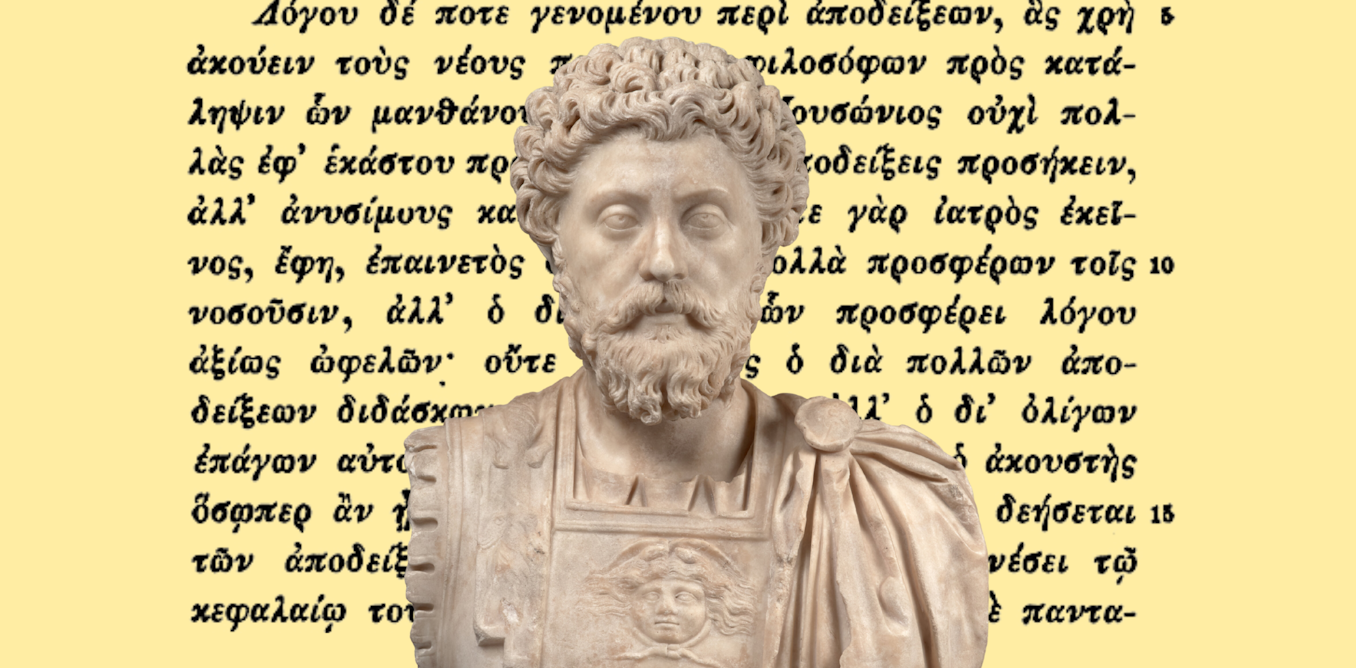
Stoicism has attracted all sorts of fans over recent years, but one group whose interest in this ancient philosophy has attracted a good deal of comment is the “manosphere”. In her 2018 book Not all Dead White Men, on classics, misogyny and the digital age, the American classicist Donna Zuckerberg noted with some concern that “the men of the manosphere have a deep fascination with Stoic philosophy.” She makes clear how these online spaces use extracts from Stoic works to argue that women are psychologically unsuited to Stoicism. For instance, the manosphere uses Stoicism’s praise of logic to claim that men possess a “superior rationality” while women are emotionally driven. In fact, they believe Stoicism is a decidedly manly weapon against the manipulative and deceitful nature of women and their influence. For these and many other reasons, the manopshere argues that women can never be Stoics. The prevalence of Stoic ideas in this world has led some, including Zuckerberg, to wonder if this is merely an unhappy distortion of the ancient material or whether there is something disturbing lurking beneath the surface of texts like the Meditations of Marcus Aurelius. Part of the problem is a deeply persistent image of the Stoic as someone who is emotionless and indifferent. They are courageous and resilient but perhaps not overly concerned with anyone but themselves. Is Stoicism really a cold and indifferent macho mindset? Is it really just for men? Read more: Want to be happy? Then live like a Stoic for a week As I argue in my new book Stoicism is not what you think, the short answer is of course “no”. The Stoics identified rationality as the defining characteristic of human beings, and it is our rationality that makes us members of a single global human community. All other characteristics, such as ethnicity, nationality and gender, are inconsequential in comparison to the shared reason that all humans possess. So there are no grounds for the Stoics to make a hard distinction between men and women. Penguin The Roman Stoic philosopher Gaius Musonius Rufus, active in the first century AD, commented directly on this very topic. In response to the question of whether women should study philosophy, he argued that women and men have the same senses that provide information about the world and the same rational capacities. They are both equally able to act virtuously. If philosophy is the study of how to live a good life, then it would be absurd to suggest that it is only suitable for one part of humanity. Musonius notes many examples where women display the “manly” virtue of courage, such as when protecting their offspring. If you ever want to see real courage, just make your way down to your nearest maternity ward. Musonius also argues that girls ought to receive the same education as boys – a radical idea in its day. The most important virtues of courage, moderation, fairness and good decision making are just as vital for girls as they are for boys and so, of course, they ought to be taught to both. Musonius was a product of his day and largely worked within the limits of his culture; he assumes that most women will end up running a household. But in the first century AD, that was a fair assumption to make. Although not perfect, this Stoic philosopher is probably the closest thing there is to a feminist theorist in antiquity. Read more: Stoicism on Tiktok promises happiness – but the ancient philosophers who came up with it had something very different in mind We are told that many in the manosphere are devoted readers of Marcus Aurelius. His Meditations include a number of passages where he seemingly says that one ought to “be a man” and at one point he criticises someone for being “unmanly”. But it is worth remembering that Marcus was not writing a book of self-help maxims that he expected others to read, he was writing to himself in a private journal. When Marcus says to himself that he ought to be man, he is saying that he ought to embody the qualities appropriate to who he is as an adult male in the world in which he lives. There are questions about what “being a man” might mean, but it is fairly clear that what Marcus has in mind is being rational, calm and acting for the wellbeing of all humankind. It is possible that Marcus is implicitly contrasting this with a negative image of women as irrational and excessively emotional, but I suggest that it is more likely that he is contrasting it with being an immature and irrational adolescent. When Marcus says to himself “be a man”, what he most likely means is “be a grown up”. Also, in these passages Marcus does not merely say “be a man”, but usually “be a good man”, and it is the adjective, “good”, that matters. “Man” simply refers to Marcus himself. What is a good man? It is someone who acts in the interests of all humankind. A good woman is exactly the same. This article features references to books that have been included for editorial reasons, and may contain links to bookshop.org. If you click on one of the links and go on to buy something, The Conversation UK may earn a commission.
Stoicism isn’t just for men – despite what the manosphere would tell you
Full Article
Original Source
Read the full article at Theconversation →KhanList aggregates and links to publicly available news content. We do not host full articles from third-party sources. Always verify important information with original sources.