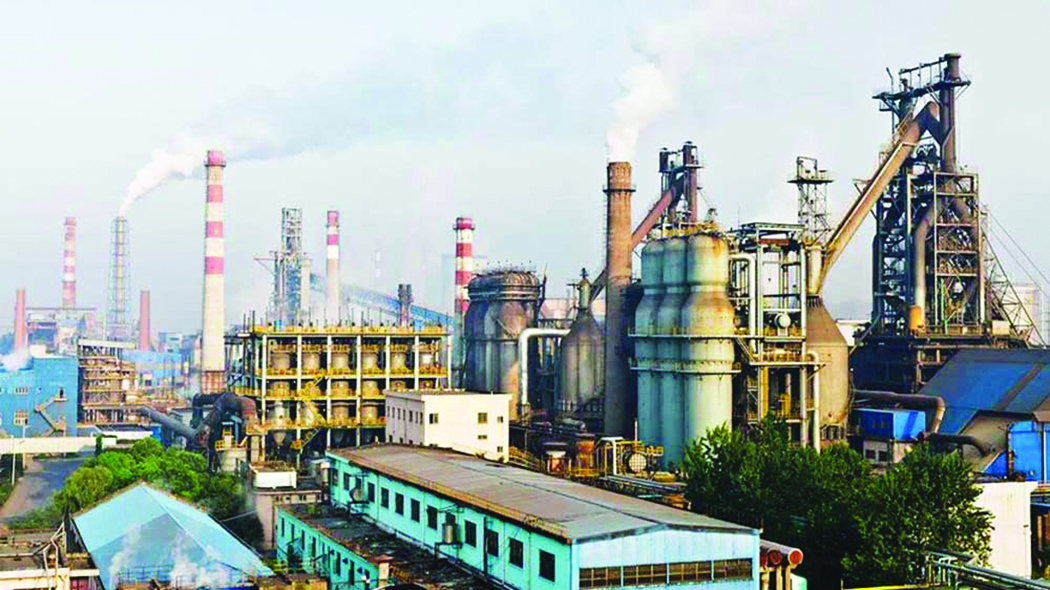
Efforts to revive Ajaokuta Steel have begun. However, the question is: will this revival deliver industrial growth, or repeat an expensive history? Festus Akanbi writes The federal government’s renewed determination to revive the Ajaokuta Steel Company has once again reignited one of Nigeria’s longest-running industrial debates. For over four decades, Ajaokuta has embodied both the country’s industrial ambitions and the frustrations of failed policy execution. Today, buoyed by a proposed $2 billion Chinese-backed investment, renewed investor interest and the implementation of the National Industrial Policy (NIP), the Tinubu administration believes the steel complex could finally become the backbone of Nigeria’s industrial transformation. Yet, amid the optimism, economists and industry analysts are urging caution, warning that unless the revival is anchored on private capital, sound governance and commercial discipline, Ajaokuta could become another expensive fiscal burden, much like Nigeria’s state-owned refineries before private investment reshaped the downstream petroleum sector. The economic case for reviving Ajaokuta is compelling. Steel is the foundation of industrialisation, supplying critical inputs for construction, transport, power, automobile manufacturing, defence and engineering. Nigeria currently requires about 10 million metric tonnes of steel annually but produces only about 1.2 million metric tonnes, most of it from recycled scrap rather than primary steel production. The huge supply gap leaves manufacturers heavily dependent on imports, exposing them to exchange-rate volatility and worsening the country’s trade deficit. Government officials believe a functional Ajaokuta would reverse that trend. The Minister of State for Industry, Senator John Enoh, recently stressed that “there is no meaningful industrialisation without steel,” noting that the administration was engaging with international investors as part of a broader industrial strategy aimed at raising industry’s contribution to Gross Domestic Product (GDP) to 25 per cent by 2030. The National Industrial Policy is expected to deepen manufacturing, promote value addition, create jobs, and support President Bola Tinubu’s ambition to build a $1 trillion economy. Nigeria’s abundant mineral resources further strengthen the investment proposition. The National Steel Raw Materials Exploration Agency (NSRMEA) estimates that the country possesses about three billion tonnes of iron ore reserves capable of supplying Ajaokuta when it is fully operational. Itakpe iron ore remains the flagship deposit, while limestone and coal deposits across several states provide the raw materials needed for an integrated steel industry. The potential economic benefits extend beyond steel production. A revived Ajaokuta could stimulate mining, rail transportation, fabrication, engineering services and manufacturing while creating thousands of direct and indirect jobs. It would also conserve foreign exchange currently spent on imported steel and encourage technology transfer through the proposed training of Nigerian engineers in China. Under the financing model being negotiated, Chinese investors would provide approximately $2 billion to rehabilitate and expand the complex under a production-sharing arrangement, allowing Nigeria to retain ownership while limiting direct fiscal exposure. Yet the enthusiasm is tempered by painful historical experience. Since construction began in 1979 and commissioning followed in 1984, successive administrations have spent billions of dollars on Ajaokuta without producing commercial steel. Policy reversals, concession disputes, legal battles, inadequate maintenance and political interference combined to leave one of Africa’s largest industrial projects largely dormant for more than 40 years. That history explains why many economists fear another cycle of wasted public resources. Their concerns have been reinforced by Nigeria’s experience with its state-owned refineries. Despite repeated rehabilitation programs costing billions of dollars across several administrations, the Port Harcourt, Warri and Kaduna refineries struggled to achieve sustainable commercial operations, highlighting the limitations of government ownership and management of capital-intensive enterprises. The Centre for the Promotion of Private Enterprise (CPPE) argues that Ajaokuta must not follow the same path. The organisation warns against committing scarce public funds to the rehabilitation or operation of commercial enterprises at a time when debt service consumes a substantial portion of government revenue and infrastructure deficits remain enormous. Instead, it advocates a public-private equity partnership in which the government contributes existing assets, while private investors provide capital, technology, operational expertise, and corporate governance. According to CPPE Chief Executive Officer, Dr. Muda Yusuf, the government should focus on providing reliable infrastructure, macroeconomic stability, and effective regulation, while private investors manage productive assets. The organisation also insists that Ajaokuta requires a comprehensive technical, financial and commercial audit before any investment proceeds, arguing that governance failures, obsolete technology, weak commercial orientation and political interference must first be addressed. Industry experts have identified additional challenges. Although Nigeria is widely believed to possess vast iron ore deposits, investors require verified geological data rather than estimated reserves. The distinction between probable and proven reserves is critical because long-term investment decisions depend on commercially bankable geological information. Reliable exploration, laboratory testing and resource verification therefore remain essential to attracting credible investors. Infrastructure poses another hurdle. Steel production requires stable electricity, efficient rail transport, functional ports and integrated logistics. Government officials acknowledge that reviving Ajaokuta will require upgrading the Itakpe-Ajaokuta-Warri rail corridor, improving road connectivity, and modernizing Warri Port to support the efficient movement of raw materials and finished products. Ultimately, few disagree that Nigeria needs a functional steel industry to support industrialisation, employment and economic diversification. The real question is whether the country has learnt from decades of costly policy failures. If the proposed production-sharing arrangement attracts credible investors, strengthens corporate governance, integrates the steel value chain and insulates the project from political interference, Ajaokuta could finally deliver the industrial revolution envisioned over four decades ago. But if past governance failures persist, the ambitious revival could become yet another costly experiment, reinforcing the lessons from Nigeria’s long and expensive attempts to revive its state-owned refineries rather than transforming the country’s industrial landscape.
Steeling Nigeria’s Future or Repeating Old Mistakes?
Full Article
Original Source
Read the full article at Thisdaylive →KhanList aggregates and links to publicly available news content. We do not host full articles from third-party sources. Always verify important information with original sources.