
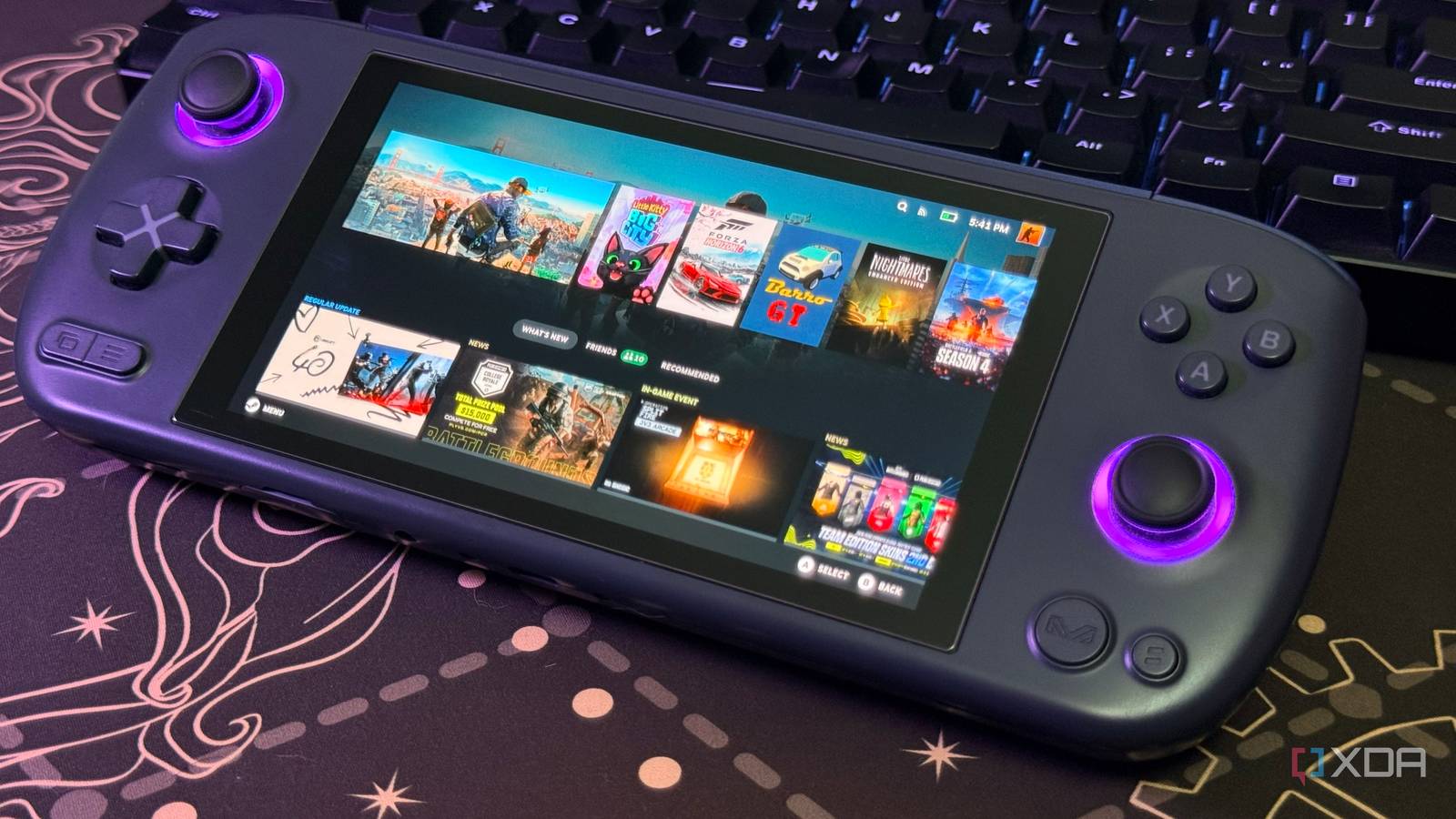
Published Sep 22, 2026, 1:30 PM EDT Abid covers consumer hardware, gaming, and platform updates with an emphasis on accuracy, clarity, and reader-first context. He holds a BSc in Computer Science and Engineering, and his work can be found in multiple publications, including Notebookcheck. Outside of work, he enjoys exploring new gaming hardware, testing system performance, and keeping up with developments across the broader tech landscape. Valve's Steam Deck played a major role in making handheld gaming a mainstream category, and from its launch, it wasn't just another handheld to choose from. Instead, it redefined what users should expect from a handheld PC. Looking back, Windows handhelds were essentially low-power PCs in a small form factor with attached controllers. They could run games, but the experience wasn't nearly what rivals like the Nintendo Switch, for example, offered. However, the same can't be said for the period after the Steam Deck launched. The Steam Deck made handheld PCs feel more like consoles SteamOS became a core part of the hardware experience It goes without saying that the hardware inside the Steam Deck isn't necessarily bleeding-edge, and that was true at launch. Launched in 2022, it came with a custom AMD APU featuring an 8CU RDNA2 iGPU. This custom integrated GPU sits between the 6CU Radeon 660M and 12CU Radeon 680M. The Radeon 680M, in particular, is a more capable integrated GPU and would have made the Steam Deck better at handling modern games. However, the device's hardware didn't make the biggest contribution to the gaming handheld segment. Instead, it's what Valve did with the software, SteamOS. Designed around the controller-first idea, SteamOS treated miniature PC hardware more like a console, and the difference is noticeable from the moment the device boots. Instead of dropping users into an interface that demands a mouse and a keyboard, Steam Deck has an interface that's easy to navigate with a controller. Another notable difference is that SteamOS puts the library front and center and allows users to quickly change performance settings, adjust brightness, and suspend games. The result? It made the handheld PC feel less cumbersome, and the software felt like it was part of the device itself, not something running on top of the hardware. Windows handhelds started to copy Steam Deck Gaming mode became mandatory The success of the Steam Deck shed light on the software experience that Windows handhelds bring to the table. After the launch, mainstream manufacturers like Asus and Lenovo introduced models that are not just smaller versions of Windows PCs with a set of controls attached. Instead, they also come with their own software layers that make use of the controller. For instance, Asus introduced Armory Crate SE for the ROG Ally handhelds, while Lenovo offered Legion Space. MSI also introduced something similar for its Claw gaming handheld PCs, and at the core, all these give users easy access to system settings, performance profiles, and their game libraries, similar to what SteamOS offers. The underlying operating system didn't change, so the handhelds still kept the flexibility Windows brings to the table. However, the experience changed significantly, with the gaming handhelds feeling more like a console than a small-sized PC. Some gaming handhelds became more like Steam Deck by ditching Windows Bazzite brought the core Steam Deck experience to other hardware The shift towards a console-like experience on Windows gaming handhelds didn't stay limited to manufacturers. Some owners took matters into their own hands by replacing the operating system with Bazzite, a Linux-based distribution that brought a Steam Deck-like experience to other hardware. Bazzite has handheld-focused controls, a controller-friendly interface, and integration with Steam's gaming environment. It's built on Fedora Linux, and Valve now supports third-party AMD-powered handhelds. Interestingly, users who are installing SteamOS or Bazzite mostly have a capable handheld that can game fine on Windows. The software change is mostly for the experience, and that says a lot about how the Steam Deck changed expectations around handheld PCs. Windows handhelds are becoming less like Windows PCs The desktop is no longer the core part of the system The Windows desktop is increasingly being pushed into the background on modern handhelds, and users are now greeted by full-screen game launchers and controller-friendly menus instead. However, Windows itself hasn't changed much. That is, the underlying operating system still offers the same flexibility as on traditional PCs, meaning that the Windows handhelds didn't lose their identity as PCs. Instead, thanks to the Steam Deck, the market learned that the best handheld experience is one where the PC aspect is there when you need it but stays out of the way at other times. Lenovo Legion Go S (AMD Ryzen™ Z2 GO) Chipset AMD Ryzen Z2 GO Processor (3.00 GHz up to 4.30 GHz) RAM 16 GB LPDDR5X-6400MT/s Storage 512 GB SSD M.2 2242 PCIe Gen4 TLC Wireless Connectivity Wi-Fi 6E 2x2 AX & Bluetooth® 5.3 Graphics Integrated AMD Radeon™ Graphics
Steam Deck's biggest win wasn't hardware, and modern Windows handhelds prove it
Full Article
Original Source
Read the full article at Xda-developers →KhanList aggregates and links to publicly available news content. We do not host full articles from third-party sources. Always verify important information with original sources.