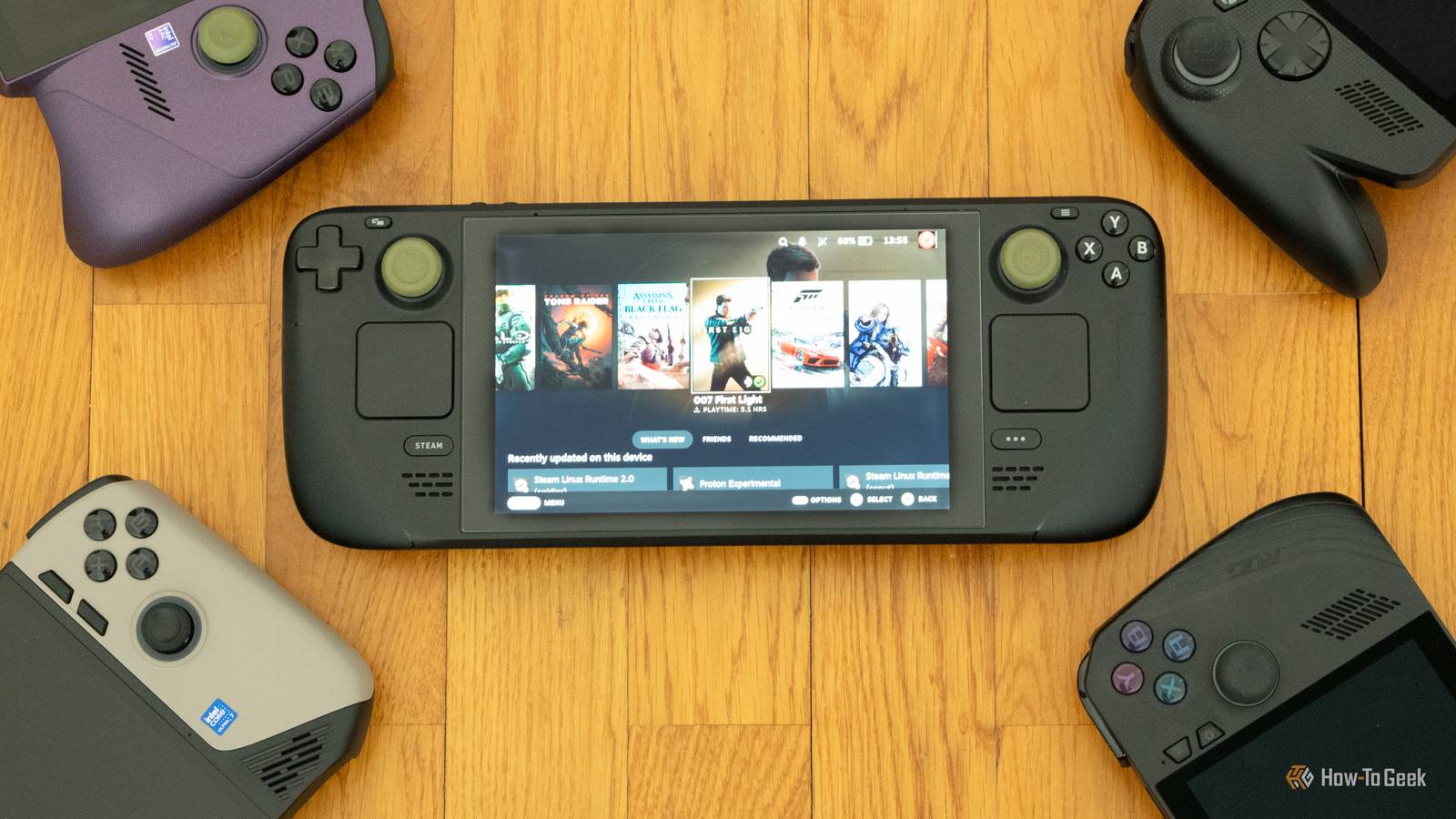
Credit: Goran Damnjanovic / How-To Geek Published Jul 28, 2026, 1:00 PM EDT Ever since he got his first smartphone, the legendary Nokia 6600, back in 2005, Goran became obsessed with technology. This obsession had only gotten worse after he received his first gaming PC a couple of months later. He fell in love with video games in the early '90s, shortly after embarking on his gaming journey with the Sega Master System II and SNES. Since then, he has built dozens of PCs, played thousands of games, and authored hundreds of articles about PC hardware, gaming hardware, and video games. He knows everything there is to know about the PC gaming and PC hardware space, and while his console gaming knowledge isn't as comprehensive, he considers himself a console veteran. Goran has almost a decade of experience writing about tech and video games for numerous web publications including TechSpot, TechPowerUp, and EsportsHeadlines. He has been writing for How-To Geek since December 2022. When he isn't gaming or deciding which component of his PC to upgrade next, you can find him strolling around Novi Sad while listening to music and contemplating what to play next. Sign in to your How-To Geek account Ever since its release in early 2022, Valve's Steam Deck has been touted as the best handheld PC for most people and the default recommendation for anyone looking to get into handheld PC gaming, for good reason. SteamOS is still the superior choice for controller-first gaming PCs compared to Windows, and while the hardware is getting a bit long in the tooth, the Deck can still run just about any game that's more than a year or two old, including a number of recent AAA releases. The OLED model's display is also still stunning, even though the 800p resolution doesn't quite do it justice. But the main reason the Steam Deck was the best handheld PC around and the default recommendation for every PC gamer who wanted a taste of handheld gaming was its price. Thanks to the recent massive price hike, though, which saw both Steam Deck variants jump by almost 50%, the Deck is anything but the best handheld PC around anymore. The value proposition isn't there anymore Not at this price You can argue that the Steam Deck hasn't been the best handheld gaming PC for a while now, and I'd somewhat agree. For anyone looking beyond a budget handheld PC, something capable of running recent AAA games at resolutions higher than 720p/800p with upscaling and at more than 30FPS, the Steam Deck hasn't been a top choice for years. But for the majority of gamers looking for their first handheld PC, the Deck was the sweet spot. SteamOS is a near-perfect interface for a handheld. It's easy enough for casual users to learn but also as powerful as any Linux distro—minus the immutable filesystem caveat—once you decide to explore Desktop Mode. The best thing about it is that you never have to venture beyond its console-like Game Mode, making SteamOS an excellent choice for anyone who doesn't want to wrestle with Windows, as well as for console gamers who aren't used to the intricacies of PC gaming. The hardware, while quite underpowered by 2026 standards, is still capable enough to enjoy just about any indie game out there, as well as almost any AAA game that's a few years old. If you're fine with 30FPS and upscaling, you can also play a good number of more recent AAA titles. For instance, I found the latest Resident Evil Requiem quite playable on the Deck, as well as a few other games, such as Pragmata, Silent Hill f, and Kingdom Come: Deliverance II. Lastly, those dual trackpads are still hands down the best way to enjoy strategy games, something no other PC handheld can match unless you're willing to pay a ridiculous price for something like the AYANEO Next. But after the devastating price hike, which saw the 512GB model go from $549 to $789 and the 1TB version shoot up from $649 to $949, the Deck is anything but the default handheld PC recommendation anymore. In fact, I'd say Valve's handheld PC is so overpriced at the moment that no one should buy one. The value proposition simply isn't there anymore, and we have the RAM-pocalypse to thank for that. ASUS ROG Xbox Ally X The ROG Xbox Ally X is ASUS' flagship Xbox-branded handheld PC, featuring AMD's Ryzen AI Z2 Extreme processor, 24GB of LPDDR5X memory, and a 7-inch 120Hz display. Combined with improved ergonomics, a larger battery, and deep Windows/Xbox integration, it delivers one of the most powerful handheld gaming experiences currently available. It's also the best bang for your buck PC handheld you can get at the moment. So, what's the best Steam Deck alternative? You won't like this If you asked me what the best Steam Deck alternative is right now, I'd have to pick the ASUS ROG Xbox Ally, which had a rather rough launch and was ridiculed for its underpowered hardware until recently. But considering its price is still firmly set at $599 as I'm writing this, it's the only budget handheld PC I'd recommend right now. On the surface, it doesn't look like much, but in this new reality, where a 1TB Steam Deck costs almost a grand (I still can't believe this), the $599 Xbox Ally is a bargain. Its 16GB of RAM and Ryzen Z2 A APU closely match the Steam Deck's hardware while offering a bit more performance, thanks to the fact that you can push the Z2 A up to 20W instead of being limited to a 15W TDP like on the Deck. The Xbox Ally also has a very nice screen for its price. While it's not OLED, the Xbox Ally's IPS panel offers a 1080p resolution, a 120Hz refresh rate, VRR support, solid color reproduction, and superb motion performance, at least for an LCD panel. You're also getting the best ergonomics on the market, which trump the Deck and every other handheld aside from its beefier cousin, the Xbox Ally X, along with a more than decent 60Wh battery, excellent thumbsticks and triggers, and 512GB of storage. While not an overly exciting package, the Xbox Ally is hands down the best Steam Deck alternative out there. Also, while Windows still isn't on par with SteamOS when it comes to a controller-friendly UI, it's gotten awfully close thanks to Xbox Mode. Ever since I reviewed the ASUS ROG Xbox Ally X and got a taste of Xbox Mode (then known as the Xbox Full Screen Experience), I've been using all my Windows handhelds almost exclusively in Xbox Mode and can honestly say I don't miss SteamOS at all. The good news is that SteamOS runs great on most AMD-powered handhelds. I've been using it on my original ASUS ROG Ally for almost a year now, and it's been running like clockwork. So if you can't stand Windows, installing SteamOS is always an option. Asus ROG Xbox Ally The ROG Xbox Ally is the more affordable of the two ASUS' new Xbox-branded handheld PCs, pairing AMD's Ryzen Z2 A processor with a 7-inch 120Hz display, ergonomic Xbox-inspired controls, and deep Windows/Xbox integration. It delivers a solid handheld gaming experience at a lower price than the flagship ROG Xbox Ally X, making it the best option for budget-conscious gamers. If you're in the market for the best bang-for-your-buck handheld PC, I'd recommend another ASUS machine, the ROG Xbox Ally X. It sounds ridiculous that I'm touting a $1,000 handheld as the best bang-for-your-buck option, yet here we are. The AMD Ryzen Z2 Extreme is a very capable chip that's able to run the latest AAA games at around 40FPS or higher, at 900p or 1080p with upscaling and low to medium settings, and the rest of the package is excellent as well. While the 7-inch screen is too small for some gamers, I find it perfectly adequate. The Xbox Ally X also has the best thumbsticks for shooter games, the best ergonomics on the market, 1TB of storage, and 24GB of RAM, and it also works great with SteamOS if you aren't fond of Windows. As for other PC handhelds I'd recommend, if you've got the cash and want the best, the MSI Claw 8 EX is a great little (well, not so little) machine I reviewed and now use as my main handheld. Its only major drawback—aside from the ridiculously high price, of course—is its clunky software, which is well behind what Valve has done with the Steam Deck's Game Mode and what ASUS offers with Armoury Crate. Its older cousins, the Claw 8 (powered by the Intel Core Ultra 7 258V) and the Claw A8 (powered by the AMD Z2 Extreme), are also solid choices, as long as you can find them for under ~$1,200. Sure, the software and ergonomics aren't on par with the Xbox Ally X, but the hardware is just as powerful (although the Intel version's performance isn't very consistent, especially in newly released games), you get access to AI-based XeSS upscaling in the case of the Claw 8, and that 8-inch screen found on both devices is a must-have for some gamers. When it comes to Lenovo handheld PCs, I wouldn't recommend buying one brand new. The Legion Go 2 is grossly overpriced for what it offers—the Z2 Extreme variant currently sells for $2,000—and is simply too massive for its own good, despite that gorgeous OLED screen. The same can be said about the Legion Go S, which got a price hike similar to the Steam Deck's a while ago, leaving it a no-go for prospective handheld PC owners, even though it's a very good handheld, especially the SteamOS variant. Before I move on, I'd also recommend considering the Nintendo Switch 2. Sure, it's not a PC, but thanks to backward compatibility, you've got access to a ton of fantastic (and cheap) indie games, as well as a treasure trove of Nintendo exclusives. Also, that $449 price (which will increase by $50 come September, mind you) is rather attractive. Nintendo Switch 2 8/10 4K Capability Yes, docked 4K Capabilities HDR The Nintendo Switch 2 is the company's latest hybrid home console, with more powerful graphics and processing, a larger 7.9” LCD touch screen with support for HDR, and more online features. The used handheld gaming PC market has some real bargains Buying used is a great way to get your hands on an affordable yet beefy handheld PC Credit: Goran Damnjanovic / How-To Geek Those of you who are fine with buying used hardware have a much wider pool of handheld PCs to choose from. While used Steam Decks are mostly overpriced due to the recent price hike, you can still find a good deal if you're patient and a savvy negotiator. The original ASUS ROG Ally (the white one), is the best used deal right now. You can find it for less than $400 on eBay and Facebook Marketplace if you're patient, which is a great price for a device capable of running virtually any new AAA game. The newer ROG Ally X isn't quite as good a deal, but you should definitely consider it if you find one at the right price. It's also worth keeping an eye out for Lenovo Legion Go S listings, especially the Z1 Extreme version. Lastly, you should also scour the used market for newer and beefier handhelds because every so often, someone buys one, ends up disappointed for one reason or another, and is now looking to unload it for cheap. This includes devices such as the MSI Claw 8, ROG Xbox Ally X, and the Lenovo Legion Go 2. It's not just the Steam Deck: The entire handheld PC market is in crisis While the Steam Deck price hike isn't the final nail in the coffin of the handheld PC market, you can't deny that the handheld PC market as a whole is in crisis. I wrote about not liking where things were headed a while ago, and while I unfortunately got most things right, I still have hope for handheld PCs because I love them. I love being able to play Halo: Combat Evolved on a handheld PC while getting cozy on the sofa, I love tinkering with my handhelds and testing games on them, and I love reviewing handheld PCs. The harsh truth is that AI's incessant hunger for memory and storage is slowly destroying the PC hardware market and that things will get worse before they get better. But I hope they do get better, and that in a few years, we'll get a Steam Deck 2 that once again becomes the go-to choice for any gamer who wants a taste of that sweet handheld gaming life.
Steam Deck isn't the best handheld gaming PC anymore
Full Article
Original Source
Read the full article at Howtogeek →KhanList aggregates and links to publicly available news content. We do not host full articles from third-party sources. Always verify important information with original sources.