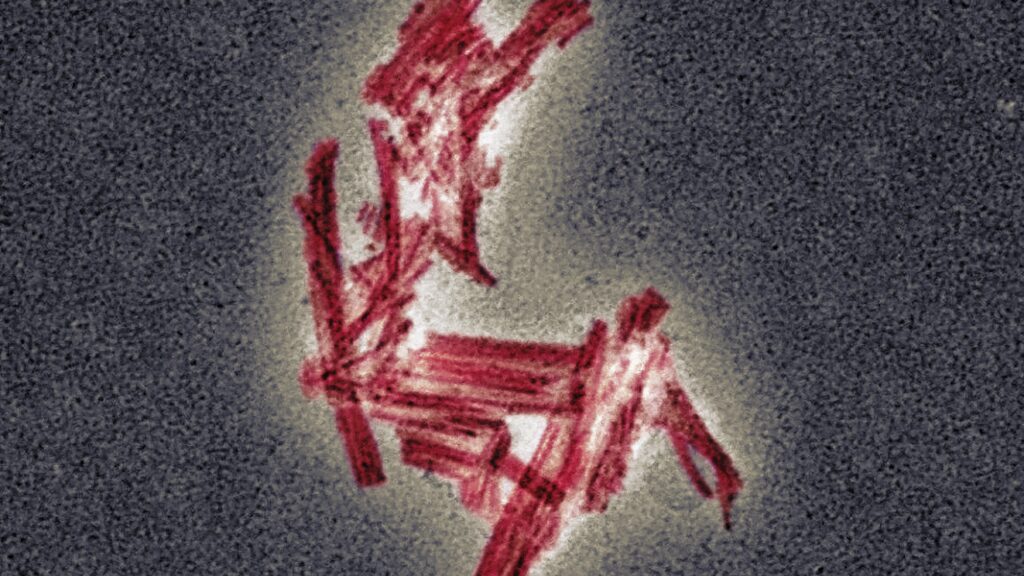
In the race for new ways to treat Alzheimer’s and other devastating neurologic diseases, the protein tau has become a tantalizing target for drug developers. A new study lends support to those efforts by describing a previously unknown role that tau plays in neurodegeneration — and suggesting a novel way researchers might block the protein’s activity. A team led by Stanford scientists found that tau can gum up the works of a cell’s mitochondria, its energy-producing powerhouse. The protein sends electrons flowing in the opposite direction of their usual microscopic relay race, a reversal that generates reactive oxygen species, cellular stress, and inflammation. Scientists found that blocking this phenomenon, known as reverse electron transport, reversed many of the harmful effects and improved learning and memory in flies and mice. Whether the same will hold true in people is for now unclear, though an analysis of human cells grown in the lab and patient brain tissue suggests blocking the retrograde flow of electrons could make neurons healthier. Two of the study’s authors have started a biotech startup to put this idea to the test. STAT+ Exclusive Story Already have an account? Log in This article is exclusive to STAT+ subscribers Unlock this article — plus daily coverage and analysis of the biotech sector — by subscribing to STAT+. Already have an account? Log in View All Plans To read the rest of this story subscribe to STAT+. Subscribe
STAT+: Study reveals new role for tau, a top target for Alzheimer’s drug development
Full Article
Original Source
Read the full article at Statnews →KhanList aggregates and links to publicly available news content. We do not host full articles from third-party sources. Always verify important information with original sources.