
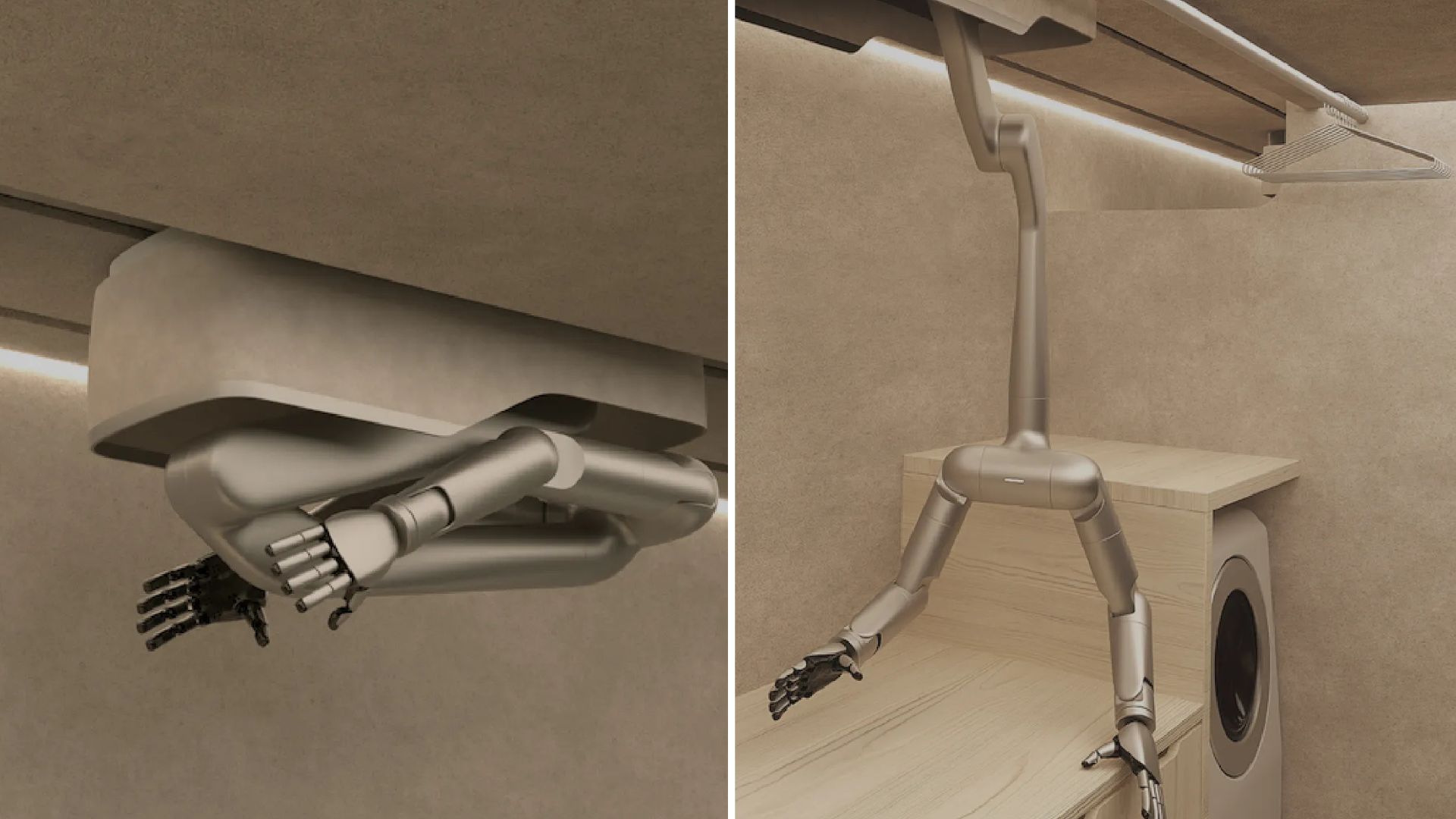
As global tech giants rush to bring two-legged humanoid robots into living rooms, Tokyo-based startup MW is heading the other way. The company is developing homes with integrated, ceiling-mounted robotic arms to automate household chores and offer an alternative to bipedal humanoid robots. The concept rests on three pillars: custom residential architecture, integrated hardware called the MW bot, and the MW Intelligence software operating system. Reportedly, MW is targeting a 2028 Tokyo debut for its automated homes. MW CEO Shuzo Narita envisions scaling built-in robotic homes to 10,000 units annually by 2035. Reaching this target would mean capturing roughly five percent of Japan’s current new home construction market for establishing automated housing as a mainstream residential standard rather than a niche luxury. “The first homes and software are complete, and we have already received over 1,000 applications and have begun sales. The first generation (Gen1) of the MW bot, a robot we have been developing alongside our architecture and software, is also complete,” noted Narita in a blog post. “The robot has been integrated into a trailer home, marking the first step in the fusion of architecture and AI robotics,” it added. Built-in robotic arms for housekeeping There is a lot of enthusiasm for domestic humanoid robots. However, uncluttered laboratories rarely reflect everyday homes. Safety and spatial constraints drove the new design. Compact Japanese homes leave little room for bulky, bipedal robots to navigate around furniture, pets, or children. Plus, bipedal bots spend vast computational energy just attempting to balance and navigate around unexpected obstacles. MW is betting that wall- and ceiling-mounted machines can tackle household chores far more easily — though only time will tell if integrated architecture beats mobile bots. The newly unveiled ceiling-mounted setup relies on two robotic arms equipped with claw-like hands. Operating on overhead rails, the system handles everyday tasks like carrying groceries and folding laundry. During a live demonstration in Tokyo’s Toyosu waterfront district, the bot correctly sorted pantry goods like soy sauce from items needing refrigeration. It successfully grabbed a hand towel from the dryer and folded it neatly. However, the machine struggled when it came to folding a T-shirt. Backed by $20M The startup draws inspiration from Tony Stark’s fictional AI butler J.A.R.V.I.S., but its immediate business model relies on high-end real estate. MW has already sold a three-story house in Meguro Ward and built additional retrofittable homes in Yokohama and Fukuoka, with price tags running between ¥200 million and ¥400 million ($1.3M–$2.7M USD). The main goal is to sell its first fully functional robot-equipped home by 2028. Compared to other tech companies that only write software or hardware startups that buy third-party housing. MW manages the entire stack vertically: acquiring land, designing architecture, managing construction, developing AI models, and building the physical robots. Now with ¥3 billion ($20 million) in seed capital and eyeing a ¥10 billion Series A, the two-year-old firm is making a major wager that built-in robotics are the ultimate answer to home chores. “We have literally not yet achieved even 1 percent of what we want to do, but our initial vision is starting to take shape, little by little,” Narita wrote in the the blog post. Reports suggest that the startup plans to expand internationally starting in 2029, though it has not yet decided on a potential IPO. For now, MW’s next target market includes larger home builds, with prospective sites in the coastal city of Futtsu and the Nagano resort destination of Karuizawa.Get the latest in engineering, tech, space & science - delivered daily to your inbox.Mrigakshi is a science journalist who enjoys writing about space exploration, biology, and technological innovations. Her work has been featured in well-known publications including Nature India, Supercluster, The Weather Channel and Astronomy magazine. If you have pitches in mind, please do not hesitate to email her.
Startup unveils Iron Man-inspired homes with built-in robotic arms to automate chores
Full Article
Original Source
Read the full article at Interestingengineering →KhanList aggregates and links to publicly available news content. We do not host full articles from third-party sources. Always verify important information with original sources.