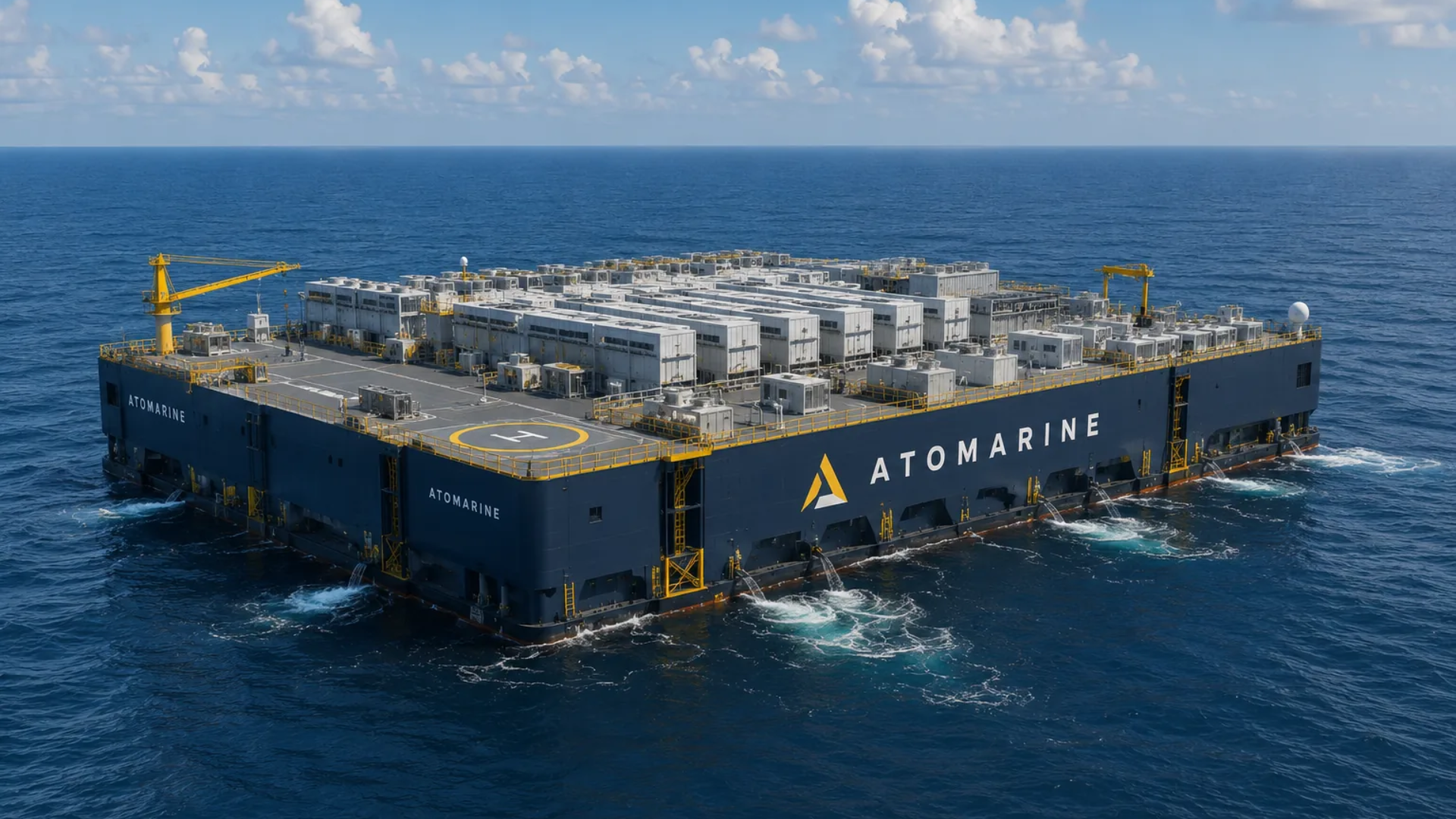
(Image credit: Atomarine) Data centers on land are facing increasing opposition and having a hard time getting off the ground — from power connection issues that can take months or years to resolve, to neighborhood concerns about noise and air pollution, as well as their impact on the local water supply. One startup called Atomarine wants to solve this by building nuclear-powered data centers on barges and deploying them at sea.Go deeper with TH Premium: AI and data centersThere have already been various proposals to put data centers out at sea (or even submerged) from established names and startups. We’ve seen conventional examples from companies like Samsung Heavy Industries and Japanese shipping company MOL who to put the servers on dedicated ships and are powered by liquefied natural gas (LNG). There are also more innovative solutions from startups that want to put them in the bases of ocean-based wind turbines or in wave energy converters.Atomarine differs by building data centers as floating barges, similar to floating oil platforms, which can be deployed anywhere — even in international waters. This should help cut down on the permitting process, and it doesn’t have to worry about disturbing neighbors. The electricity needed to run the infrastructure is then delivered by a power ship moored alongside the barge supplied by LNG ships. Once small modular nuclear reactors (SMRs) become commercially available and certified for shipboard use, operators can then swap out the conventionally powered electricity suppliers with a nuclear one relatively quickly. And because these data center barges are modular in nature, it would be relatively easy to upgrade and scale the floating data center.While this project sounds promising, building a megastructure like this comes with several challenges. The biggest one is that the ocean is massive and unpredictable, so these barges must be engineered to face extreme weather conditions, making them quite expensive to deploy. It must also be connected to high-speed internet (unless the operators plan to ship tons of drives daily), so they’ll have to lay undersea cables, as well. Furthermore, data servers are particularly sensitive equipment, so they must be upgraded to ensure that they can withstand the continuous rolling motion and the salty environment of the sea. There’s also the question of an SMR’s viability in shipborne use, although the U.S. Navy already has a good track record of running nuclear reactors aboard massive vessels.The mounting opposition against data centers, both by the general public and politicians, is making it harder and more time-consuming to build new projects across the U.S. While an ocean-based data center like this is likely going to be significantly more expensive and technically challenging than land-based developments, this might become the fastest option in the future if the idea proves to be viable. Follow Tom's Hardware on Google News, or add us as a preferred source, to get our latest news, analysis, & reviews in your feeds.Get Tom's Hardware's best news and in-depth reviews, straight to your inbox. Jowi Morales is a tech enthusiast with years of experience working in the industry. He’s been writing with several tech publications since 2021, where he’s been interested in tech hardware and consumer electronics.
Startup plans to put nuclear-powered data centers in the sea — modular units could be much faster to deploy, but questions about reliability and longevity remain
Full Article
Original Source
Read the full article at Tomshardware →KhanList aggregates and links to publicly available news content. We do not host full articles from third-party sources. Always verify important information with original sources.