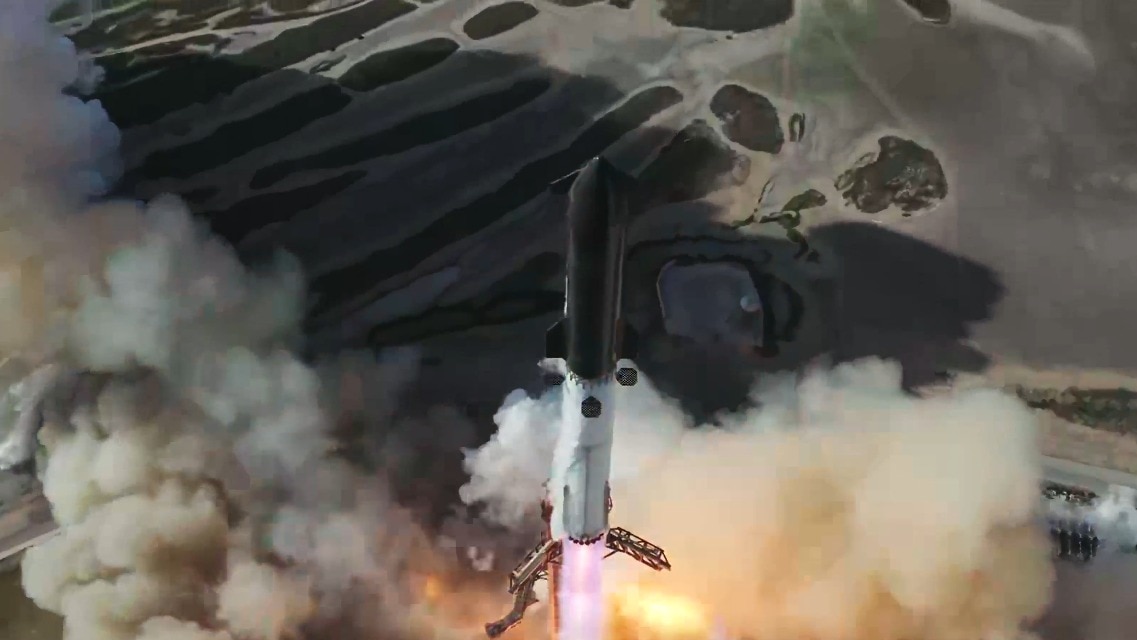
Starship has cleared its biggest hurdle, but the mission is only just beginning. Several crucial moments still lie ahead as the world's most powerful rocket embarks on yet another test, one that could shape the future travel to Moon and Mars.SpaceX's Starship is seen taking off on Flight 13. (Photo: Screengrab)SpaceX's Starship Flight 13 successfully lifted off from Starbase in Boca Chica, Texas, at 4:21 am IST on Saturday, July 25, marking another major milestone in the company's effort to build a fully reusable rocket capable of carrying astronauts and cargo to the Moon and Mars.The world's tallest and most powerful rocket thundered away from the launch pad after a smooth countdown, days after a previous launch attempt was called off at the last second due to an engine startup issue.The mission carried 20 next-generation Starlink Version 3 satellites on a suborbital test flight while also demonstrating key capabilities needed for future operational missions.LET'S GO! SpaceX just SUCCESSFULLY launched Starship from Starbase—the 13th Starship flight—as they get closer and closer to securing a RE-USABLE rocket the size of a 40-STORY buildingOnly in America, baby!Congratulations to @elonmusk and the SpaceX team pic.twitter.com/HcDdBZPYZm— Nick Sortor (@nicksortor) July 24, 2026WHAT FOLLOWED STARSHIP LAUNCH?After the massive rocket successfully left the launchpad, it moved through several major phases during its journey into space and back. The first big milestone happened around over 2 minutes after liftoff, when the lower booster section separated from the upper Starship spacecraft.After breaking away, this booster steered itself backward and slowed down for a controlled ocean splashdown in the Gulf of Mexico almost 7 minutes into the flight. Meanwhile, the upper Starship spacecraft continued to climb until it reached the 8-minute and 5-second mark.Soon the rocket shut off its engines and entered the coasting phase, which is a period where the ship simply floats through the silence of space without using any engine power.While drifting in this coasting phase, the ship began releasing 20 real Starlink internet satellites into space.This deployment allowed the new satellites to unfold their panels and test their space lasers. (Photo: Screengrab/@SpaceX) Shortly after, Starship will briefly restart one of its engines to prove it can safely steer itself in space.The final phase comes to an end 1 hour and 5 minutes after launch, when the Starship spacecraft plunges back through the atmosphere and makes its final splashdown in the ocean.WHY IS FLIGHT 13 IMPORTANT?Flight 13 is another step towards making Starship a fully operational launch vehicle.The rocket is central to SpaceX's plans to deploy larger Starlink satellites, support Nasa's Artemis programme and eventually transport humans to Mars. (Photo: X/Screengrab) Unlike earlier flights focused primarily on proving the vehicle could survive launch and re-entry, this mission expands the rocket's operational capabilities by testing payload deployment and engine relight in space.SpaceX will now monitor the remainder of the mission, including the booster's planned splashdown, the upper stage's performance, satellite deployment and Starship's controlled re-entry into the Indian Ocean.The company is expected to release further updates as each mission milestone is completed.- EndsPublished By: Nitish SinghPublished On: Jul 25, 2026 04:22 IST
Starship launched on 13th flight to space, Super Heavy rocket crashes
Full Article
Original Source
Read the full article at Indiatoday →KhanList aggregates and links to publicly available news content. We do not host full articles from third-party sources. Always verify important information with original sources.