
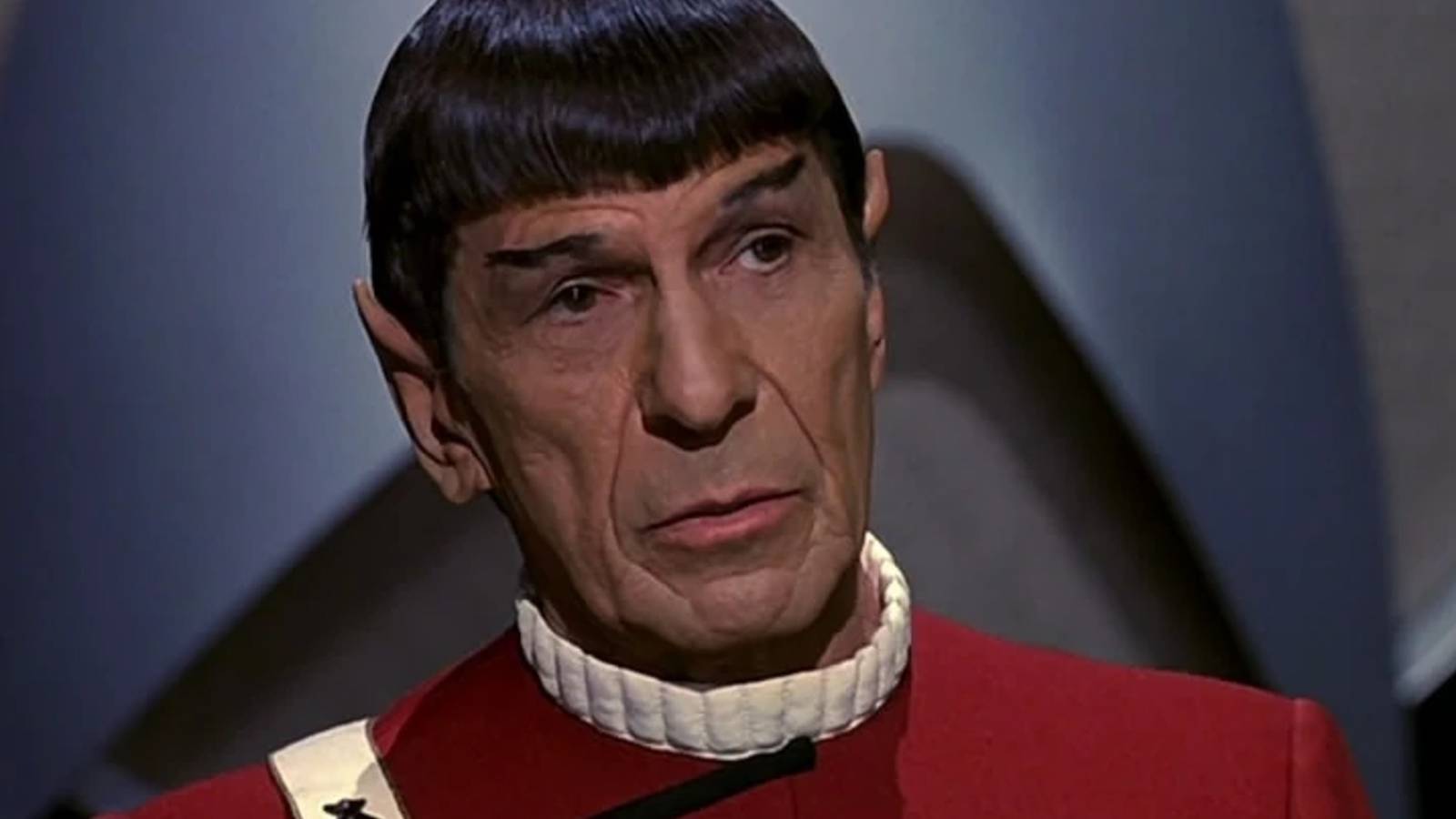
Published Aug 18, 2026, 6:31 PM EDT Simon Gallagher has worked in movie and TV journalism for more than 15 years. He has written more than 6000 articles and reviews, and edited thousands more. He is an expert in the entertainment industry, particularly in the golden age of screen superheroes. Simon is also a Rotten Tomatoes approved critic. When it comes to truly great Star Trek movie quotes, there's an embarrassment of riches. Despite occasional wobbles in quality, the big screen arm of Star Trek has always benefited from great scripts. The episodic nature of the series built rich characterization as the franchise's foundation, but Gene Roddenberry's playbook also fine-tuned the "alien of the week" approach that lent itself perfectly to larger movie set pieces. And the brand's patented blend of melodrama and sci-fi technospeak brought thematic grandeur and a delightful theatricality that translated just as well on the silver screen as it had when beamed directly into fans' homes. Long after the franchise ends, Star Trek II: The Wrath of Khan will likely still be held in the highest regard, and it says a lot about the sequel's enduring legacy that it's widely considered an excellent movie in its own right beyond its appeal to franchise fans. It's also an impeccably written movie. Stardate 47988.1 · Crew Assessment The Final FrontierTrivia Challenge 🚀ShipsEnterprise! ⭐CrewMake it so ☠EnemiesResistance is… ⚡TechWarp speed! 📖LoreLive long… ENGAGE → 01 The USS Enterprise is the most iconic starship in science fiction. What is the registry number of Captain Kirk’s original Enterprise from The Original Series? ANCC-1701-D BNX-01 CNCC-1701 DNCC-74656 ✓ Correct! NCC-1701 is the registry of Kirk’s original Constitution-class Enterprise. The “-D” suffix belongs to Picard’s Galaxy-class ship, NX-01 is Archer’s Enterprise, and NCC-74656 is Voyager. ✗ Red alert! The answer is NCC-1701. Kirk’s original Constitution-class Enterprise carried this now-legendary registry. NCC-1701-D is Picard’s Enterprise from TNG, NX-01 is Captain Archer’s, and NCC-74656 belongs to Voyager. NEXT → 02 Kirk’s most trusted officer is a half-human, half-Vulcan science officer famous for his logic and iconic salute. Who is this legendary character? AData BSpock CTuvok DSarek ✓ Correct! Mr. Spock, played by Leonard Nimoy, is the half-Vulcan science officer whose “Live long and prosper” salute became a cultural icon. His struggle between logic and emotion defines the heart of the Original Series. ✗ Red alert! The answer is Spock. Data is an android from TNG, Tuvok is Voyager’s Vulcan tactical officer, and Sarek is Spock’s Vulcan father. Only Spock is the half-human, half-Vulcan first officer of Kirk’s Enterprise. NEXT → 03 Starfleet’s most important regulation forbids interference with the natural development of alien civilizations. What is this guiding principle called? AThe Temporal Accord BGeneral Order One CThe Omega Directive DThe Prime Directive ✓ Correct! The Prime Directive (also known as General Order 1) is Starfleet’s most sacred law. It prohibits interfering with less-developed civilizations — though Kirk, Picard, and Janeway have all famously bent or broken it when lives were at stake. ✗ Red alert! The answer is the Prime Directive. While “General Order One” is technically another name for it, the Prime Directive is the universally known term. The Omega Directive and Temporal Accord are separate, more specialized Starfleet protocols. NEXT → 04 “Resistance is futile.” This chilling declaration belongs to a cybernetic collective that assimilates entire civilizations into its hive mind. What is this fearsome species called? AThe Borg BThe Dominion CThe Romulans DSpecies 8472 ✓ Correct! The Borg are Star Trek’s most terrifying villains — a hive-mind collective that forcibly assimilates species and technology. Captain Picard was famously assimilated and transformed into Locutus in the landmark TNG episode “The Best of Both Worlds.” ✗ Red alert! The answer is the Borg. The Dominion is the Gamma Quadrant empire from DS9, the Romulans are a rival empire, and Species 8472 is actually one of the few species that the Borg themselves fear. Only the Borg declare “Resistance is futile.” NEXT → 05 Captain Jean-Luc Picard commands the Enterprise-D in The Next Generation and later received his own series, Star Trek: Picard. Which acclaimed actor portrays him? AWilliam Shatner BAvery Brooks CPatrick Stewart DScott Bakula ✓ Correct! Sir Patrick Stewart brought gravitas, Shakespeare, and Earl Grey tea to the captain’s chair for seven seasons of TNG, four films, and three seasons of Star Trek: Picard. His “Make it so” is one of TV’s most iconic catchphrases. ✗ Red alert! The answer is Patrick Stewart. William Shatner plays Captain Kirk, Avery Brooks is Captain Sisko on Deep Space Nine, and Scott Bakula captains the NX-01 Enterprise. Only Sir Patrick Stewart portrays the legendary Jean-Luc Picard. NEXT → 06 Starfleet vessels travel faster than light by bending space around them using a matter-antimatter reaction. What is this propulsion system called? ATranswarp Drive BWarp Drive CSlipstream Drive DSpore Drive ✓ Correct! Warp Drive is the standard faster-than-light propulsion in Star Trek, powered by dilithium-regulated matter-antimatter reactions. Zefram Cochrane invented it in 2063, which led to humanity’s first contact with the Vulcans. ✗ Red alert! The answer is Warp Drive. Transwarp is an advanced Borg technology, Slipstream is an experimental quantum drive, and the Spore Drive uses mycelial network navigation (from Discovery). Standard Starfleet vessels use Warp Drive. NEXT → 07 At Starfleet Academy, cadets face a notorious no-win scenario designed to test their character under impossible circumstances. James Kirk is the only cadet who ever beat it — by cheating. What is this test called? AThe Prometheus Trial BThe Omega Simulation CThe Corbomite Maneuver DThe Kobayashi Maru ✓ Correct! The Kobayashi Maru is an unwinnable rescue simulation that tests how cadets handle certain death. Kirk reprogrammed it so he could win — earning a commendation for original thinking. It was memorably featured in Star Trek II: The Wrath of Khan. ✗ Red alert! The answer is the Kobayashi Maru. The Corbomite Maneuver is a TOS episode, not an Academy test. The Kobayashi Maru is the famous no-win scenario that Kirk defeated by reprogramming the simulation — because he doesn’t believe in the no-win scenario. NEXT → 08 In the widely regarded greatest Star Trek film, a genetically enhanced superhuman from Earth’s past seeks revenge against Captain Kirk. “KHAAAAN!” Who is this iconic villain? AKhan Noonien Singh BGeneral Chang CQ DGul Dukat ✓ Correct! Khan Noonien Singh, played by Ricardo Montalbán, is Star Trek’s greatest villain. First appearing in the TOS episode “Space Seed,” he returned in The Wrath of Khan (1982) for a devastating revenge plot that cost Spock his life. ✗ Red alert! The answer is Khan Noonien Singh. General Chang is a Klingon from Star Trek VI, Q is TNG’s omnipotent trickster, and Gul Dukat is DS9’s Cardassian antagonist. Only Khan inspired Kirk’s legendary scream across the cosmos. REVEAL MY SCORE → Mission Complete Your Starfleet Record / 8 Are you an Admiral — or still a cadet on deck-scrubbing duty? ↻ RE-ENGAGE There are certainly more flashy — and inevitably, more clipped — quotes, like Kirk's chest-thumping and infinitely mimicked "Khan!", but one quote more than any from the masterpiece is arguably the most important line in the entire franchise. The immortal line in question, "I have been and always shall be your friend," is so good that it broke containment from the franchise and belongs in sci-fi's hall of fame. Spock's "Friend" Quote In Star Trek II: The Wrath Of Khan Is Perfect Spock's noble sacrifice at the end of Wrath of Khan is so iconic that it managed to survive being undone just one movie later, which would typically prompt far more than mild complaints from the fanbase. That's an understatement, actually: it should have been a disaster. However, reviving Nimoy's half-Vulcan scored enough goodwill by the simple virtue of giving us all one of the greatest characters ever conceived back. It didn't even matter that what it cost might not hold up as much as the sacrifice itself, but that's a different story. And it all comes down to how perfectly Spock's tragic choice pays off his entire arc, with his final words to Kirk delivering the haymaker. Spock's sacrifice is the culmination of a movie obsessed with the idea of legacy, framed around Admiral Kirk's difficult transition into the post-Enterprise chapter of his career. He might lament starship captaincy as a "young man's game," but he effectively cuts a dejected figure almost overshadowed by his own glories — a quietly-retired gunslinger whose hand still twitches to his hip. In normal circumstances, the sacrifice at the end of Wrath of Khan would be the perfect end to Kirk's arc: the climax to a story defined by an unwillingness to lose, even when the odds don't allow loss. Spock being the one to die flipped those expectations beautifully. Kirk helplessly watching his friend die in Engineering through the glass is a killer blow to the Admiral just as much as it is to Spock. It destroys the illusion of a hero who can't lose, even after Khan drags him back into the action. And Spock's decision is crushingly logical when you consider Kirk's volatility might complicate the necessary sacrifice. If he was willing to break the rules for the Kobayashi Maru exercise, why wouldn't he seek to cheat death? But then Spock's final words devastate even that logic: he could have explained why he had to be the one to die — a final triumph of logic — but he goes beyond saying "the needs of the many..." to share the final confirmation of Kirk's importance to him. It's not only the right end to Spock's entire Original Series arc, but to Kirk and Spock's dynamic. The Star Trek Quote Is A Core Part Of The Franchise's Enduring Appeal MovieStillsDB Kirk and Spock's relationship has endured as one of the greatest double acts in all of storytelling, defining three separate timelines because of the simple appeal of their odd-couple conflict. We've seen countless dynamics between mavericks and their straight-laced partners, and though Kirk and Spock weren't the first, they might well be the most definitive because it was literally coded into their genetics. We love them for their prickly affection for one another, a microcosmic drama reflective of the far bigger idea that drives Star Trek: that cultural expansion requires collaboration, despite differences. Kirk and Spock's friendship (a word that doesn't even feel sufficiently grand) is the ultimate defiance of the Federation/Klingon conflict and later the Federation/Borg conflict that demanded conquest because of difference. James T. Kirk was (and is) popular because he is an aberration of everything Star Trek's vision of a post-scarcity, ultra-efficient future is supposed to represent. Every spark of brilliance and defiance should have been conquered out of him, and his relationship with the cold, logical Spock should never have happened. But Star Trek is also about more than high-concept sci-fi ideas, worlds, and technology that belong more to Spock: it's about the fragile, uniquely human contradiction of Kirk, and love, and friendships that should be illogical. And Spock's final moments being a warm outreach to his friend did more for that central message than any other single moment in Trek's long and storied history. Star Trek has always been fascinated by the trope of an outsider looking in, and it's obviously not an unfamiliar idea in broader sci-fi works. That has always been part of the franchise's promise to the audience to explore strange new worlds and to seek out new life and new civilizations, and a massive part of the genre's appeal, but Trek might just do it best. Spock's internal battle between emotion and logic was the blueprint, but we've also seen it in Data's desire to become human, Seven of Nine's traumatic quest to reintegrate as a human, and the Doctor's often hilarious dynamic with his patients. The franchise presents humanity — and all alien variations — as something worth preserving, even in the unforgiving order of the Federation's supremacy. It's something to aspire to for those who don't have it, and Spock's final words are basically the greatest victory of that idea. Wrath Of Khan Holds Up As A Great Sci-Fi Movie, Not Just A Great Star Trek Movie MovieStillsDB There are a number of good Star Trek movies, and a smaller group of excellent ones, but as I've already said, The Wrath of Khan is more than just a great franchise movie. It is great without having to rely on the captured affection of Star Trek fans, thanks to an excellent story by Nicholas Meyer, whose aspirations to make it more than the show behind it managed to avoid insulting that material or alienating fans. He gave the world of sci-fi a story that took in greatest hits from other genres and from age-old stories like Moby Dick. There's also the small matter of the movie's brilliant villain, thanks to Ricardo Montalbán's firebrand performance, and the familiar, warm performances of the returning Original Series cast deserve just as much praise. They're often overlooked, and Shatner's melodrama attracts some cute mockery, but there are multiple excellent performances. And it's more than "just" a Star Trek movie, chiefly because of the clever decision to make human emotions — redundancy, existential anxiety, burning vengeance, tragic loss — the real heart of the story behind the clinical technology and aliens. The Wrath of Khan is a formidable contender for one of the best sci-fi movies of the 1980s. It is surprising and rewarding, and that is best captured in moments like Spock's final words. And even decades on, it remains irresistibly rewatchable, and it's all thanks to the flawless marriage of sci-fi spectacle and accessible human emotion. Or should that be half-human emotion...?
Star Trek's Greatest Movie Line Is Still A Top 10 Quote In Sci-Fi History
Full Article
Original Source
Read the full article at Screenrant →KhanList aggregates and links to publicly available news content. We do not host full articles from third-party sources. Always verify important information with original sources.