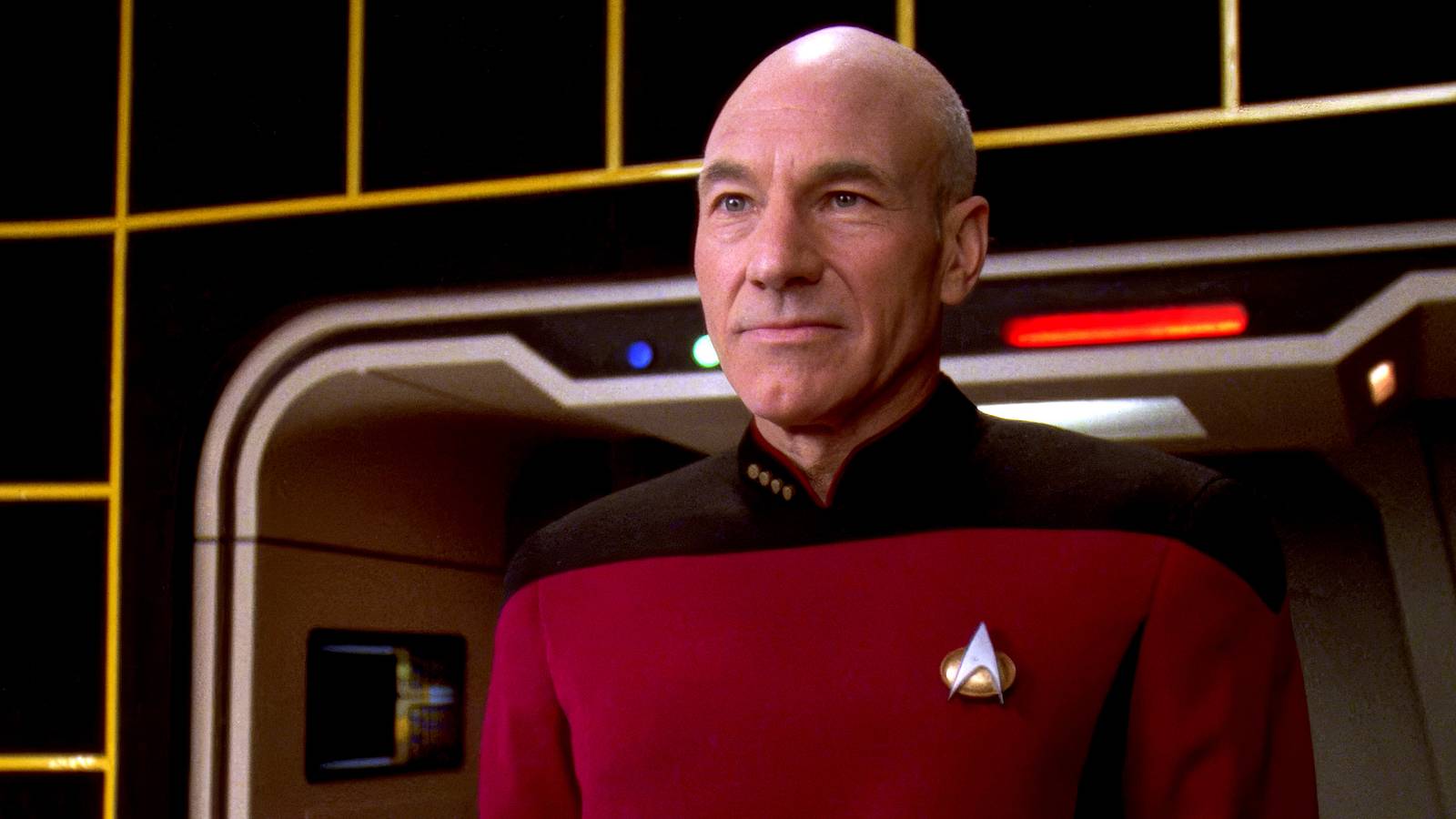
Image via Paramount Television Published Jul 25, 2026, 11:07 PM EDT Lade Omotade is a News and Features Author at Collider. She covers everything from casting announcements and streaming trends to behind-the-scenes stories and the cultural impact of today's biggest film and television franchises. Her work has also been featured on AOL and IMDb, reflecting her passion for delivering timely entertainment news, insightful analysis, and engaging features for a global audience. Sign in to your Collider account Star Trek, as we know it, owes its legacy to a fanbase that has never stopped showing up, especially for its best moments, most notably in The Next Generation. Star Trek: The Next Generation was a true turning point for the franchise, seeing as it modernized Gene Roddenberry's universe and set a new standard for modern sci-fi television. Originally airing from September 28, 1987, to May 23, 1994, the space epic is the franchise's second live-action series and took heavy inspiration from the first-ever Star Trek entry, The Original Series. Unlike its predecessor, however, The Next Generation moved away from relying strictly on a central trio, Kirk, Spock, and McCoy. Instead, it built a true ensemble cast featuring professional Enterprise crew that acted more like representatives of a utopian future than cowboys in space. Nearly three decades after The Next Generation went off the air, another similarly phenomenal entry arose: Star Trek: Strange New Worlds. Often regarded as the spiritual successor to TNG, Strange New Worlds has consistently won over critics and lifelong fans alike with every passing season, proving that the franchise's episodic, character-driven storytelling still works today. Now in its fourth season, the show has refined The Next Generation's classic formula for a modern audience in ways few thought possible. Collider Exclusive · Star Wars Quiz Which Force UserAre You? Light Side · Dark Side · Or Somewhere Between The Force is not a binary. It is a spectrum — from the serene halls of the Jedi Temple to the shadowed corridors of Sith space. Ten questions will reveal where you truly fall. The Force has always known. Now you will too. 🔵Jedi Master 🟡Padawan 🔴Sith Lord ⚫Inquisitor ⚪Grey Jedi IGNITE YOUR SABER → 01 What is the Force to you? Your relationship with the Force defines everything else. AA living energy I must be worthy of — it is not mine to control. BSomething vast and mysterious I'm only beginning to understand. CNeither light nor dark — just a current I choose to ride. DPower. Pure and simple. The strong take it; the weak don't. NEXT QUESTION → 02 When you feel strong emotions — anger, grief, love — what do you do? The Jedi suppress. The Sith feed. Others choose differently. AAcknowledge them, then release them. Attachment leads to suffering. BFeel them fully, then decide what to do — they're not the enemy. CBury them. Emotion is a liability I can't afford to indulge. DUse them. Passion is the engine of the dark side for good reason. NEXT QUESTION → 03 The Jedi Council gives you an order you disagree with. You: How you handle authority reveals your alignment. AFollow it. The Council's wisdom surpasses my own perspective. BVoice my objection clearly, then defer to the decision. CComply outwardly while doing what I think is right. DIgnore it. The strong don't answer to committees. NEXT QUESTION → 04 You are offered forbidden knowledge that could give you enormous power. The cost is crossing a moral line. You: The dark side's pull is never more than a choice away. ARefuse without hesitation. There is no cost worth that price. BWeigh it carefully — sometimes darkness holds real answers. CFeel the pull but walk away — for now. DAccept it. Power justifies the method used to obtain it. NEXT QUESTION → 05 Your approach to training and learning is: A student's habits become a master's character. ADedicated but humble. There is always more to learn from my masters. BRigorous and patient. Mastery is earned through years of discipline. CEclectic — I draw from every tradition, not just one. DRelentless and brutal. Pain accelerates growth. Rest is weakness. NEXT QUESTION → 06 In a duel, your lightsaber fighting style reflects: Combat is the purest expression of a Force user's philosophy. ADefense and composure — I wait for my opponent to overcommit. BFast and instinctive — I trust the Force to guide my movements. CUnpredictable — I blend styles to keep enemies off-balance. DOverwhelming aggression — I end fights before they begin. NEXT QUESTION → 07 A defeated enemy lies at your feet, powerless. You: Mercy — or its absence — is the truest test of alignment. AStrike them down — compassion toward enemies is naïve and costly. BNeutralize them permanently. I can't afford loose ends. CSpare them if I can — but stay clear-eyed about the risks. DOffer them a chance to surrender. Every being deserves that. NEXT QUESTION → 08 The Jedi Code forbids attachment. Your honest view on love and bonds: The source of the greatest falls in the galaxy. AThe Code is right. Attachment clouds judgment and invites suffering. BLove is not a weakness — the Jedi Code got this one wrong. CI have no attachment — only loyalty to my master's mission. DI feel it deeply but struggle to reconcile it with my training. NEXT QUESTION → 09 Why do you use the Force at all? What's the point? Purpose is the difference between a knight and a weapon. ATo learn. I'm still figuring out what I'm capable of. BTo protect and serve. The Force is a responsibility, not a gift. CTo survive — and maybe carve out something worth having. DTo dominate. Strength demands to be expressed, not contained. NEXT QUESTION → 10 At the final moment — light side or dark side pulling at you — what wins? In the end, every Force user faces this moment. What does yours look like? AThe light. I choose peace, even when darkness would be easier. BNeither fully — I carve my own path through the middle. CWhoever I serve — my loyalty defines me more than my morality. DThe dark. Power is the only thing that's ever actually been real. REVEAL MY ALIGNMENT → Your Alignment Has Been Determined Your Place in the ForceThe scores below reveal how the Force sees you. Your highest number is your true alignment. Read on to understand what that means — and what it will cost you. 🔵 Jedi Master 🟡 Padawan 🔴 Sith Lord ⚫ Inquisitor ⚪ Grey Jedi Disciplined, compassionate, and deeply attuned to the living Force, you have walked the path long enough to understand its demands — and accept them. You lead not through authority alone, but through example. You have felt the pull of the dark side and chosen otherwise, every time. That is not certainty. That is courage. You are earnest, powerful, and brimming with potential — and you know it, which is both your greatest asset and your most dangerous flaw. You act before you think, trust your gut over your training, and sometimes confuse impatience for bravery. The Masters see something in you, though. The question isn't whether you have what it takes — it's whether you'll be patient enough to find out. You are not simply dangerous — you are certain, and that is worse. You have decided what the galaxy needs, and you have decided you are the one to deliver it. Your power is genuine and formidable, earned through sacrifice that would have broken lesser beings. But examine your victories carefully. Every Sith believed their cause was righteous. The dark side's cruelest trick is that it agrees with you. You were forged in fire and reshaped by those who found you at your lowest. You serve, because service gave you structure when you had none. Your allegiance is not to an ideology — it is to survival and to the master who gave you purpose. But there is something buried beneath the conditioning. The Jedi you hunt? You recognize them. Because you remember what it felt like before the choice was taken from you. You have looked at the Jedi Code and the Sith Code and found both of them incomplete. You walk the line not out of indecision but out of conviction — you genuinely believe both extremes miss something essential. The Jedi don't fully trust you. The Sith think you're wasting your potential. They're both partially right. But so are you. ↻ RETAKE THE QUIZ 'Strange New Worlds' Won Over Critics From the Start Image via Paramount Television Right from its premiere in 2022, Strange New Worlds was met with critical acclaim, earning a Certified Fresh rating of 98% on Rotten Tomatoes for Season 1, which immediately placed the series among the highest-rated in the franchise. To date, it hasn't gone below 80% across every season on the review aggregator website; even the latest Season 4 debuted to a perfect 100% score. By comparison, The Next Generation, which holds a 92% Tomatometer score, is remembered far more for its evolution than its debut. While later seasons produced some of the greatest episodes in Star Trek history, the show's uneven first two years remain a frequent talking point among Trekkies. That difference matters because first impressions shape a series' reputation. Strange New Worlds, which sits at 90%, never had to overcome an inconsistent beginning and understood exactly what made the franchise special. 'Strange New Worlds' Perfected the Star Trek Formula Much of Strange New Worlds' success comes from how effectively it balances old and new. Like The Next Generation, it embraces classic Star Trek episodic storytelling and adventure-of-the-week structure while still developing its characters across the seasons. But unlike many modern streaming dramas that rely heavily on serialized plots, the four-season series refines the franchise's formula without feeling dated. In one episode, Strange New Worlds unexpectedly delivers a musical, the very first in Star Trek history, "Subspace Rhapsody." And in the next, it's exploring courtroom drama in "Ad Astra per Aspera," before seamlessly crossing over with Star Trek: Lower Decks in "Those Old Scientists," effortlessly balancing the distinct tones of both series. No matter how ambitious its genre experiments become, every episode of Strange New Worlds remains unmistakably Star Trek at its core. Under Captain Christopher Pike, the series never loses sight of the optimism, curiosity, and humanity that have defined the franchise, values that The Next Generation helped popularize. Still, the difference is clearer when compared with the older series: although it excelled at exploring ethical dilemmas, it rarely ventured this boldly across genres, and when it did experiment, the results were far more uneven and divisive. 'Strange New Worlds' Features Fewer Weak Episodes Image via Jan Thijs/Paramount+ Looking at the critical reception of Strange New Worlds and The Next Generation, it stems directly from how both series were constructed. The classic drama operated under the draining 22-26-episode syndication model of the late 1980s and '90s, forcing writers to prioritize quantity over consistent quality. So with 178 episodes across seven seasons, the inconsistency was almost unavoidable. While The Next Generation gave fans all-time classics like "The Best of Both Worlds" and "The Inner Light," it also produced its fair share of misfires. Early episodes such as "Code of Honor" remain among the most criticized in the franchise, while "Sub Rosa" has become infamous as one of Star Trek's most divisive and frequently hate-watched episodes. Even many longtime fans admit there are entries they simply skip on rewatches. Those uneven early years are reflected in the show's critical reception. The first season struggled with frequent writer turnover and an uncertain creative direction. At the same time, the strike-shortened second season holds a lukewarm 57% critics' score on Rotten Tomatoes, ending with the widely panned clip-show finale "Shades of Gray." Moreover, it wasn't until Season 3, particularly the highly memorable "The Best of Both Worlds," that The Next Generation truly found its footing. Meanwhile, Strange New Worlds benefits from a tighter 10-episode season, giving each story more room to be carefully crafted without the need for filler. As a result, the series has produced very few episodes that critics or audiences consider weak. One of its finest is the Season 1 finale, "A Quality of Mercy," which cleverly reimagines The Original Series episode "Balance of Terror." By exploring how Pike and Kirk would handle the same crisis differently, the episode offers a compelling meditation on leadership, sacrifice, as well as destiny, and it is widely regarded as one of the strongest episodes of modern Star Trek. The Next Generation will always be one of the most important series in Star Trek history. But when it comes to consistent critical acclaim and overall storytelling, Strange New Worlds may have quietly outdone the classic. Even so, it doesn't replace TNG's legacy; instead, it builds on it, proving that Star Trek can still evolve while staying true to everything that made the franchise great. Both Star Trek shows stream on Paramount+. Release Date 2022 - 2027-00-00 Network Paramount+ Showrunner Henry Alonso Myers, Akiva Goldsman Directors Dan Liu, Amanda Row, Maja Vrvilo, Akiva Goldsman, Dermott Downs, Eduardo Sánchez, Jeffrey W. Byrd, Jonathan Frakes, Jordan Canning, Leslie Hope, Valerie Weiss, Sydney Freeland, Christopher J. Byrne, Rachel Leiterman Writers Onitra Johnson Franchise(s) Star Trek Creator(s) Akiva Goldsman, Alex Kurtzman, Jenny Lumet
‘Star Trek’s Best Series Has Quietly Outdone ‘The Next Generation’
Full Article
Original Source
Read the full article at Collider →KhanList aggregates and links to publicly available news content. We do not host full articles from third-party sources. Always verify important information with original sources.