
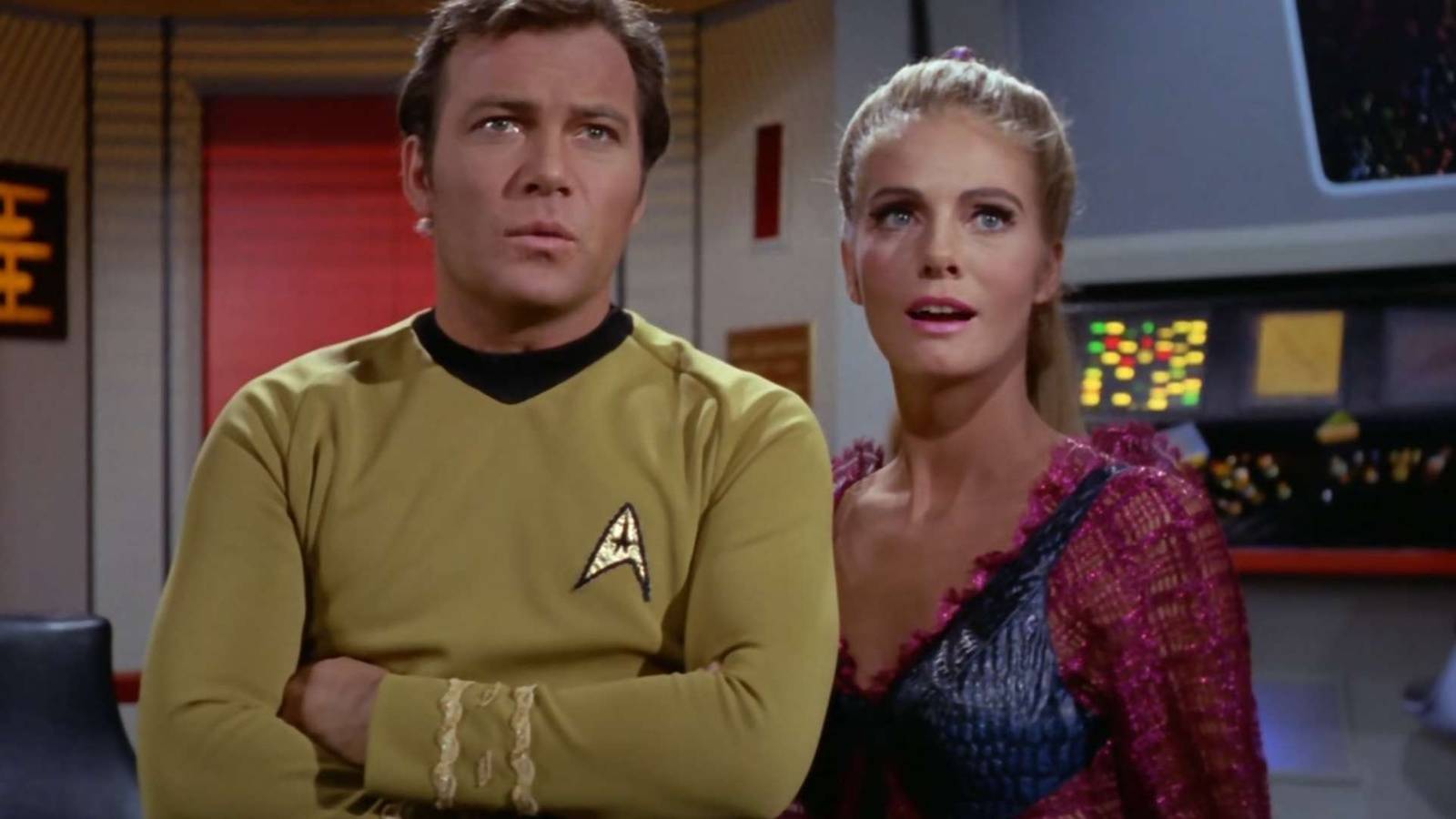
Published Nov 6, 2026, 2:16 PM EST Craig began contributing to Screen Rant in 2016 and has been ranting ever since, mostly to himself in a darkened room. After previously writing for various outlets, Craig's focus turned to TV and film, where a steady upbringing of science fiction and comic books finally became useful. Craig has previously been published by sites such as Den of Geek. Craig is an approved critic on Rotten Tomatoes. LinkedIn: https://www.linkedin.com/in/craig-elvy-5b31a3381/ The first season of Star Trek: The Original Series gave the world classics such as "The Enemy Within," "Arena," and "Space Seed," and season 2 continued that hot streak thanks to the likes of "Amok Time" and "The Trouble with Tribbles." It was, infamously, Star Trek's third season that let the show down, and while there are hidden gems to be uncovered, season 3 isn't the wall-to-wall collection of sci-fi standards that the previous two seasons are considered to be. Among the real stinkers of Captain Kirk's third trek across the Alpha Quadrant are "Spock's Brain," featuring the disembodied voice of Leonard Nimoy's Spock, "Elaan of Troyius," where Kirk gets hypnotized by a princess, and "The Way to Eden," with its 'flower power in space' premise. And then there's "The Mark of Gideon." There are, undeniably, weaker episodes from Star Trek's 1960s run, but while many of those have attained a certain level of infamy that at least makes them memorable, "The Mark of Gideon" falls into that unpleasant void of being entirely forgettable. Not awful enough to become the butt of a joke; not decent enough to make any sort of impression. The Problem With Star Trek's "The Mark Of Gideon" Right off the bat, "The Mark of Gideon" requires the viewer to navigate two massive leaps in logic just to enter a suspension of disbelief. The first is that, somehow, a highly advanced and seemingly benevolent alien civilization has decided the best way to deal with overpopulation is by introducing a deadly virus. Kirk offers alternatives, and it's not every day a Starfleet captain discusses contraception, only for Gideon's leaders to have problems with all of them. All except the 'widespread painful death' solution. Even if the viewer gets past that ridiculous notion, there's another. In order for "The Mark of Gideon" to have any kind of stakes, it's necessary to believe that Gideon needs to keep Captain Kirk as a prisoner forever, otherwise they'll somehow... run out of virus? Again, Kirk points this out to his captors, and again, they have some reason for refusing, but by this point, this galactic stretch of a plot is a lost cause. Also, the leader's daughter needs to actually die from the virus, otherwise the planet's youth won't sign up to be infected, or something. "The Mark of Gideon" offers little in the way of Star Trek's usual adventure and exploration. Kirk's prison is an exact replica of the Enterprise, conveniently, so the episode is mostly confined to one location, albeit with Gideon's council chamber visible on the bridge's viewscreen. Weaker Star Trek episodes there may be, but at least they usually have an alien planet or enemy ship to roam around. Making matters worse, "The Mark of Gideon" follows season 3's trend of 'Captain Kirk falls in love' episodes. Kirk had near-episodic love interests from the very beginning, but his brief encounters started taking center stage too often in Star Trek's third season, stripping "The Mark of Gideon" of any originality or novelty. Only three episodes prior, Kirk had been taken as a lover by Princess Elaan. A few episodes before that, Kirk had been claimed as a mate by Deela, the Scalosian queen. Now, in "The Mark of Gideon," it's the daughter of the planet's leader. Evidently, news of Starfleet's most eligible captain had been spreading among the galaxy's royal and political elite. The lack of any distinctive setting or unique angle is a major factor in "The Mark of Gideon" blending into the background of Star Trek: The Original Series, becoming not just a bad episode but one that struggles to be remembered at all. And "The Mark of Gideon" ends with just the anti-climax you would expect. The story's resolution is essentially just Spock beaming down and walking into the room. "Ah, the jig's up," the Gideoneans might as well say, "the science officer has arrived, there's nothing we can do." After that, the people of Gideon decide they don't need Captain Kirk after all, but are still going to commit mass murder. Cue rousing music and end credits. "The Mark Of Gideon" Had The Potential To Be A Great Star Trek Episode The most frustrating thing about "The Mark of Gideon" isn't the plot, the ending, or Captain Kirk fussing over his itchy arm. It's the clear signs of a good episode hiding deep down in there somewhere. The idea of a utopian civilization seeking human sicknesses to cope with overpopulation is a fascinating one brimming with ethical implications and intriguing conversation-starters. Star Trek struggles to justify Gideon's intentions, throws in an unwanted love story, and fails to offer any sort of meaningful conclusion, but the script's nucleus has enough potential for genuine quality. Had "The Mark of Gideon" really wrestled with the moral ambiguity of its premise, it might've been more fondly remembered. And remembered in the first place. The episode might have also fared better by focusing less on Kirk and more on his first officer. "The Mark of Gideon" features a fascinating subplot where Spock makes the decision to defy Starfleet in the name of saving Captain Kirk, believing his employers' actions to be illogical. Needless to say, Spock's quiet rebellion is infinitely more interesting than Kirk's escapades on a fake, empty Enterprise, but the ramifications of the Vulcan's defiance are swept under the rug all too quickly. Spock gave Starfleet the middle finger back in "The Menagerie" out of loyalty to his former captain, Christopher Pike. In "The Mark of Gideon," Spock's defiance has a sense of intellectual superiority. He's surprised at Starfleet's orders, and opts for what he perceives as the logical course of action over mindlessly heeding instructions. That probably should have been a cornerstone of the episode, in hindsight. Of course, "The Mark of Gideon" would have been vastly improved with a stronger third act too. While there's always value in refusing to provide a black-and-white answer to a difficult question, tackling big philosophical themes also carries the responsibility to send a worthwhile message. Star Trek's hasty reveal that Gideon will make do without Kirk and the vague suggestion that the virus plan will go ahead leaves too many loose threads. Is Kirk happy to let the culling happen? What about Gideon's negotiations with Starfleet? And what on Earth are the Gideoneans going to do with a full-sized replica of the USS Enterprise? Release Date 1966 - 1969-00-00 Network NBC Showrunner Gene Roddenberry Star Trek follows the U.S.S. Enterprise on its five-year mission to explore the galaxy, led by Captain James T. Kirk and First Officer Mr. Spock. The crew confronts a variety of challenges, including Klingons, Romulans, and genetic supermen, as they search for new life and civilizations.
Star Trek: The Original Series' Most Forgettable Episode Is The Worst Of Kirk's Era
Full Article
Original Source
Read the full article at Screenrant →KhanList aggregates and links to publicly available news content. We do not host full articles from third-party sources. Always verify important information with original sources.