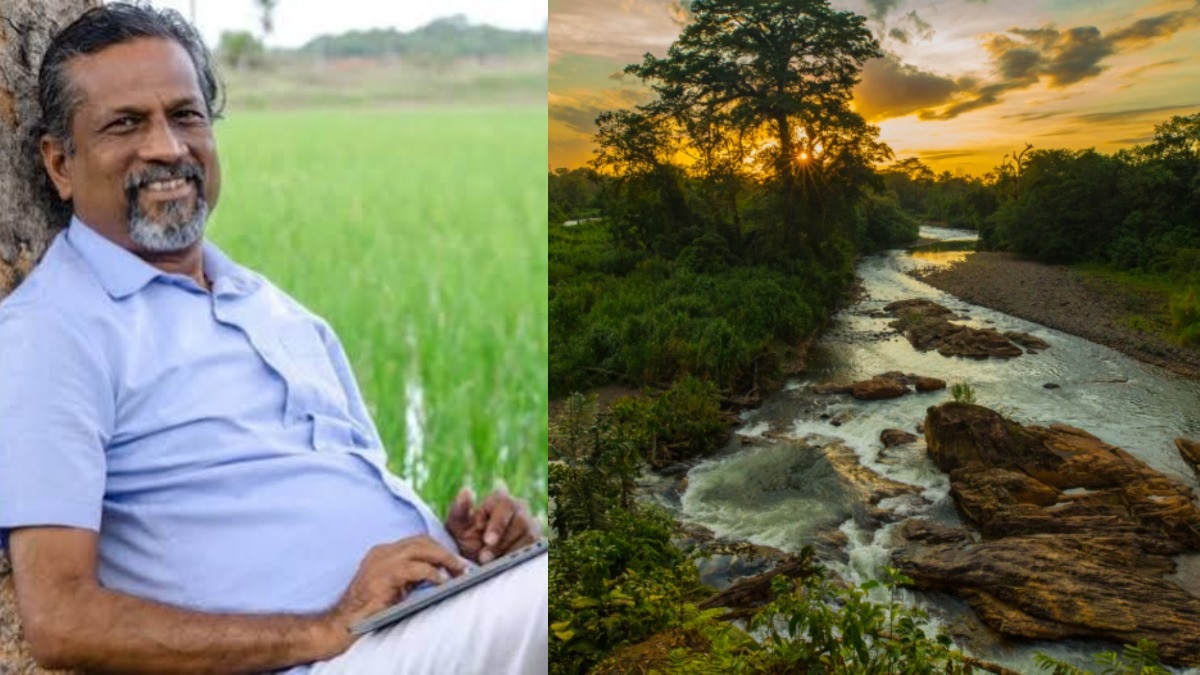
A study led by Qing Li found that a three-day forest walk increased participants' natural killer cell levels for up to 30 days. In a post on X, Sridhar Vembu highlighted the findings, saying they suggest forest walks could help keep people feeling energised at work for days.How can a long walk through a forest help your body for an entire month? A study by Japanese scientist Qing Li suggests it can. Li, an immunologist at Nippon Medical School in Tokyo, took 12 men on a three-day trip into a forest. What he found surprised many researchers. The men showed changes in their immune system that lasted for up to 30 days after the trip.Sridhar Vembu shared the study on X, highlighting its findings and the benefits of spending time in nature. Referring to the work of scientist Qing Li, he said the research showed how a walk in the forest can be energising for the body and help boost immune cells.He added, "We need to live closer to nature and in harmony with nature.""A scientist in Japan demonstrated that the air inside a forest strengthens your immune system for a full month"Just yesterday, a visitor from Chennai told me "I feel tired often in Chennai and I feel a lot less tired past 2 days, even after doing a lot of work".We need to https://t.co/kqPKfqWPA2— Sridhar Vembu (@svembu) August 5, 2026JAPANESE FOREST BATHING STUDYThe study, published in the National Library of Medicine, looked at the effects of forest bathing, known in Japan as Shinrin-yoku. Forest bathing is not about exercise or hiking. It is a slow and relaxed walk through a forest, allowing people to spend time in nature. During the study, the participants spent three days and two nights in forest areas.They walked for a few hours each day without following a fixed route or doing breathing exercises. Blood and urine samples were collected during the trip and again one week and one month later. The researchers found that the participants had higher levels of natural killer (NK) cells after the forest visit.NK cells are part of the body's immune system and help fight viruses and destroy damaged or cancerous cells. The increase was still present 30 days after the trip.To compare the results, another group walked the same distance in a city. Their immune cell levels did not show the same changes, suggesting that the forest environment played an important role.MORE PEOPLE ARE TURNING TO NATURELi believes the difference may come from compounds released by trees called phytoncides.Trees such as pine, cedar and cypress produce these natural substances to protect themselves from insects and bacteria. When people breathe them in during a forest walk, they may help activate the body's immune cells.The idea of forest bathing was introduced in Japan in 1982 by the country's Forest Agency as a way to encourage people to spend more time in nature. Since 2005, Li and his team have carried out several studies involving both men and women to understand how forest visits affect human health.Based on his findings, Li suggests that one forest walk each month may be enough to help maintain higher levels of these immune cells throughout the year. While more research is needed, the study adds to growing evidence that spending time in nature may support overall health.In the 21st century, city life has brought several challenges for working professionals, especially rising concerns around mental health. This has led many people to look towards nature as a way to slow down, recharge, and focus on their well-being.Japan's practice of Shinrin-yoku, or forest bathing, reflects this idea, and Sridhar Vembu's decision to highlight the study has brought renewed attention to it at a time when conversations around work-life balance and mental health are more relevant than ever.- EndsPublished By: Rishab ChauhanPublished On: Aug 5, 2026 17:59 IST
Sridhar Vembu links forest bathing to feeling more energised at work
Full Article
Original Source
Read the full article at Indiatoday →KhanList aggregates and links to publicly available news content. We do not host full articles from third-party sources. Always verify important information with original sources.