
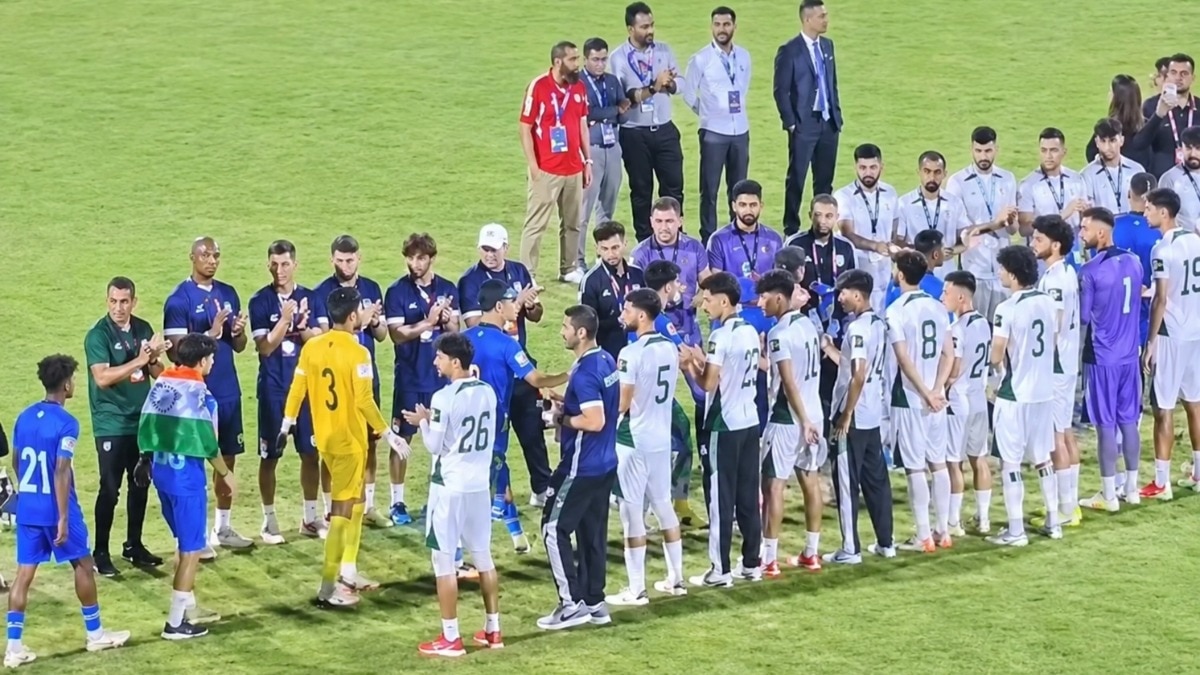
In a heartwarming display of sporting spirit, Pakistan's footballers gave India a guard of honour after the SAFF Championship final in Dhaka. The gesture stood out amid recent handshake snubs between the neighbours in other sports.Pakistan players give India guard of honour after SAFF Championship 2026 final (Screengrab from X)New Delhi,Nov 18, 2026 08:06 ISTIn a sporting rivalry increasingly defined by the absence of handshakes, Indian and Pakistani footballers offered a reminder that competition need not come at the cost of camaraderie. After India defeated Pakistan 2-1 in the SAFF Championship final in Dhaka on Tuesday, the Pakistani players lined up to give the newly crowned champions a guard of honour, providing a striking contrast to the strained sporting exchanges between the neighbouring countries in recent times.The gesture stood out against the backdrop of the no-handshake policy that has become a feature of India-Pakistan cricket encounters since the 2025 Asia Cup. The two cricket teams have repeatedly avoided customary greetings, both at the toss and after matches, with the practice extending to the men's and women's teams across competitions.The trend began after the Pahalgam terror attack in April 2025 and the subsequent military escalation between the two countries. It continued through the 2025 Asia Cup, the Under-19 Asia Cup, the Women's World Cup and the Women's Asia Cup in 2026. Even at the Asian Games in Japan last month, India captain Shreyas Iyer and Pakistan skipper Sahibzada Farhan did not shake hands at the toss before the men's cricket final.Football, however, offered a different picture. Pakistan giving the Indian team a guard of honour after India won the finals of the SAFF Cup Football. https://t.co/SERUVYIP0Q— Nikhil Naz (@NikhilNaz) November 17, 2026 The final in Dhaka was not the first instance of the two teams exchanging pleasantries during the tournament. Before their group-stage meeting on November 5, India head coach Naushad Moosa had indicated that his players would follow customary pre-match greetings. India captain Bijoy Varghese subsequently shook hands with Pakistan skipper Yousuf Ijaz Butt.The post-final scenes offered another illustration of that sporting spirit, with players from both sides exchanging handshakes and high-fives during the medal ceremony. Pakistan's guard of honour for the Indian champions was a particularly memorable moment after a fiercely contested final. The contrast was also visible at the Asian Games, where Indian and Pakistani athletes across hockey, volleyball, table tennis and squash exchanged greetings despite the strained relations between the countries. India's hockey players and their Pakistani counterparts shook hands after a dramatic semifinal, while Pakistani volleyball players were seen consoling Indian opponents after a victory.On the pitch, India had to fight back from a goal down to secure their 10th SAFF Championship title and complete a hat-trick of consecutive triumphs.Pakistan, appearing in their maiden SAFF final, took the lead through Alamgir Ghazi in first-half stoppage time, catching India off guard. The Blue Tigers struggled to find their rhythm in the opening period but were handed an advantage when Junaid Shah was sent off in the 59th minute following a VAR review for a dangerous challenge on Brison Fernandes.India made their numerical advantage count. Suhail Ahmad Bhat restored parity in the 60th minute before Sandip Mandi struck an 88th-minute winner to complete the comeback.The 2026 SAFF Championship, the premier men's football competition for South Asian national teams, featured six countries. India sent a second-string squad comprising predominantly younger players under U-23 coach Naushad Moosa, rather than its first-choice senior team.- Ends
Sporting spirit shines as Pakistan give India guard of honour after SAFF final
Full Article
Original Source
Read the full article at Indiatoday →KhanList aggregates and links to publicly available news content. We do not host full articles from third-party sources. Always verify important information with original sources.