
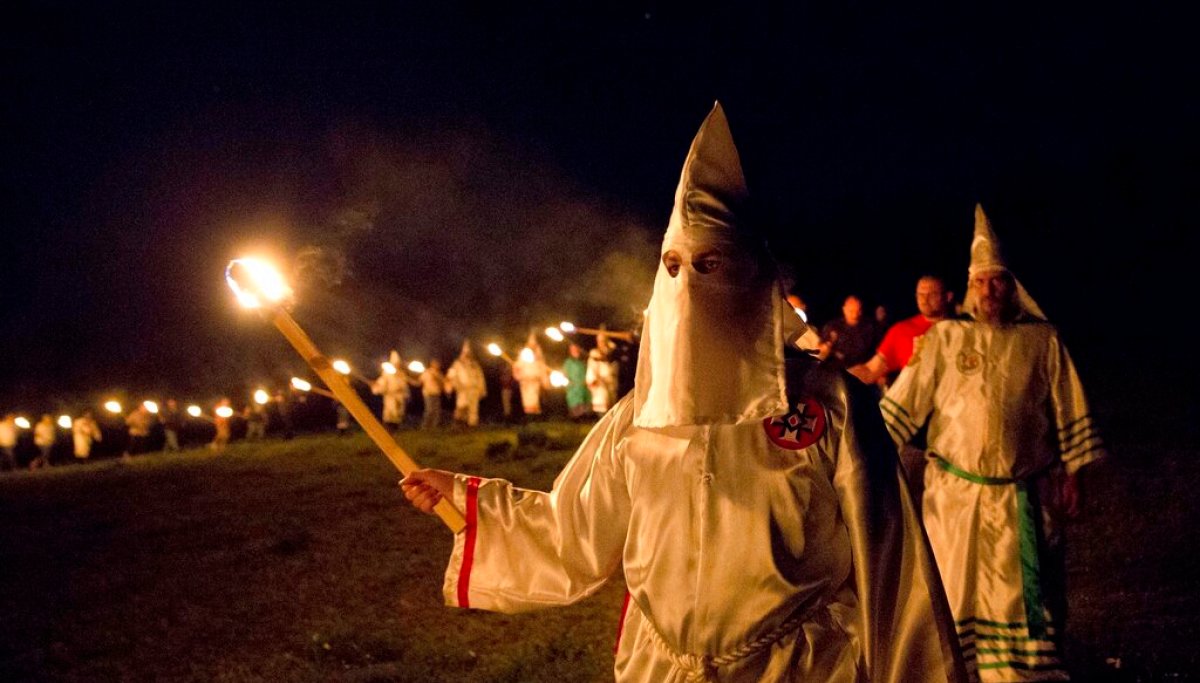
A leading figure in the Southern Poverty Law Center’s criminal case said the group exaggerated “hate” group data to sway law enforcement, court records show.An FBI source called “Individual-1” described the Alabama nonprofit group’s alleged efforts to gain power during his employment in a June interview, according to a transcript released Nov. 2 by SPLC codefendant Heidi Beirich’s lawyers. The SPLC changed its signature “Hate Map” over time to treat singular hate groups as multiple, said the source, who oversaw the SPLC’s undercover informant program.“There were only maybe 12 or 15 categories of hate groups,” Individual-1 said. “If you only had 12 or 25 dots on your map, that’s not much of a map. But if you have a total of 287 chapters, you know, that’s a much more impressive map because it’s more detailed … it’s got more information.” Individual-1 said he “sold” the narrative conveyed by the map because “[w]e had a huge need for law enforcement, to cooperate with law enforcement and be kind of a — have them on our side.”The claims validate critics’ belief that the SPLC went from a respected watchdog attacking known white supremacists in the 20th century to a political grift operation. Before its criminal charges, the FBI source’s description of a desired law enforcement relationship largely came true. Federal and local officials relied on the SPLC in their understanding of domestic extremist threats across several presidencies, from George W. Bush to Joe Biden, while the group increasingly labeled mainstream conservatives as hateful.Grand jurors indicted the SPLC as an organization and Beirich, its former analyst, on fraud and other charges earlier this year. The case mostly centers on an alleged scheme to fund extremist groups despite telling donors they were combating them. Beirich and the nonprofit group have separately moved to dismiss the case as political, and a Trump-appointed judge denied the SPLC’s motion in August.Beirich’s lawyers say President Donald Trump’s officials show political bias partly because of their reliance on Individual-1, who worked for the SPLC for more than a decade and left in 2014.“In January 2026, a former [SPLC] field source, F-9, urged the agents to interview Individual-1, describing him as a ‘salt of the earth guy’ who left the SPLC in ‘disgust,'” defense attorneys wrote. “F-9 told the agents that he believed Individual-1 likely harbored ill-feelings about the SPLC due to a perceived ‘anti-Christian’ bias allegedly held by the SPLC.”Leading prosecutor Kevin Davidson did not respond to the Washington Examiner’s request for comment. His team has until Nov. 24 to respond to Beirich’s request for dismissal. The SPLC is set for an April 2027 trial.“Law enforcement was our main readership,” Individual-1 told investigators in his June interview. Law enforcement agencies hardly knew “anything” about hate groups such as the Ku Klux Klan until the SPLC came along, he added.Individual-1 and another unnamed person “were both prior law enforcement, so we had a leaning that way anyway,” he said.DEEP-POCKETED DONORS FLOCKED TO THE SPLC TO HEAL AMERICA’S DIVISIONS. DID IT PAY OFF?A month after the interview, the source known as “F-9” told a federal official that Individual-1 could pull back the curtain on “how the Center lost its way,” according to text messages the defense says are his.“Get him and you’ve got your case,” F-9 allegedly wrote.
SPLC inflated ‘Hate Map’ data to get law enforcement on its ‘side,’ FBI interviewee says
Full Article
Original Source
Read the full article at Washingtonexaminer →KhanList aggregates and links to publicly available news content. We do not host full articles from third-party sources. Always verify important information with original sources.