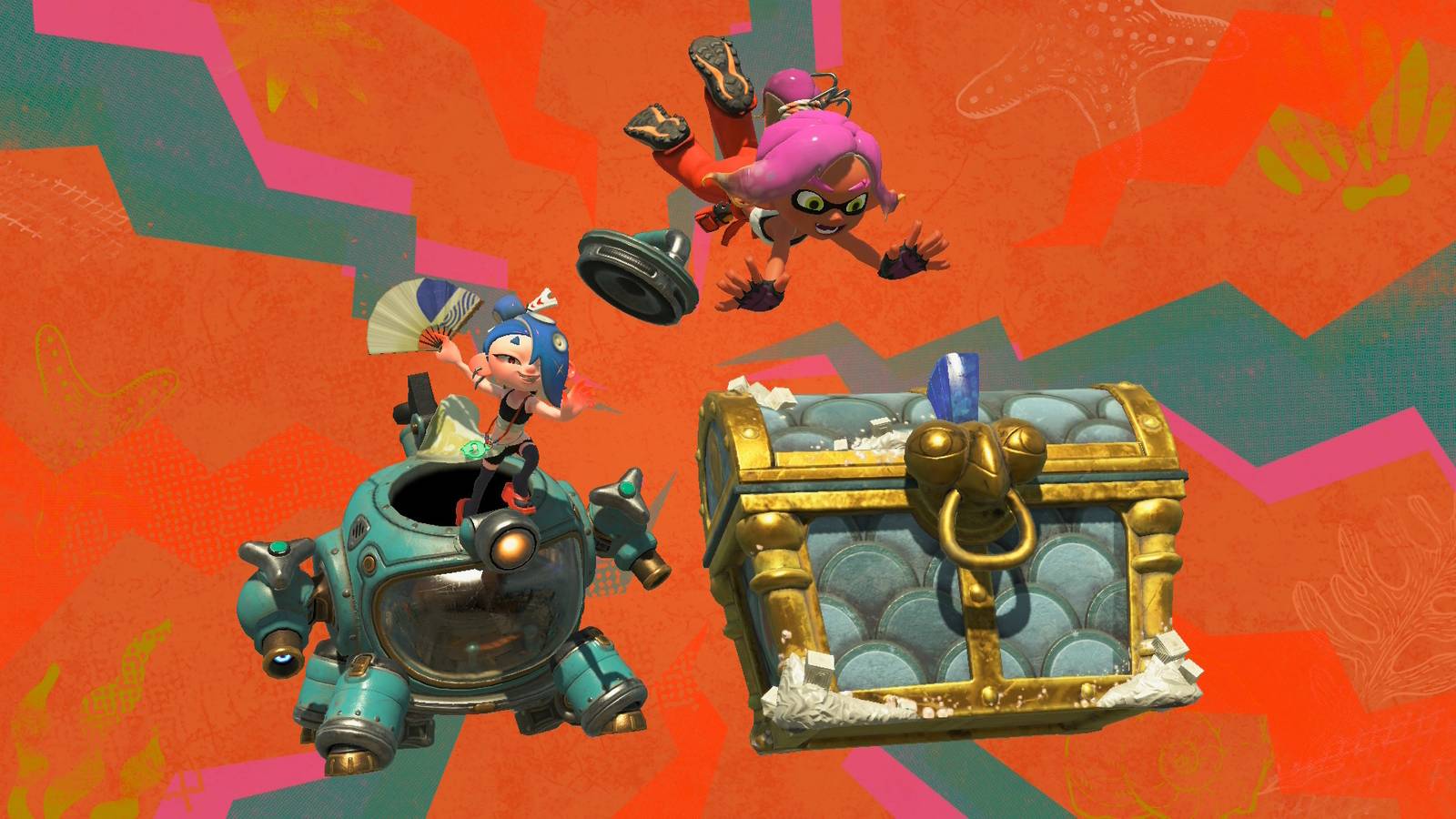
Published Jul 21, 2026, 9:00 AM EDT The Switch 2 exclusive is a full-blown looter shooter that goes way deeper than you'd expect Splatoon Raiders' all-ages RPG action stands up to Diablo and Borderlands Image: Nintendo via Polygon Usually when the word “mess” appears in a video game review, it’s a bad sign. Splatoon Raiders is an exception to the rule. The ink-splattered Nintendo Switch 2 shooter is a mess in the most positive sense of the word. In its most pulse-pounding moments, when I’m trying to ink my way out of a Salmonid mosh pit that overtakes the screen, I feel like a kid tossing mashed potato bombs in the center of a cafeteria food fight. The sloppier the battlefield gets, the wider my devilish grin becomes. That experience isn’t unique to Splatoon Raiders. It’s something that has drawn me to Nintendo’s multiplayer-forward Splatoon series since its Wii U debut. The simple delight of drenching arenas in colorful ink still hasn’t failed to charm me after over a decade of shootouts. As a single-player spin-off that cranks the spirit of childhood mayhem up even further, the delightfully untidy Splatoon Raiders has finally helped me pin down the series’ lasting appeal. Sometimes it’s cathartic to make a big mess that no one can tell you to clean up. Make me, loser! Built as a single-player adventure with co-op support, Splatoon Raiders puts you in control of an Inkling dubbed The Mechanic. After getting caught up in a freak storm with Deep Cut, the Splatoon universe’s best pop band, you’re left stranded in the Spirhalite Islands, a series of landmasses inhabited by the same angry Salmonids that terrorize Splatoon 3’s Salmon Run mode — googly-eyed fish, steel snakes, mechanical dolphins, etc. That misfortune presents an opportunity: The islands are filled with valuable treasures, so you decide to set up shop rather than look for an escape. Splatoon’s wacky lore gets put to good use in collectible scrolls that tease out an economic crisis plaguing Splatsville. (And you know what happens when an Inkling goes underwater.) The story itself is mostly just there to motivate a fun treasure hunting campaign. As The Mechanic, you’ll fight through a series of compact levels with a bot buddy that can help you take down enemy mobs while looking for loot and crafting materials. You can see shades of various Splatoon modes from the series’ past in that structure. Some stages have you fighting through linear levels with shooting and light platforming that wouldn’t feel out of place in Splatoon 3’s solo campaign. Others toss you into arenas where you need to splat waves of Salmonids and collect Power Eggs, adapting the winning PvE structure of Salmon Run to something more solo-friendly. Other challenge levels, which give you a specific loadout or toss you into a combat gauntlet centered around one enemy type, feel right out of Splatoon 2’s excellent Octo Expansion DLC. The series’ history of experimentation pays off in a single-player game that mashes several great ideas into one splattershot collage that’s still cohesive as a standalone spin-off. Image: Nintendo All the fundamentals of Splatoon remain intact. You’re still shooting at enemies with the inky weapons you’d use in a multiplayer turf war. The terrain gets covered in blots that you can swim in to refill your ammo and evade enemies, a clever mix of action and traversal that’s still novel after all these years. Most of it cleanly translates to a single-player adventure, though not quite everything. Some weapon classes that were built for team dynamics, like Rollers and Chargers, feel ill-equipped to manage denser packs of Salmonids on their own. What’s more, only being able to keep one weapon equipped at a time feels like a restriction born from the core series that doesn’t suit a new breed of game. And that game is a loud-and-proud looter shooter. Splatoon Raiders’ closest parallels are, surprisingly, Borderlands and Diablo: It’s a full-on action RPG where you grab piles of weapons with increasing levels, stats, and perks. Steady progression is the name of the game, as you boost your stats alongside your weapons and gradually turn a weak Inkling with a pea shooter into a one-squid wrecking machine. That means that the early hours of Splatoon Raiders can feel a little simple as you complete light, short challenges featuring a familiar cast of enemies that have barely been tweaked for a different style of game. But the chaos and challenge creep up on you throughout the 15-hour story and beyond. The key to that success is in Splatoon Raiders’ approach to character builds, which turns the series into a more kid-friendly Outriders with a few tweaks. The Mechanic can equip one of three ink tanks at a time, each one giving them access to an array of secondary weapons that operate on cooldowns. The Tactical Tank grants access to a turret and a wind turbine, among other gadgets, while the Power Tank gets a ground-pounding fist, a spinning top of doom, and more. The early game fun comes from crafting each gadget, testing them out, and figuring out a combination that best complements your playstyle. Splatoon Raiders is the most kid-friendly rage room in town. Like any good ARPG, everything picks up once you start locking in decisions and get into nitty-gritty tinkering. Each gadget can be augmented with perks that make it more devastating as your power levels grow. Take the Splattelites, a rotating ring of damaging ink blots that you can summon around you for a spell. I eventually loaded them up with perks that added even more blots, made them larger, boosted their damage, and inflicted burns on enemies. If I wanted to, I could go back and swap some perks to turn them into a stationary death wheel, add an auto-trigger effect that sets them off when I’m hit, cause them to knock enemies sky-high, and more. Each perk can also be upgraded, upping its effectiveness and altering the number of perk slots it costs. The addition of some top-level character perks brings a layer of passive boosts on top of everything else. Splatoon Raiders is an optimizer’s dream, as every gadget becomes its own little min-max puzzle as you try to fit as many perks as possible onto one gadget. Now, imagine what your build begins to look like once you have three gadgets equipped at once, each maxed out with perks, and you’ve started to find high-value weapons that have built-in perks of their own. That’s where the glorious mess of Splatoon Raiders reveals itself. By the time I got to the very challenging post-game missions, it felt like I was playing Vampire Survivors. The Salmonid waves get steadily denser until you’re surrounded at all times, and your survival hinges on the damage-per-second effectiveness of your gadgets. My current late-game build revolves around the Tactical Tank. I’ve kitted out my turret so that I can drop two at once that each have a maxed out rate of fire and explosive shots. A wind turbine with increased knockback helps me get some distance from the Salmonids to let my turrets do the work, while a sort-of ink-laser shooter gradually damages enemies from afar in a wide spread. The action gets downright cacophonous when I have every gadget active at once, all while peppering far-off Salmonids with my long-range Blaster and powering up my ultimate attack to rain eels down on the battlefield. Image: Nintendo It’s through waves of colorful ink that Splatoon Raiders gets at the hidden appeal of the ARPG genre. If I was trying to sound smarter than I am, I’d tell you that the delight of Diablo comes from engineering, as you craft precise loadouts born from hours of synergistic decision-making. In reality, the reason I enjoy those games is because the screen fills up with demons that explode real nice when I hit them with lightning. Who wants to make a Borderlands 4 build that cleanly dispatches bandits without leaving a trace of residue behind? It’s not an adult power fantasy so much as it is an innate childhood dream; sometimes I want to be the twerp that instigates that food fight, a real conductor of chaos. Splatoon Raiders is all crescendo. Just when you think the levels can’t get any more crowded and your gizmos can’t possibly spit out more ink, the mess keeps piling up. It keeps tempting you to make one more little tweak that will give you enough of an edge in a mission that’s just too tough to survive. Once I was in that loop, I couldn’t stop tinkering. The shockingly deep endgame gear systems allow you to keep pushing the theoretical limits of how much havoc you can wreak, giving you compelling motivation to repeat missions as you grind for materials. The addition of co-op play and a help feature that lets you assist another player are also crucial: both give you a chance to show off your maniacal build. Image: Nintendo All that said, the endless power creep does wear thin eventually. Replaying the same missions on Spicy difficulty gets repetitive, even with the variety of objectives offered. It’s a shame that Splatoon Raiders never builds up to a highly-replayable PvE endgame activity on par with Salmon Run, though I wouldn’t be surprised if something like that is in the cards given the series’ knack for post-launch updates. If anything, I imagine that we’ll see some of Splatoon Raiders’ best ideas make their way into the inevitable Splatoon 4. There’s still more ink in Splatoon Raiders’ tank than you might expect, though. I’ve played for over 30 hours already and still have plenty of missions I plan to chip away at in pursuit of my perfect Jackson Pollock build. What can I say? The glee of dirtying every surface in sight still triggers some juvenile instinct in me. In setting aside multiplayer tactics and focusing on sloppy fun, Splatoon Raiders is the most kid-friendly rage room in town. Splatoon Raiders will be released July 23 on Nintendo Switch 2. The game was reviewed on Nintendo Switch 2 using a prerelease download code provided by Nintendo. You can find additional information about Polygon’s ethics policy here.
Splatoon Raiders review: Nintendo's take on Borderlands is a delightful mess
Full Article
Original Source
Read the full article at Polygon →KhanList aggregates and links to publicly available news content. We do not host full articles from third-party sources. Always verify important information with original sources.