Spider-Man: Brand New Day has swung into theatres to an overwhelmingly positive response, with audiences across the world embracing Tom Holland's latest outing as the web-slinger. India, too, has turned up in big numbers. But what's surprising is that not only the original English version, but even the Hindi-dubbed version of the film has posted impressive numbers at the box office. This shows that Spider-Man's web reaches households far beyond the metro cities.Which brings me to the question: is the outpouring of love from Indian audiences really that surprising? After all, the friendly neighbourhood web-slinger has always been loved in India. Spider-Man's popularity in the country isn't something that began with the Marvel Cinematic Universe (MCU) or with Tom Holland.Long before the Avengers became a cultural phenomenon, and much before the X-Men or any other contemporary superhero films became the equivalent of an Indian superstar's film in the country, only three foreign superheroes had truly made a mark here—the demigod alien Superman, the billionaire genius detective and gadget-wielding dark hero Batman, and the friendly neighbourhood Spider-Man.Among the three, Spider-Man has received the most love because, beneath the mask, he is a middle-class young man juggling studies, work, family, relationships and responsibility while trying to do the right thing. His problems may be extraordinary one moment and painfully ordinary the next, and that is precisely what has made him so relatable across generations. Stan Lee, one of Spider-Man's co-creators, once explained the character's appeal in an interview: "Peter Parker struck a chord because he was more like a regular person than any other superhero. He worried about making a living, relationships and everyday problems. That's why people could relate to him." Stan Lee at the premiere of Tobey Maguire's Spider-Man 2 (Photo: IMDb) Spider-Man's popularity in the country has never really depended on a new film. For Indian audiences, Peter Parker has always been more than a superhero. Spider-Man wasn't just someone audiences watched in theatres; he was on television, on video games, in newspaper comic strips, on school bags, stationery and countless pieces of childhood merchandise. He was also a staple of fancy-dress competitions, where there was almost always at least one child dressed as Spider-Man. That's perhaps what sets Spider-Man apart from almost every other superhero. In India, he wasn't simply watched. He was lived with. While the popularity of many superheroes rises and falls with blockbuster releases, Spider-Man never really went away. He remained woven into everyday childhood, quietly passing from one generation to the next.And that's the beauty of Spider-Man. Every generation inherited the same superhero, but each got to call a different actor their Spider-Man.For most millennials, it was Tobey Maguire's earnest and emotionally vulnerable Peter Parker. Others grew up with Andrew Garfield's witty, rebellious, yet endearingly nerdy take on the character (a personal favourite), while an entire generation has watched Tom Holland literally grow up along with Peter Parker within the MCU. And for today's younger audiences, even Miles Morales has become as iconic as Peter Parker through Sony's Spider-Verse films.The live-action films didn't redefine Spider-Man as much as they brought to life a character millions of Indians had already imagined. Watching Peter Parker swing between New York's skyscrapers on screen, whether in theatres or from the comfort of their homes, felt less like meeting a new superhero and more like seeing a childhood companion come to life. The various Spider-Men of multiple generations (Photo: IMDb) Take Tobey Maguire's Spider-Man, for instance—perhaps the most influential live-action Spider-Man of them all. At a time when Western films had only a limited reach in India, Spider-Man (2002) performed exceptionally well at the Indian box office, introducing an entire generation to Peter Parker on the big screen.There's a good chance that many of the audiences flocking to theatres for Marvel films today are the same kids who once watched Tobey Maguire's Spider-Man on TV and became fans of the hero after seeing him give every ounce of his strength to stop the runaway train in Spider-Man 2, or witnessed the countless other iconic moments that defined Sam Raimi's trilogy across 2002, 2004 and 2007.Then came The Amazing Spider-Man, introducing audiences to a markedly different Peter Parker. In contrast to Tobey Maguire's innocent, soft-spoken Peter—who was hopelessly in love with Mary Jane Watson, constantly dealing with J. Jonah Jameson at the Daily Bugle and somehow balancing all of it with saving New York—Garfield's Spider-Man was effortlessly cool. He flirted with Gwen Stacy with confidence, excelled academically, challenged authority and carried himself with far more swagger.Yet, beneath that confidence was a Peter Parker who was perhaps even more flawed. His mistakes, impulsive decisions and selfish choices were explored with far greater emotional depth, making him feel just as human despite his cooler exterior. It was a different interpretation of Spider-Man, but one that stayed true to the character's heart—a young man learning that every choice comes with consequences.Then arrived Tom Holland's Spider-Man—the MCU's Spider-Man, the Spider-Man of the present, or simply "Peter 1" (a Spider-Man: No Way Home reference). Holland's first trilogy introduced audiences to the youngest and perhaps the most innocent live-action Peter Parker yet. He was awkward, impulsive and eager to prove himself, almost like a perfect blend of Tobey Maguire's sincerity and Andrew Garfield's youthful charm.But unlike the Spider-Men before him, Tom Holland's Peter never really got the chance to be the friendly neighbourhood Spider-Man on screen. Right from the get-go, he was drafted into the big leagues by Tony Stark and gifted a high-tech suit developed by the genius billionaire, playboy, philanthropist himself. From fighting for Team Iron Man in Captain America: Civil War to facing the universe-threatening Thanos in Avengers: Infinity War and Avengers: Endgame, Peter was forced to grow up much faster, in circumstances far more high-stakes than those faced by his predecessors.We watched him navigate high school, build a strong friendship with Ned Leeds, develop an endearing romantic relationship with MJ, look up to Tony Stark as both a mentor and father figure, experience unimaginable loss, and repeatedly learn that good intentions don't always lead to good outcomes. His biggest mistake in Spider-Man: No Way Home—asking Doctor Strange to tamper with reality—cost him everything. By the end of the film, Peter had lost his Aunt May—the only family he had left—his friends, and even his own identity in the eyes of the people he loved and respected.It was a heartbreaking conclusion, one that finally stripped away the spectacle and left behind the Peter Parker audiences had always known—a young man with no one to rely on except himself, carrying the weight of responsibility one choice at a time. His loneliness and self-doubt felt more real than ever, making him deeply relatable once again.In the end, that's what connects all three generations of Spider-Man. Beneath different suits, different worlds and different personalities lies the same lonely young man, trying to do the right thing despite the personal cost, all while navigating the daily struggles of an independent young adult.And that is exactly what Spider-Man: Brand New Day sets out to explore. Stripped of the Avengers, the high-tech suits and the safety net that once surrounded him, Peter Parker is just a young man trying to navigate these hardships. In many ways, it marks Peter's return to being the friendly neighbourhood Spider-Man. It's a direction that brings the character back to what has always resonated most with Indian audiences: the humanity beneath the mask. During the film's premiere, Tom Holland summed up what makes Spider-Man special. He said: "For me, the biggest realisation is that it isn't Spider-Man that makes Peter Parker special, but Peter Parker that makes Spider-Man special. In this film, I realised that it is Peter Parker who is the superhero, not Spider-Man."Calling Peter Parker a "middle-class superhero" isn't really about his economic status. It is about the life he leads. His anxieties are the same ones that define millions of ordinary Indians: balancing ambition and responsibility, making difficult choices for loved ones, worrying about the future, living with loss, and continuing to move forward despite repeated setbacks. These are problems that don't require superpowers to understand.Perhaps that's also why so many of India's most beloved protagonists are cut from the same cloth. Whether in Hindi cinema or the many industries of the South, audiences have always rooted for ordinary people who rise to extraordinary occasions. Even India's own superhero, Krrish, carries many of these traits—a hero defined not by wealth or status, but by compassion, sacrifice and responsibility. One could even argue that Rakesh Roshan's creation borrows, consciously or otherwise, from the emotional blueprint that made Spider-Man such an enduring character.For over two decades, India hasn't simply embraced Spider-Man because he swings through skyscrapers or saves the world. It has embraced Peter Parker because he reminds us of ourselves. Every generation has had its own Spider-Man, and every actor has brought something unique to the mask, but the heart beneath it has never changed.The numbers tell the story. Spider-Man: No Way Home remains the highest-grossing solo MCU film in India, with over Rs 271 crore gross, behind only Avengers: Endgame and Avengers: Infinity War. Homecoming and Far From Home were box-office successes too. Now, Spider-Man: Brand New Day has gone one step further, opening to Rs 60 crore nett in India—overtaking Avengers: Endgame's Rs 54 crore nett opening. If anything, Spider-Man's hold over Indian audiences is only getting stronger. "With great power comes great responsibility" may be Spider-Man's most famous line, but perhaps it also explains his place in India. Great characters carry great responsibility too—to make audiences feel seen, understood and hopeful. Peter Parker has done that for generations. And that's why Spider-Man continues to hold a special place in the hearts of Indian audiences. The overwhelming response to Spider-Man: Brand New Day at the Indian box office isn't creating that love—it is simply reminding us that it was always there.- EndsPublished By: Sanjay Ponnappa CSPublished On: Aug 1, 2026 10:00 ISTMUST WATCH:
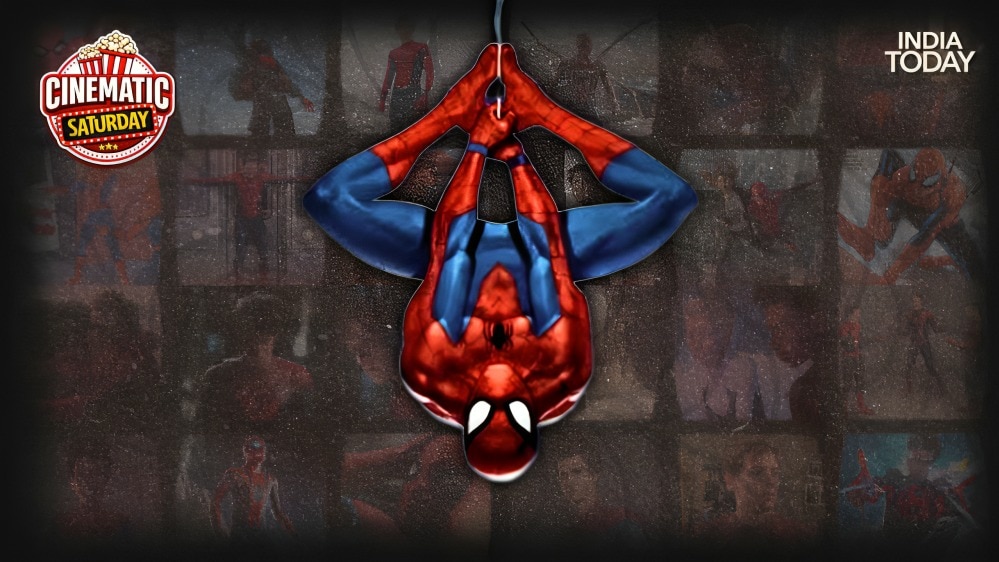
Spider-Man: The middle-class superhero India never stopped loving
Full Article
Original Source
Read the full article at Indiatoday →KhanList aggregates and links to publicly available news content. We do not host full articles from third-party sources. Always verify important information with original sources.