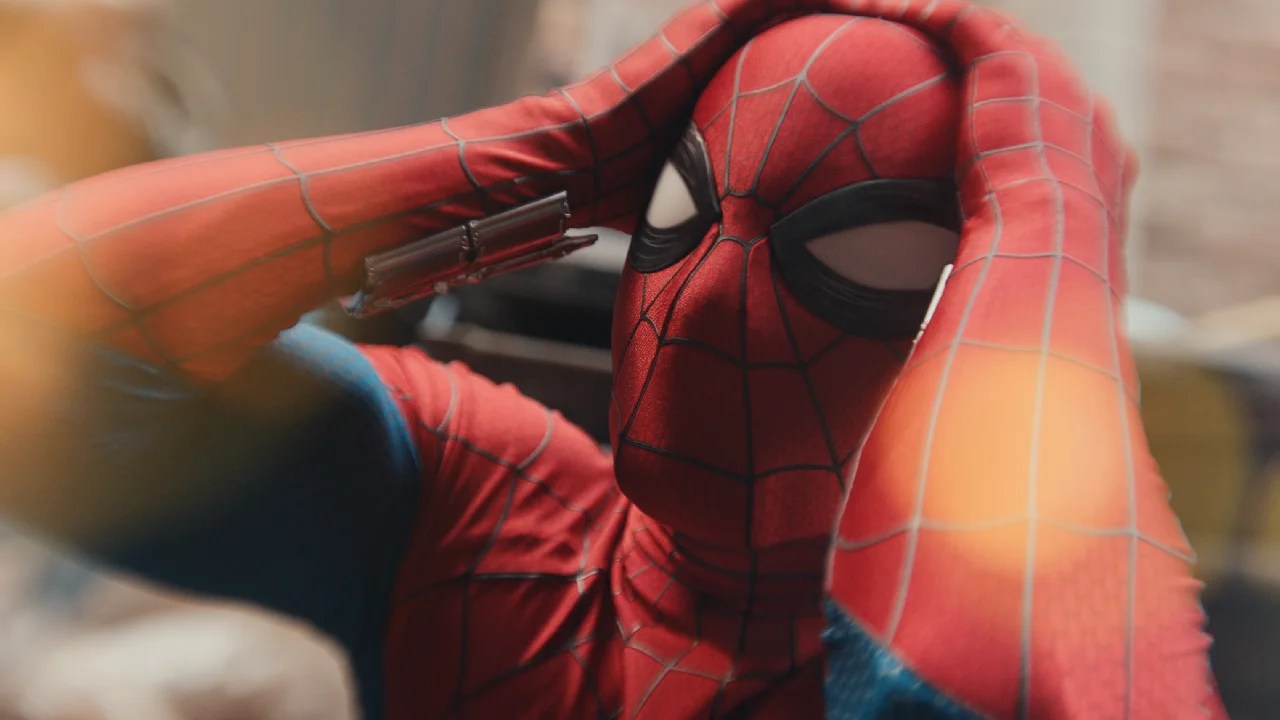
If you’re just leaving the theater for “Spider-Man: Brand New Day,” you may be wondering what the hell just happened. Tom Holland’s latest Spidey adventure (this one helmed by Destin Daniel Cretton) concludes with a single scene at the very end of the credits, one that builds off of an application seen throughout the rest of the movie. The only problem is, early audiences can’t decide what it actually means. So we’re going to break down the most logical explanations for “Spider-Man: Brand New Day’s” post-credits scene and how it might tie into “Avengers: Doomsday.” This should go without saying since we’re talking about the very last frames of the film, but spoiler warning for “Spider-Man: Brand New Day.” What is the post-credits scene for “Spider-Man: Brand New Day”? In “Brand New Day,” audiences are introduced to the Spidey Tracker, an app developed in-universe by Ned Leeds (Jacob Batalon) to help him locate Spider-Man based on reported sightings. Ned developed the app in the hopes of tracking Spider-Man down and thanking him for saving him so many times during high school (not remembering that the reason Spidey was always there for the save, and the reason that they were often in danger, was because it was his best friend, Peter Parker). Sony and Marvel used the Spidey Tracker for some real-world marketing, featuring it heavily in promos and giving it its own website at spideytracker.com. The tracker is another example of how heavily “Brand New Day” is inspired by Insomniac’s recent Spider-Man PlayStation games, with a similar app, the Friendly Neighborhood Spider-Man app, developed in Spider-Man: Miles Morales by Miles’ friend Ganke Lee (a comic book character that also inspired the MCU’s interpretation of Ned Leeds). The Spidey Tracker comes to play again in the film’s post-credits scene, which features no actors or live-action footage. Instead, the scene simply shows that a new Spider-Man sighting has been detected by the app, which zooms out to show that said Spidey appears somewhere in outer space beyond the moon. I guess Ned’s coding really thought of everything. It’s a brief scene that is light on details, so what it actually means is anybody’s guess. Clearly, a Spider-Man is in space — but where, and which one, remains up for debate. As early crowds debate their interpretations, here are the theories that seem the most likely. “Spider-Man: No Way Home” (Credit: Sony Pictures) Theory #1: Earth-616 goes into the Spider-Verse Have you heard of incursions? They’re about to come to play in a big way in “Avengers: Doomsday.” In case you’ve forgotten from movies like “Doctor Strange in the Multiverse of Madness,” incursions are cosmic events that see two universes from the multiverse cross over with one another, threatening to crash into each other and destroy all life. In Jonathan Hickman’s “New Avengers” comic (which leads up to his “Secret Wars” event), heroes are given two options when faced with an incursion: They can allow both Earths to crash into each other, destroying both universes, or they can destroy one planet Earth and allow both universes to live. Heavy stuff! The appearance of another Spider-Man off-world could imply that the boundaries between the main Marvel universe (Earth-616) and another world in the multiverse are eroding, allowing them to cross over. So who would that other Spider-Man be? The most likely culprits would be Peter 2 (Tobey Maguire) and Peter 3 (Andrew Garfield), who both already visited the MCU in “Spider-Man: No Way Home.” But there are also plenty of other Spideys that exist in the multiverse but have not been seen in the MCU: Miles Morales, Gwen Stacy (Ghost Spider) and Miguel O’Hara (Spider-Man 2099), to name a few. So perhaps this post-credits scene is teasing that the MCU will not just cross over with the Fox X-Men and Fantastic Four’s universes, as teased in the “Doomsday” trailer, but will also feature another Spider-Man’s world getting pulled into the mix. The only problem with this theory is that the Spidey Track blip appears to be pretty far out in space for it to be an incursion. Without much data on what incursions actually look like in the MCU, however, it can’t be fully written off. Ebon Moss-Bachrach, Vanessa Kirby, Pedro Pascal and Joseph Quinn in “The Fantastic Four: First Steps” (Credit: Marvel Studios) Theory #2: A Fantastic voyage If Spider-Man is headed to space, he’s going to need a spaceship. Who do we know in “Doomsday” who has one of those? A second possibility for this post-credits scene is that Spider-Man has hitched a ride with the Fantastic Four, seen entering Earth-616 on their rocket in the credits scene for “Thunderbolts*.” This theory itself comes with two different readings. First of all, the Fantastic Four, after arriving to Earth-616, could end up going back to space for a mission in “Doomsday.” If that’s the case, perhaps Holland’s Peter Parker hitches a ride with them, giving movie audiences the first glimpse at the Fantastic Four/Spider-Man relationship that is so pivotal in the comics. There’s also a possibility that, when the Fantastic Four arrives on Earth-616, they’re already bringing another Spider-Man with them. Matt Shakman previously stated that the Fantastic Four are the only heroes native to Earth-818, but perhaps another Peter Parker met up with the Four after another incursion event in their universe. It’s a stretch (get it? Mr. Fantastic?), but these multiverses escapades can get pretty complicated. Doctor Doom in “Avengers: Doomsday” (Marvel) Theory #3: Welcome to Battleworld Another theory is that this post-credits scene doesn’t tie into “Doomsday” at all — it ties into its sequel, “Avengers: Secret Wars.” The original “Secret Wars” from the 1980s (an event written by Jim Shooter, with art by Mike Zeck, Bob Layton and John Beatty, meant to drive toy sales) sees a collection of Marvel heroes and villains travel to a distant planet called Battleworld, created by an all-powerful being named the Beyonder. In 2015, Hickman and Esad Ribić rebooted this concept with an event comic that served as the conclusion to Hickman’s time on “Avengers” and “New Avengers.” In that book, Doctor Doom takes the power of the Beyonders to create a patchwork Battleworld (made up of the incursion points from various Earths) as the last remnant of the multiverse. While most people lose their memories of life before Battleworld in Hickman and Ribić’s comic, a select group of heroes (including Peter Parker and Miles Morales) survive the change with their memories intact by boarding a ship known as the Life Raft, created by Reed Richards and T’Challa to restart society after the death of the multiverse. Assuming that the next two “Avengers” films follow a similar narrative arc, it’s possible that Spider-Man’s presence in space is actually him appearing on Battleworld in “Secret Wars” rather than making an unannounced “Doomsday” appearance. Sony Pictures Theory #4: Let there be Venom You know what else first appeared in the 1984 “Secret Wars”? Venom. Well, kind of. Technically, Spider-Man’s black costume debuted in 1984’s “The Amazing Spider-Man #252,” a book that takes place after “Secret Wars” despite being released sooner (in a time when fans were likely far less picky about lore and chronology than they are today). Peter obtained that black costume on Battleworld, with audiences not learning until later that it was actually an alien (with loads of Venom lore being filled in from there). Both Sam Raimi’s “Spider-Man 3” and the Tom Hardy “Venom” trilogy already established the Symbiotes as being extraterrestrial, and the post-credits scene for “No Way Home” revealed that some of Venom was left behind on Earth-616. Maybe that detail will finally come into play in the upcoming films, tying into a spacebound Spider-Man adventure. Or maybe this is a stretch even Reed Richards couldn’t make.
‘Spider-Man: Brand New Day’ Post Credits Scene, Explained
Full Article
Original Source
Read the full article at Thewrap →KhanList aggregates and links to publicly available news content. We do not host full articles from third-party sources. Always verify important information with original sources.