
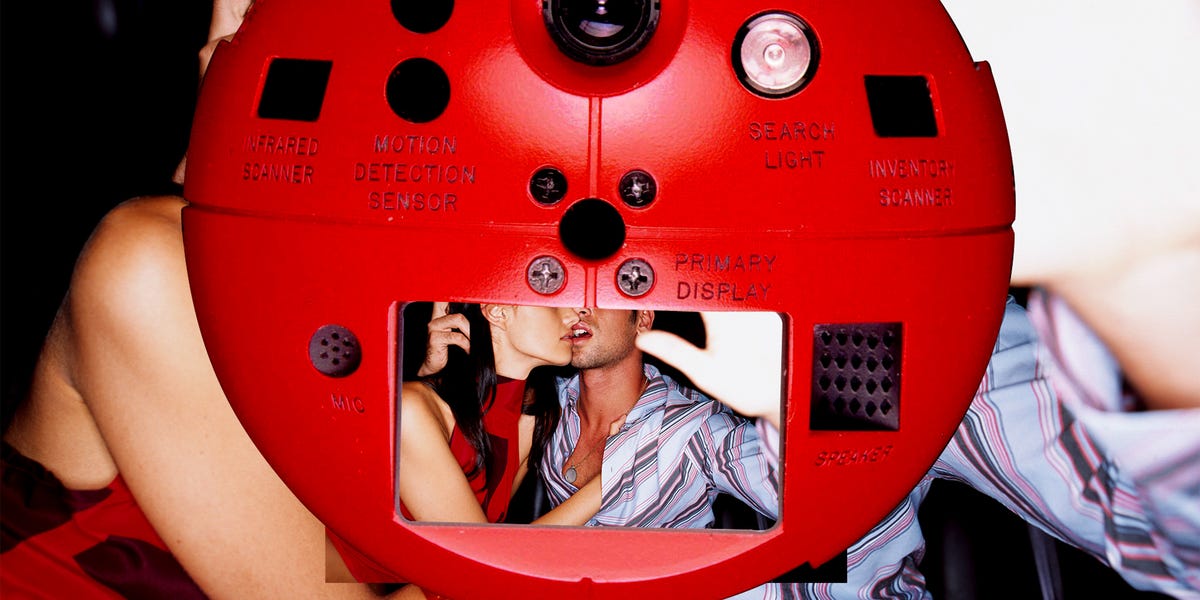
Picture this: You're having sex, things are getting hot and heavy, and instead of enjoying yourself, you're wondering if your stomach looks weird from this angle. Or whether you're making the right noises. Or if your partner is secretly bored. Suddenly, you're less focused on how good everything feels and more concerned with whether you're putting on a five-star show.If this sounds familiar, you might be experiencing something called spectatoring. And no, we're not talking about watching other people get it on.“Spectatoring is when you mentally step outside your own body during sex and start watching yourself, like you’re a spectator at your own experience instead of actually living it,” explains Annette Benedetti, sex and intimacy coach and host of Talk Sex With Annette. Basically, you're so busy thinking about how you're doing that you forget to actually enjoy what you're doing.The good news is that you don't have to spend the rest of your sex life mentally reviewing your own performance. Ahead, experts explain why spectatoring happens, how it can affect your pleasure, and what you can do to get out of your head and back into the action.Spectatoring is essentially the sexual equivalent of having an overly critical audience in your head. Instead of focusing on what feels good, you're mentally evaluating everything from your appearance to your partner's reactions to how long it's taking you to orgasm.And while it's closely related to performance anxiety and self-consciousness, spectatoring is a little more specific. “What makes spectatoring different from distraction is self-monitoring and self-judgment,” explains Valerie Poppel, PhD, clinical sexologist and director of education at Bliss Cruise. In other words, getting distracted by your grocery list is one thing. Mentally critiquing your boobs while someone's touching them? That's spectatoring.And despite the name, you don't actually need an audience for it to happen. Spectatoring can occur during masturbation, too, whether you're worrying about how long it's taking to finish or wondering why your body isn't responding the way you think it should.What Are the Signs of Spectatoring During Sex?The tricky thing about spectatoring is that you might not even realize you're doing it. According to Tara Suwinyattichaiporn, PhD, sex educator and author of How Do You Like It?: A Guide for Getting What You Want (in Bed), common signs include:Body checking: Worrying about how your stomach looks, whether you shaved thoroughly enough, or if a particular position is flattering.Overanalyzing your partner: Wondering whether they're enjoying themselves, interpreting every facial expression, or worrying that they're secretly judging you.Performance anxiety: Stressing about how long you're taking to orgasm, whether you're making the right noises, or if you're doing everything correctly.Feeling disconnected: Being physically involved in sex but mentally somewhere else, almost like you're watching yourself instead of participating.You might also notice that sensations feel less intense or that you're suddenly having trouble getting aroused. As Benedetti explains, when your attention shifts from pleasure to self-criticism, it's harder to stay connected to what your body is actually feeling.Why Does Spectatoring Happen?There are plenty of reasons you might find yourself mentally checking out during sex, but a lot of them boil down to one thing: pressure. Pressure to look hot, sound sexy, please your partner, or have an orgasm within a socially acceptable amount of time (whatever the hell that means).“Oftentimes, for women, spectatoring is a symptom of what society has taught us from a young age about how to behave and what to feel,” explains Dr. Tara. Add in body-image insecurities, sexual shame, past criticism, or unrealistic expectations about what sex should look like, and it's not exactly surprising that your brain might start treating intimacy like a performance review.Certain experiences can also make spectatoring more likely. Poppel notes that people navigating changes to their bodies or sexual function, whether from childbirth, menopause, illness, or other life transitions, may feel particularly self-conscious.Past sexual trauma can also contribute to spectatoring, though Poppel emphasizes that spectatoring and trauma-related dissociation are distinct experiences that may require different therapeutic approaches.How Does Spectatoring Affect Your Sex Life?Turns out, being your own harshest critic isn't exactly an aphrodisiac. When you're busy worrying about how you look or whether you're doing everything right, you're diverting attention away from the sensations that make sex feel good in the first place.This can make it harder to get aroused, stay in the moment, or reach orgasm. For some people, spectatoring can also contribute to difficulties with erections or lubrication, even when they're genuinely interested in having sex.And here's where things get particularly annoying: Spectatoring can create a vicious cycle. Maybe you start worrying about how long it's taking you to finish. That anxiety makes it harder to orgasm, which gives you something else to worry about. As Benedetti explains, the less pleasure you experience, the more you might monitor yourself, creating a cycle that's increasingly difficult to break.Over time, this pattern can take a toll on your sexual satisfaction. Because when getting naked starts to feel more like taking a test than having a good time, it's understandable that you might not be particularly excited to do it again.How to Stop Spectatoring During SexSo, how do you convince your brain to stop giving a running commentary? The trick isn't to force yourself to stop thinking (because when has that ever worked?), but to redirect your attention toward what you're experiencing.Focus on Your SensesWhen you catch yourself worrying about whether your stomach is sticking out or your face looks weird, try shifting your attention to what your body is actually feeling.Poppel recommends sensory grounding, which involves focusing on physical sensations rather than evaluating your performance. Notice the warmth of your partner's skin, the pressure of their touch, or the feeling of their lips against yours.Dr. Tara also suggests making eye contact with your partner to help ground yourself in the present moment. Plus, as she points out, your partner is hopefully pretty hot to look at.And if your mind wanders? That's fine. You don't need to achieve some sort of orgasmic state of enlightenment. Just gently bring your attention back to what you're feeling.Slow Things DownIf you notice yourself spiraling into a mental checklist of everything you're supposedly doing wrong, consider taking a beat. Slowing down, closing your eyes, and breathing intentionally can help bring your attention back to physical sensations, says Benedetti. You can also take penetration off the table for a few minutes and focus on kissing, touching, or simply holding each other.And if you're with a partner, don't be afraid to say you need a minute. A simple “Can we slow down?” can help you reset without turning the moment into a whole production.Take the Pressure Off OrgasmLook, orgasms are great. Huge fans. But when having one becomes the sole measure of whether sex was successful, it's easy to get so caught up in reaching the finish line that you forget to enjoy the actual experience.Poppel recommends broadening your definition of satisfying sex beyond penetration, erections, or orgasm. That might mean spending time exploring what feels good without trying to make anything specific happen.And if you don't come? That doesn't automatically mean the sex was bad or that something went wrong. Taking the orgasm goal off the table can help interrupt the cycle of pressure and self-monitoring that keeps spectatoring going in the first place.What If Spectatoring Keeps Happening?If you've tried focusing on your senses, slowing things down, and telling your inner critic to kindly STFU, but you're still spectatoring during sex, know that breaking the habit can take practice.One technique worth trying is sensate focus, an intimacy exercise that involves exploring touch without making penetration or orgasm the goal. Poppel recommends it as a way to shift your attention away from performance and back toward pleasure. You can also practice sexual mindfulness during masturbation, when there's no partner to impress.If you're having partnered sex, communication can help, too. Benedetti suggests explaining that you sometimes get stuck in your head during sex and letting your partner know what helps you feel more present. Maybe that's slowing down, spending more time touching, or simply not being asked whether you're almost there every five minutes.And if spectatoring is consistently interfering with your pleasure, causing distress, or connected to past sexual trauma, consider reaching out to a qualified sex therapist or mental health professional.Ultimately, the goal isn't to have a perfectly quiet mind every time you get naked. It's to spend a little less time judging your performance and a lot more time actually enjoying yourself.
Spectatoring During Sex Could Be Why You're Stuck in Your Head
Full Article
Original Source
Read the full article at Sex →KhanList aggregates and links to publicly available news content. We do not host full articles from third-party sources. Always verify important information with original sources.