
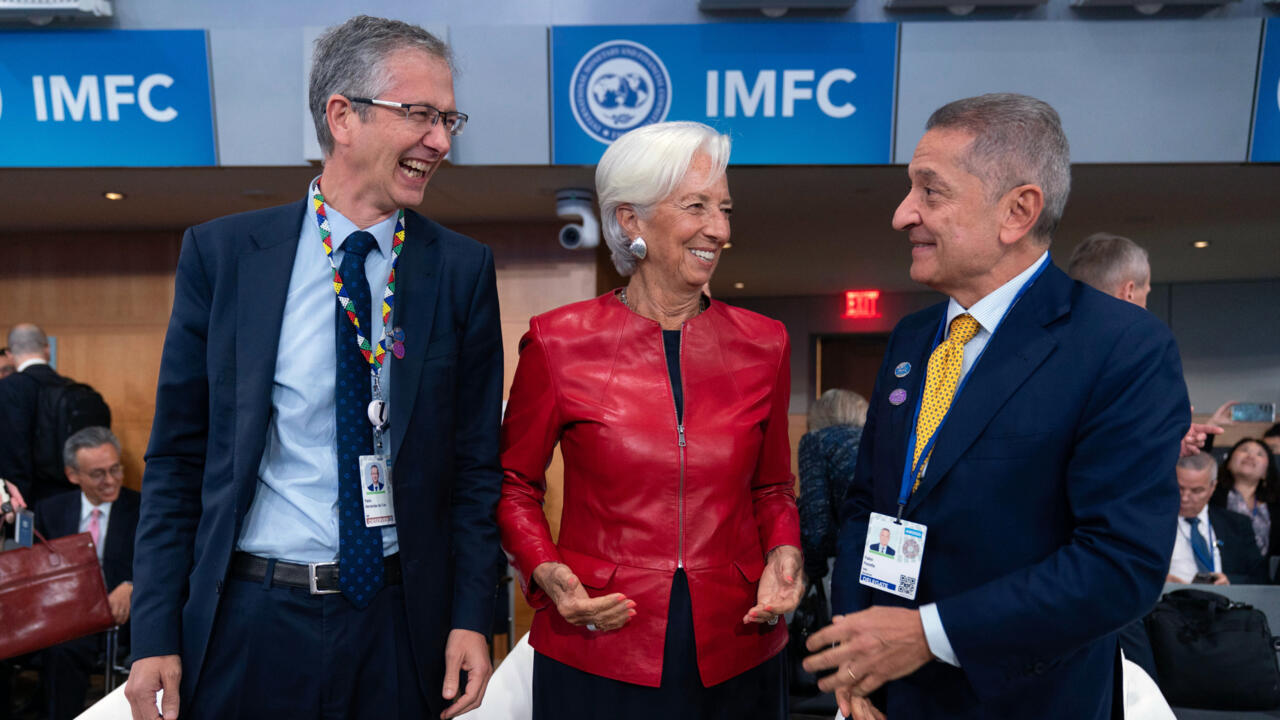
European leaders on Thursday chose the former head of Spain’s central bank, Pablo Hernandez de Cos, to succeed Christine Lagarde as president of the European Central Bank (ECB) as the key EU institution confronts inflation driven by the war in Iran and worries about high government debt and borrowing costs in Europe. Leaders from the 21 European member countries that use the euro also filled two other top posts at the ECB, which decides borrowing costs for the 359 million people in the eurozone. Agreement on the three posts was reached at a summit in Brussels, said an EU diplomat tasked with communicating for the Irish Presidency and speaking on condition of anonymity because they were not authorized to be named. French President Emmanuel Macron confirmed the result on X. French President Emmanuel Macron on November 26, 2026, confirmed that European leaders had chosen Pablo Hernandez de Cos to head the ECB on X. © @EmmanuelMacron, X De Cos' nomination still must pass review by the European Parliament and the ECB’s governing council, but those steps are formalities. The former Spanish central bank governor and the current general manager of the Bank for International Settlements, will take over when current chief Lagarde steps down early on February 7. Read moreECB President Christine Lagarde to step down in February 2027, nine months before term ends The way for him to replace her as the next ECB chief became clear on Thursday after the Netherlands decided to back him, effectively standing down its own candidate Klaas Knot. The reshuffle comes as the ECB grapples with an Iran war-driven resurgence in inflation and worries that political turmoil in France could trigger broader financial market stress affecting other euro zone countries. De Cos' appointment hands the top job to a southern European policymaker and ally of former ECB President Mario Draghi, reinforcing expectations that the central bank would ultimately use its firepower to contain any new sovereign debt crisis. His formal approval will come from a meeting of ambassadors of Eurozone countries on Thursday, ahead of endorsement from the bloc’s leaders. Steady hand De Cos, 55, a trained monetary economist, has built a reputation for independent thinking anchored in economic theory, and pragmatism picked up over a decade served in policymaking roles. He worked in various staff positions at the ECB and the Bank of Spain early in his career before making a rare jump to the policymaking level as governor of the national central bank, serving on the ECB's rate-setting Governing Council. De Cos is a veteran of crises including Spain's banking sector bailout, the COVID-19 pandemic, and the post-pandemic inflation surge that forced the ECB into its fastest interest rate-hiking cycle on record. While southern European policymakers are often considered "doves" favouring easier monetary policy, colleagues and ECB watchers say De Cos is pragmatic and a moderate who cannot be boxed into any such category. ECB policy is decided by the 27-member Governing Council, meaning even the president has limited scope to steer interest rates single-handedly. In any case, any dovish bias would only be relevant if inflation was slightly above target, and this year's surge in price pressures would force any ECB president to keep raising interest rates. At 4 percent, inflation is now twice the central bank's target and policymakers speaking on and off the record appear unanimous that a rate hike in December is inevitable. The path beyond is murky, however. Markets expect just one more upward move, given the recent retreat in oil prices and an expected decline in inflation from the spring, when statistical base effects start knocking year-earlier figures from the data set. (FRANCE 24 with AP and Reuters)
Spanish economist de Cos to succeed Lagarde as head of ECB
Full Article
Original Source
Read the full article at France24 →KhanList aggregates and links to publicly available news content. We do not host full articles from third-party sources. Always verify important information with original sources.