
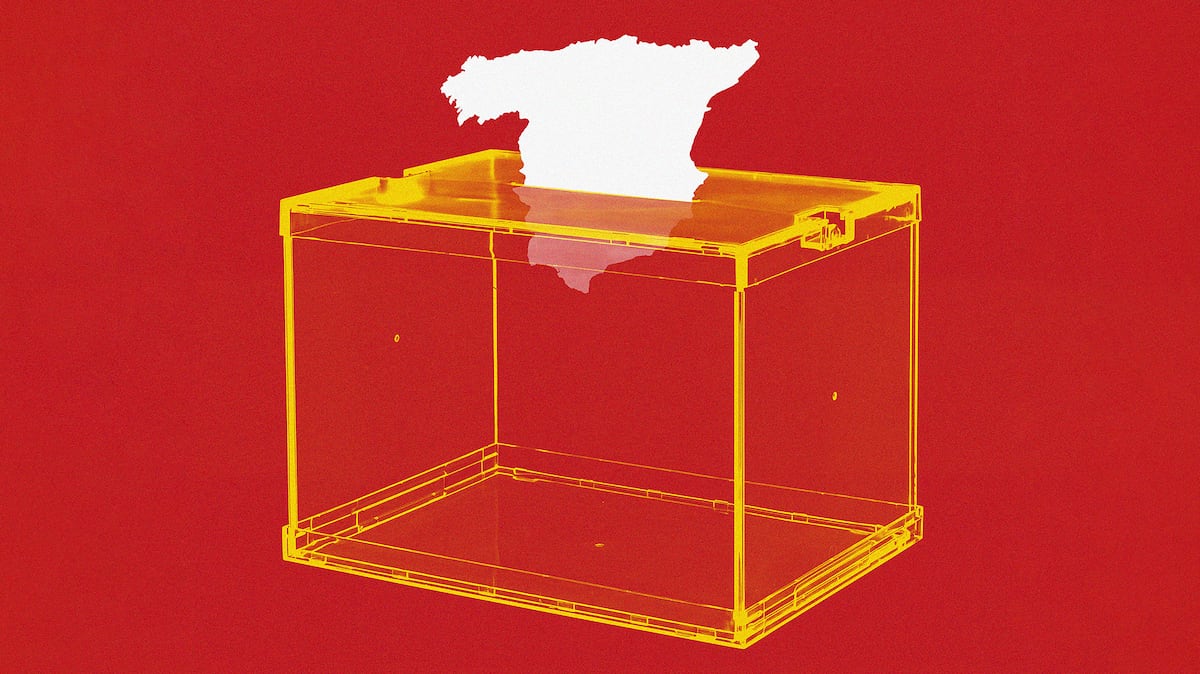
Every election is a moment of truth. At the ballot box, citizens have the opportunity to correct, endorse, or change a country’s course. Spain’s general election takes place after eight years of left-wing governments and with the possibility that, for the first time since the end of the Francisco Franco dictatorship, a far-right party could enter central government in coalition with the traditional right. On a day like this, it is worth emphasizing a number of fundamental truths that should not need repeating: the obligation, whoever wins, to respect the results, and the damaging consequences that, as seen elsewhere, come from casting doubt on the integrity of an electoral process in a healthy democracy. Another is the importance of exercising this right at a time of ideological polarization, in a society strained by problems such as the housing crisis that require ambitious solutions, and in a context where social advances are increasingly being called into question.This November 29 opens an electoral cycle in which four of the European Union’s five largest countries will go to the polls. It comes in a year when nationalist populist movements allied with Donald Trump hope to gain ground, with potentially lasting consequences for the balance of power across the continent. Rarely in recent times, regardless of political preference, have Spaniards faced an election with such a clear sense that so much was at stake. For Spain, and for Europe.This election would not have been brought forward had it not been for an unknown 87-year-old woman being evicted on September 23 from the apartment where she had lived since she was 17. The eviction of Maricarmen Abascal, who died two weeks later, sparked a protest movement that gave voice to widespread frustration at the obstacles millions of people face in accessing housing. After a majority in Congress rejected the government’s decrees, Prime Minister Pedro Sánchez dissolved Parliament and called an early election. A general strike was announced on the eve of the campaign, which was also shaped by the October 28 train crash in Urda that killed 69 people, another event that shook the country and reignited debate over the deterioration of public infrastructure.But if Spaniards are voting on Sunday, months before the end of the legislature, it is largely because of a housing crisis fueled by other structural problems, including insecure employment, low wages, and the rising cost of living. The housing crisis, particularly severe for young people, is deepening inequality and poverty and, as a result, eroding confidence in liberal democracy’s ability to provide a decent standard of living. The top priority of the next legislature must therefore be to forge the broadest possible agreements between government and opposition, and with Spain’s regional authorities, to address this emergency.That problem will remain regardless of who governs. Others may depend on the winner and the alliances that emerge afterward. The possibility that the far right could enter Cabinet for the first time since the restoration of democracy makes it necessary to recall that modern Spain has been built over the past 50 years on consensus and a commitment to the common good, achieved by parties of different ideological backgrounds, including the traditional right. Public healthcare, education, and dignified public pensions are non-negotiable. Advances in the rights of women and minorities belong to everyone. Gender-based violence must be called by its name and unequivocally condemned. Decentralization and multilingualism are essential parts of Spain’s constitutional pact. In a diverse and plural country such as Spain, there can be no place for discriminatory measures against immigrants or foreigners. The dictatorship was a dark chapter in our history, and every democrat, every patriot, should be able to condemn it openly and without hesitation.A return to ideological vetoes, submission to Trumpism, and the dismantling of spaces for consensus are threats that should not be underestimated. Winds of hatred are spreading across the world. Institutions tasked with safeguarding peace are increasingly disparaged, diversity is under attack, and the pursuit of excessive profit is celebrated. In times such as these, every citizen’s vote becomes, more than ever, an ethical act that should reflect the highest values of a society that is both open and committed to solidarity, values that Spain aspires to uphold. Sign up for our weekly newsletter to get more English-language news coverage from EL PAÍS USA Edition
Spain’s election: What is at stake
Full Article
Original Source
Read the full article at English →KhanList aggregates and links to publicly available news content. We do not host full articles from third-party sources. Always verify important information with original sources.