
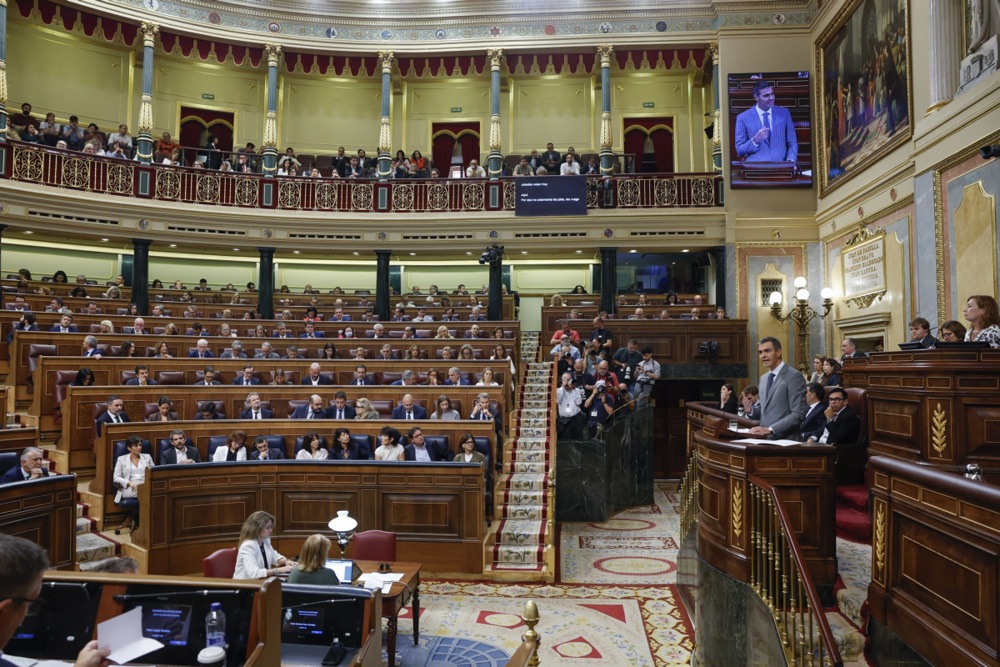
After years without being able to pass a budget, a coalition that wavered over every major proposal, the Ceuta crisis, a string of corruption cases and people taking to the streets over the housing crisis, Spanish prime minister Pedro Sánchez has called snap elections for 29 November — just as a rightwing victory appears increasingly unstoppable. Monday’s (5 October) move is barely a surprise. Sánchez’s gambles have proven effective in the past to keep his grasp on power. Even before the summer, an early election wasn’t considered a far-fetched possibility. Sources in Sánchez’s centre-left Spanish Socialist Workers’ Party (PSOE) and its allies linked it to the budget vote anytime from October onwards, with some analysts pointing to November 2026 as a politically attractive date. Spain now faces a 54-day sprint to the polls, the shortest window the law allows, with Sánchez betting that the housing issue can turn the campaign in his favour. But why now? The eviction of an 87-year-old woman from her rental home after 70 years on 23 September prompted people across the country to take to the streets against Spain’s ongoing housing crisis. And last Friday, the Spanish lower house in parliament rejected two new housing decree-laws. It was the centre-right People’s Party (PP), far-right Vox, Catalan pro-independence party Junts and Navarrese regional party UPN who voted them down, exposing once again how fragile Sánchez’s parliamentary coalition is. But with parliament dissolved, a political manoeuvre could now see similar housing decrees approved anyway – helping Sánchez make the housing crisis his main election motto. Housing bet In Spain, when parliament is dissolved ahead of an election, responsibility for ratifying government-approved laws passes to a smaller standing committee of 69 lawmakers, known as the Diputación Permanente [Permanent Deputation], which continues to operate until the new parliament is sworn in. The maths in that body favours Sánchez. His socialist party and the left-wing and regional parties that backed the original housing decrees hold 35 seats, against 34 for the opposition.
Spain’s 54-day sprint to the polls: can Sánchez’s housing gamble stop the far-right from entering into government?
Full Article
Original Source
Read the full article at Euobserver →KhanList aggregates and links to publicly available news content. We do not host full articles from third-party sources. Always verify important information with original sources.