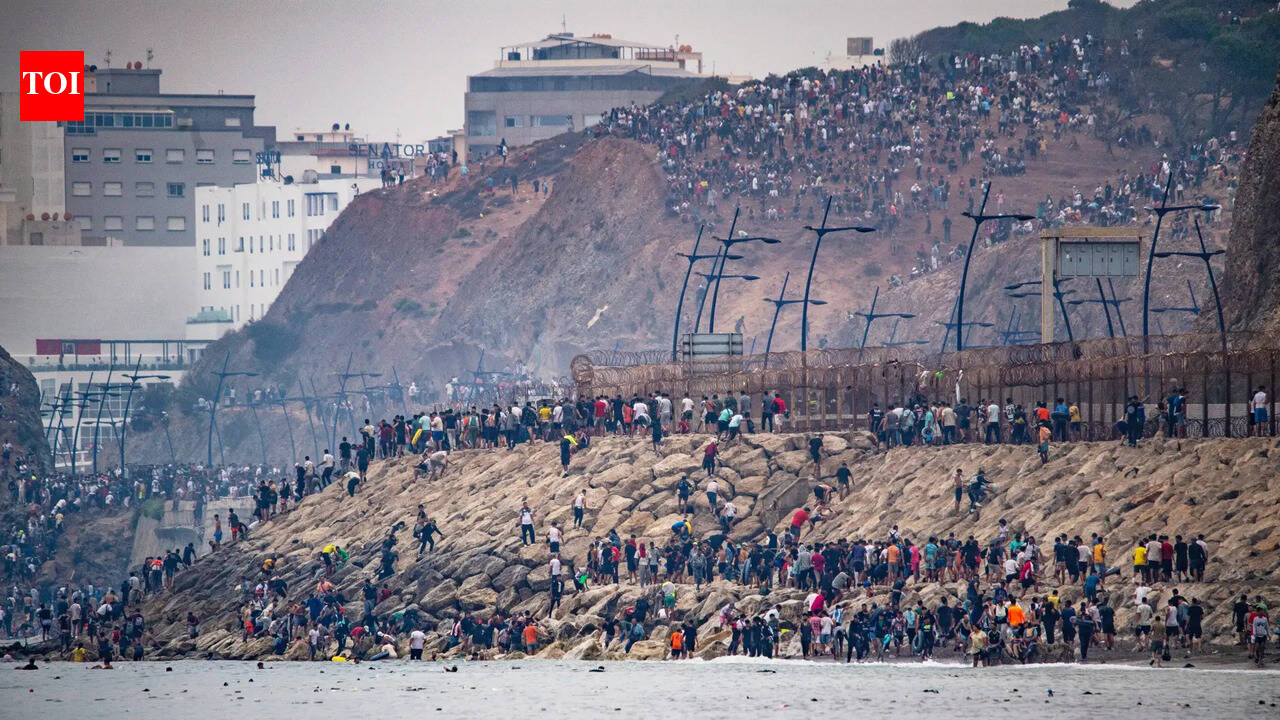
As thousands gathered near the border, Moroccan security forces used batons and tear gas to push back crowdsSpain said on Friday that it had regained control of a massive migrant surge into its North African enclave of Ceuta, with most of the more than 50,000 people who crossed the border by land and sea voluntarily returning to Morocco. The unprecedented influx left dozens dead and triggered political tensions across Europe.Spanish authorities said 57 bodies had been recovered on the Spanish side of the border. Officials warned that the death toll could be higher as there may have been additional casualties on the Moroccan side. According to the government, some migrants drowned while others were crushed as they attempted to climb the breakwater supporting the border fence.Spain's interior ministry said around 50,000 migrants entered Ceuta between Thursday and Friday, with about 48,300 having already returned to Morocco by Friday evening. Ceuta regional president Juan Jesus Vivas, however, estimated that the total number of crossings could have reached 60,000 over the two days.As thousands gathered near the border, Moroccan security forces used batons and tear gas to push back crowds and prevent more people from entering the Spanish territory. Reuters reporters at the scene also saw riot police firing tear gas, while water cannon vehicles were deployed to disperse migrants. Burnt remains of a bus and seven cars were visible following clashes.On the Spanish side, military vehicles were positioned along sections of the border as hundreds of migrants remained stranded on the Moroccan side. Several hundred people later crossed back through official checkpoints and openings in the fence, with many saying they were unable to find food or shelter in Ceuta. "I'm going back," one migrant told news agency Reuters. Spanish prime minister Pedro Sanchez travelled to Ceuta on Friday, where he faced protests and jeers from demonstrators. He described the mass border crossing as "a violation of Spain's territorial sovereignty" and said authorities were accelerating the return of those who had entered illegally with Morocco's full cooperation.The incident also exposed divisions within Europe over migration policy. Italy announced it was temporarily suspending the European Union's Schengen border-free travel arrangements with Spain, a decision that would affect air and sea travel between the two countries. Madrid criticised the move, saying it breached European Union treaties.Ceuta and Melilla, Spain's two autonomous enclaves in North Africa, form the European Union's only land borders with Africa. While both regularly witness attempts by migrants to enter Europe, Spanish authorities described the latest influx as unprecedented.Several right-wing political parties across Europe blamed the crisis on Spain's migration policies, including this year's amnesty for hundreds of thousands of undocumented migrants. Spain also summoned the Italian ambassador after Italian Foreign Minister Antonio Tajani claimed the amnesty had "encouraged human trafficking".US President Donald Trump also weighed in on the crisis, describing the situation at Ceuta as an invasion.The crossings "look like an invasion", Trump said, adding, "That same thing's going to happen to us if the Republicans don't get elected, except worse," referring to the upcoming US midterm elections.The US state department also criticised Spain's handling of migration, saying the incident was "the direct result of the Spanish Government's deliberate efforts to enable and facilitate mass illegal migration into Europe." It added, "We are considering actions to defend Americans at home and abroad from this threat and stand ready to assist other European allies considering similar option."Meanwhile, France said it would significantly strengthen security along its border with Spain. French interior minister Laurent Nunez announced that the police presence would be increased fivefold by Saturday, alongside enhanced aerial surveillance and additional patrols on trains.Spain's Guardia Civil police association AUGC also criticised the handling of the situation, saying there had been too few officers deployed at the border fence during the surge, leaving security forces unable to stop the mass crossings.
Spain says most migrants return to Morocco after border rush kills 57
Full Article
Original Source
Read the full article at Timesofindia →KhanList aggregates and links to publicly available news content. We do not host full articles from third-party sources. Always verify important information with original sources.